
All categories
Featured selections
Trade Assurance
Buyer Central
Help Center
Get the app
Become a supplier
In 2026, optimizing renewable energy capture has evolved into a strategic imperative for homeowners, businesses, and mobile tech users alike. The rapid acceleration of global investment in off-grid power solutions is not just a trend—it is a seismic shift influenced by sustainability targets, escalating energy costs, and consumer demand for portable, reliable solar harvesting equipment. As societies embrace the transition to decarbonized energy, the focus has broadened from static panel arrays to dynamic and adaptable mounting solutions, especially rotating solar panel stands.
Contemporary solar panel owners face competing demands for mobility, resilience, and maximum efficiency. In peak summer and shoulder seasons, sunlight angles and intensity fluctuate dramatically, resulting in suboptimal static-panel performance. Cultural events and increased outdoor activities—such as mobile workstations, RV travels, and pop-up green festivals—underscore the need for panels that can pivot and tilt to chase the sun and maintain strong energy output even as daylight hours extend or contract.
Against this backdrop, rotating solar panel stands have emerged as a preferred choice for many segments, offering users the flexibility to adjust orientation, minimize shadowing, and maximize power throughout the day. The surge of discussions and creative DIY solutions across digital communities reflects a profound shift: buyers now seek not just panels, but mounting systems that can adapt to climate, application, and location-specific needs. Retailers and wholesale buyers, from off-grid specialists to mainstream hardware suppliers, are recalibrating their procurement priorities around stands that unite durability with dynamic adjustment—making this sector a market hot zone for 2026[1][5][6][7].
A rotating solar panel stand is an engineered mounting platform enabling solar modules to pivot or turn—either manually or automatically—along one or more axes. The purpose is simple yet profound: to continually reposition panels in alignment with the sun, increasing incident light capture and thereby boosting energy yield compared to fixed installations.
Historically, solar mounting systems began as rigid aluminum frames threaded into rooftops or ground ballast. As the drive for portability and multi-season adaptation grew, innovation focused on:
Today’s classification system for buyers distinguishes stands along several dimensions:
B2B buyers should prioritize classification based not only on end-user application (residential install, retail display, remote comms) but also logistics and certification requirements per region, as regulatory standards and environment resilience (wind, weather, road transport) vary substantially by market segment[2][3][4].
The widespread discussion on rotating solar panel stands across online communities offers deep insight into evolving buyer priorities and pain points. Real-world feedback from DIY enthusiasts, mobile power users, and prosumer groups reveals several recurring themes crucial for international buyers.
Creative Customization is one of the top sentiments driving the category. Users commonly share instructions and material lists for building adjustable or folding solar panel stands. A popular design involves EMT tubing (metal pipe), aluminum flat bars, and U-channels, allowing scalable builds for 400W panels that can fold flat for transport. Community members highlight crucial trade-offs: while custom mounts boost versatility and reduce cost, they demand careful attention to durability and wind resistance, especially for large panels or permanent installations[5].
Sentiment analysis of user comments shows strong demand for stands that can handle
Many users report frustration with standard kickstands offered by leading portable panel brands, particularly for larger panels (e.g., 400W modules). The consensus is that native solutions are often too flimsy, risking stability issues and requiring frequent angle adjustments. Alternatives—DIY wood braces, multi-position aluminum frames, and third-party adjustable bracket systems—are widely recommended for their reliability and adaptability, with specific nods to models that provide reinforced supports and hinge mechanisms that lock at multiple tilt settings[6][7].
User-generated content and influencer reviews also point out safety and longevity factors:
Lifestyle integration is advancing as solar stands are now seen in applications ranging from jewelry and electronics display in retail shops (rotating turntables powered by ambient light or battery), to tactical deployment for disaster relief and outdoor workspaces. This illustrates the cross-sector appeal of rotation-enabled mounts, driving product evolution that reflects the needs of both retail and commercial customers[2][3][4][5][6][7].
Market analysis for rotating solar panel stands in 2026 reveals dual paths of growth: first, mainstream adoption for portable solar panel mounts, especially among RV, boating, and outdoor adventure markets; second, niche expansion of solar-powered rotating display stands for retail product showcasing and promotional events[1][2][3][4].
The overall market size for solar mounts is expected to climb by at least 15% year-over-year, spurred by rising solar panel sales and governmental incentives. Geographic preference varies—North America and Europe favor robust, weatherproof portable stands for outdoor applications and camping, while Asia and the Middle East show strong demand for commercial solar-powered turntables for jewelry, electronics, and compact retail displays[1].
Within the top-selling Amazon products, buyers can spot clear patterns:
Emerging trends include:
Buyers are also responding to the proliferation of “no-drill” and quick-mount stands—these solutions minimize installation time and reduce the risk of roof or structure damage, while preserving solar investment resale value[1].
Hot Selling Analysis: Top 10 Amazon Bestsellers for Rotating Solar Panel Stands
The following table presents the top-selling Amazon solar panel stands, ranked by latest monthly sales volume. Each entry includes product image, headline specs, prices, ratings, and standout features:
| Image | Product Name / Model | Average Rating | Latest Monthly Sales | Retail Price | Wholesale Price | Key Features / Specs |
|---|---|---|---|---|---|---|
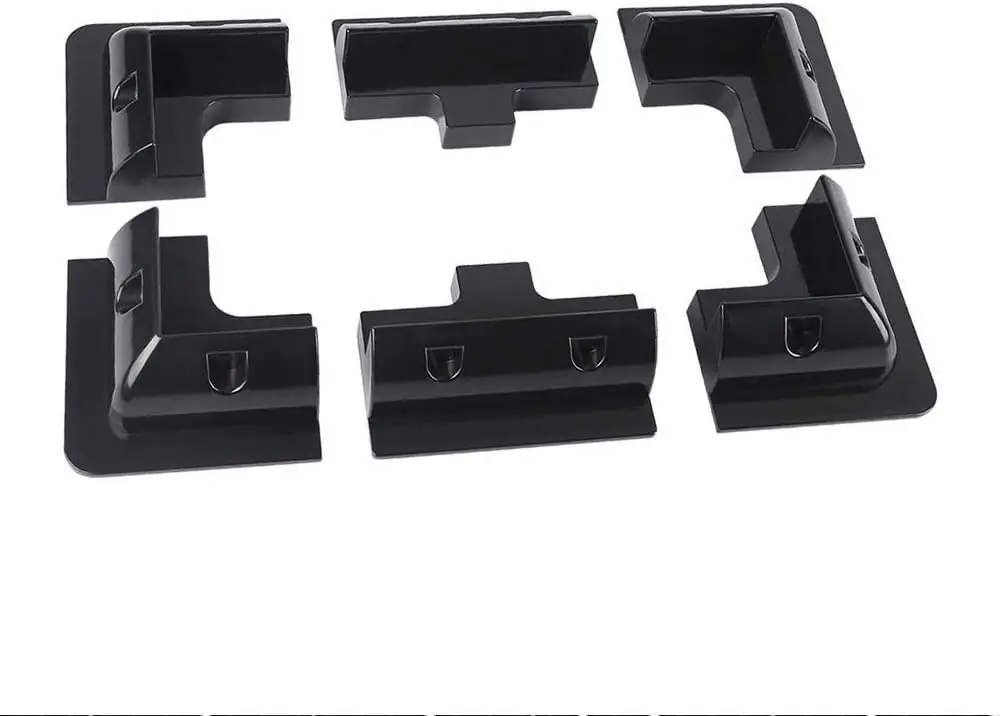 |
Renogy Corner Bracket Solar Panel Roof Drill-Free Mount | 4.4 | 267 | $24.21 | $13.27 | No-drill install, Compatible with RV/boat, Lightweight, Polycarbonate composite |
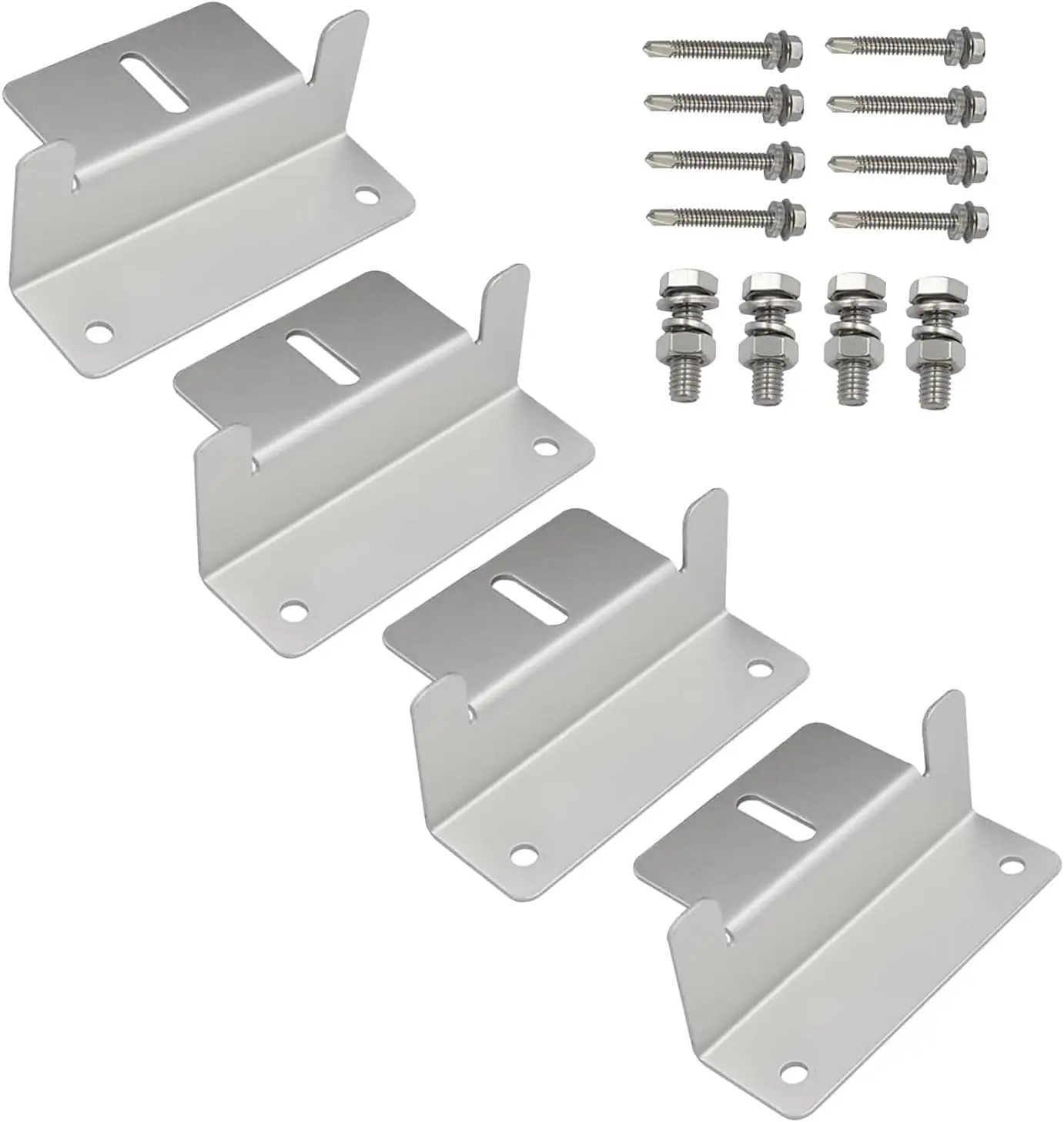 |
Spartan Power Silver Solar Panel Z Bracket Mount | 4.7 | 187 | $9.99 | $1.90 | Lightweight anodized aluminum, Universal fit, Set of 4, High consumer rating |
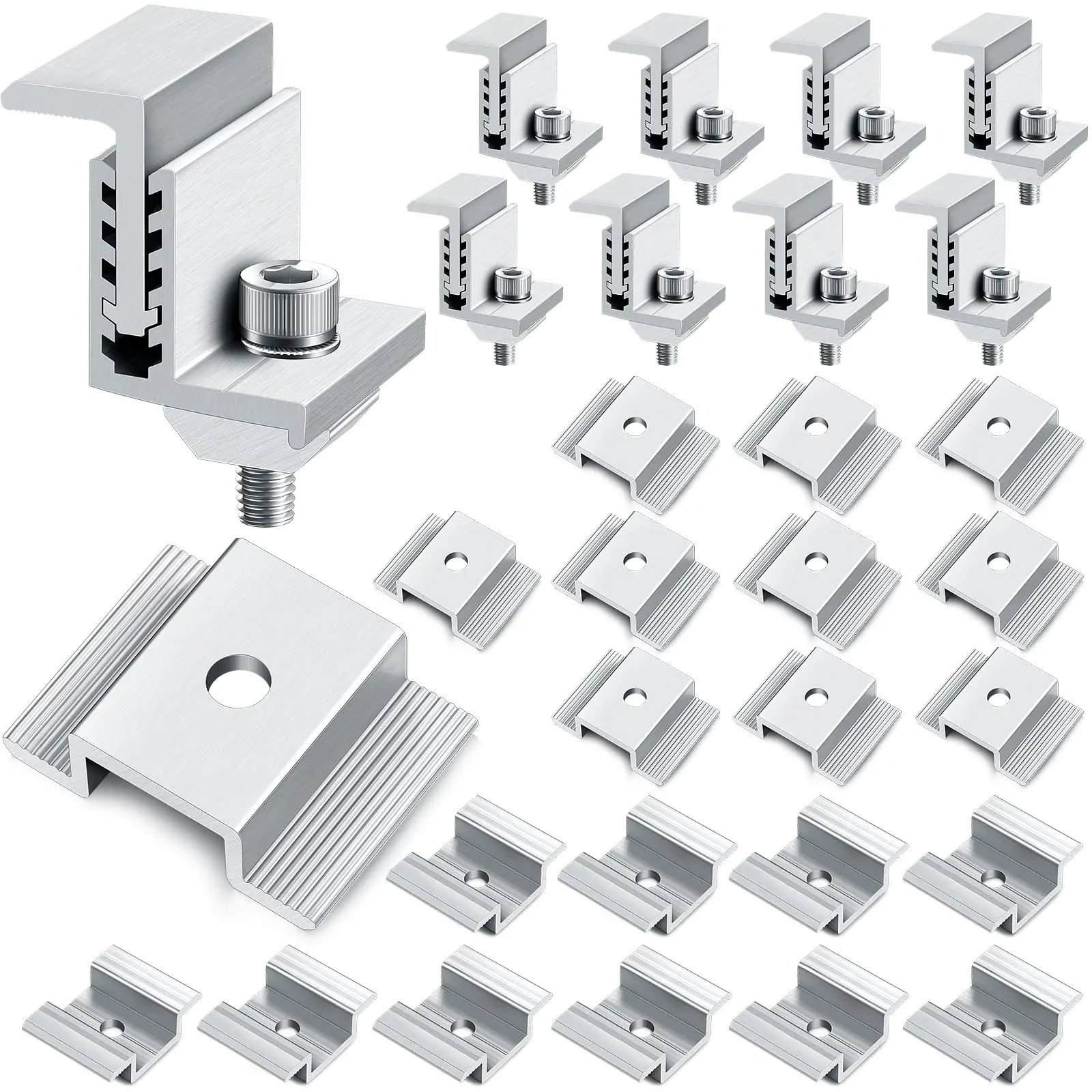 |
Zhengmy 1.06 Inch Solar Panel Bracket Aluminum | 4.4 | 182 | $28.70 | $0.45 | Adjustable clamps, 32-50mm size range, Easy mid/end install, 28-piece kit |
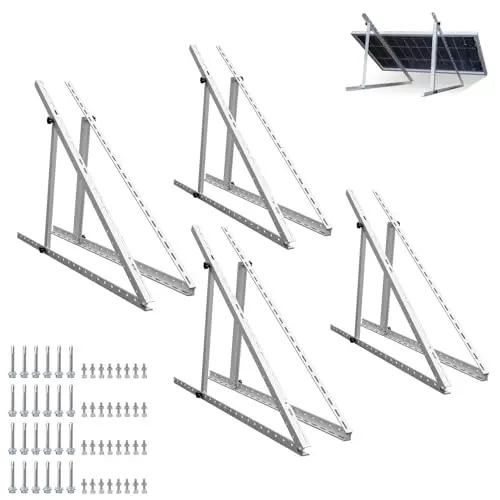 |
ECO-WORTHY 4 Sets 45inch Adjustable Solar Panel Tilt Mount Brackets | 4.6 | 164 | $126.99 | $6.84 | Foldable tilt legs, Roof/RV/boat compatible, Heavy load support (up to 400W panels) |
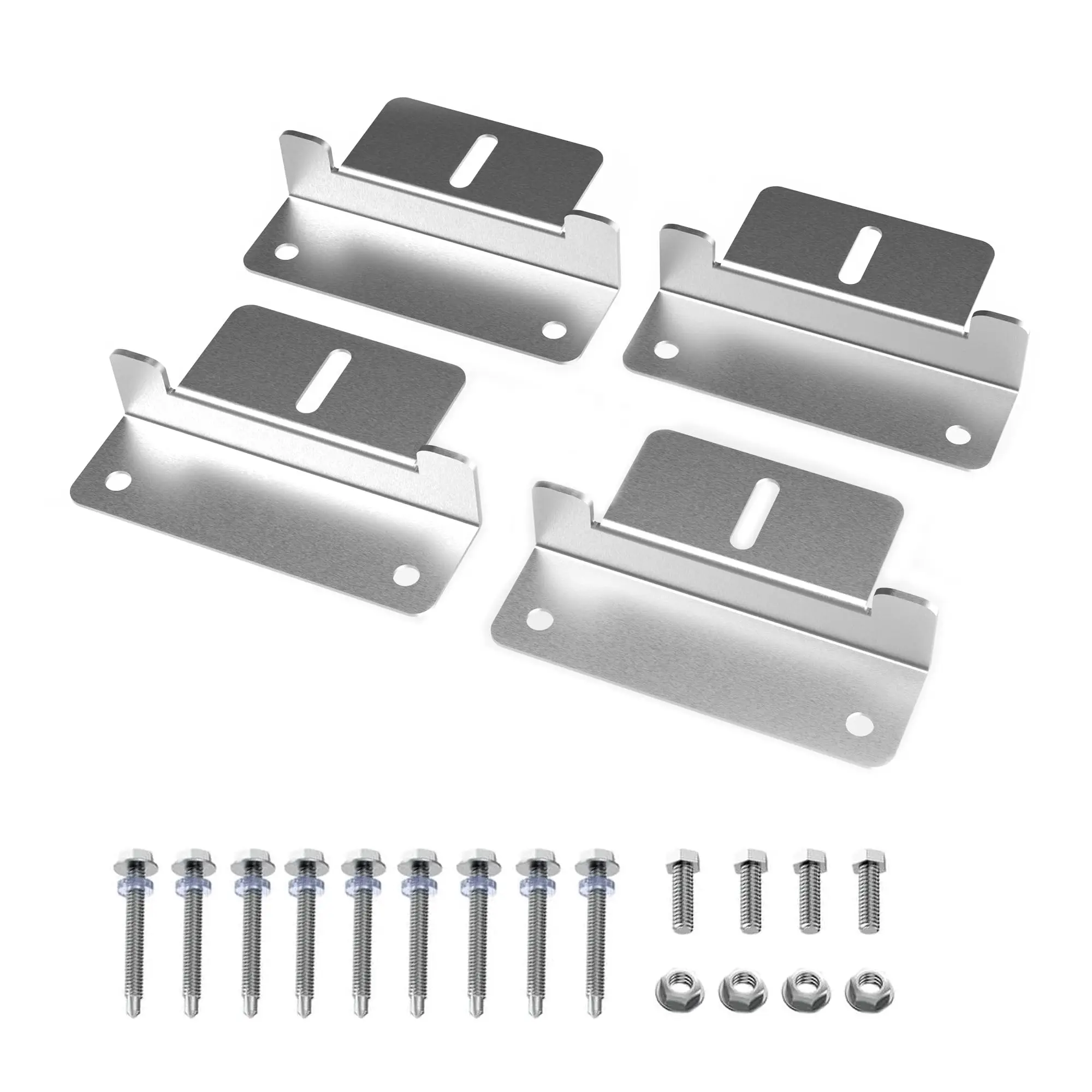 |
ACOPOWER Solar Panel Mounting Z Bracket | 4.5 | 158 | $9.95 | $2.01 | Set of 4, Universal boat/RV mount, No-drill, Sliver finish |
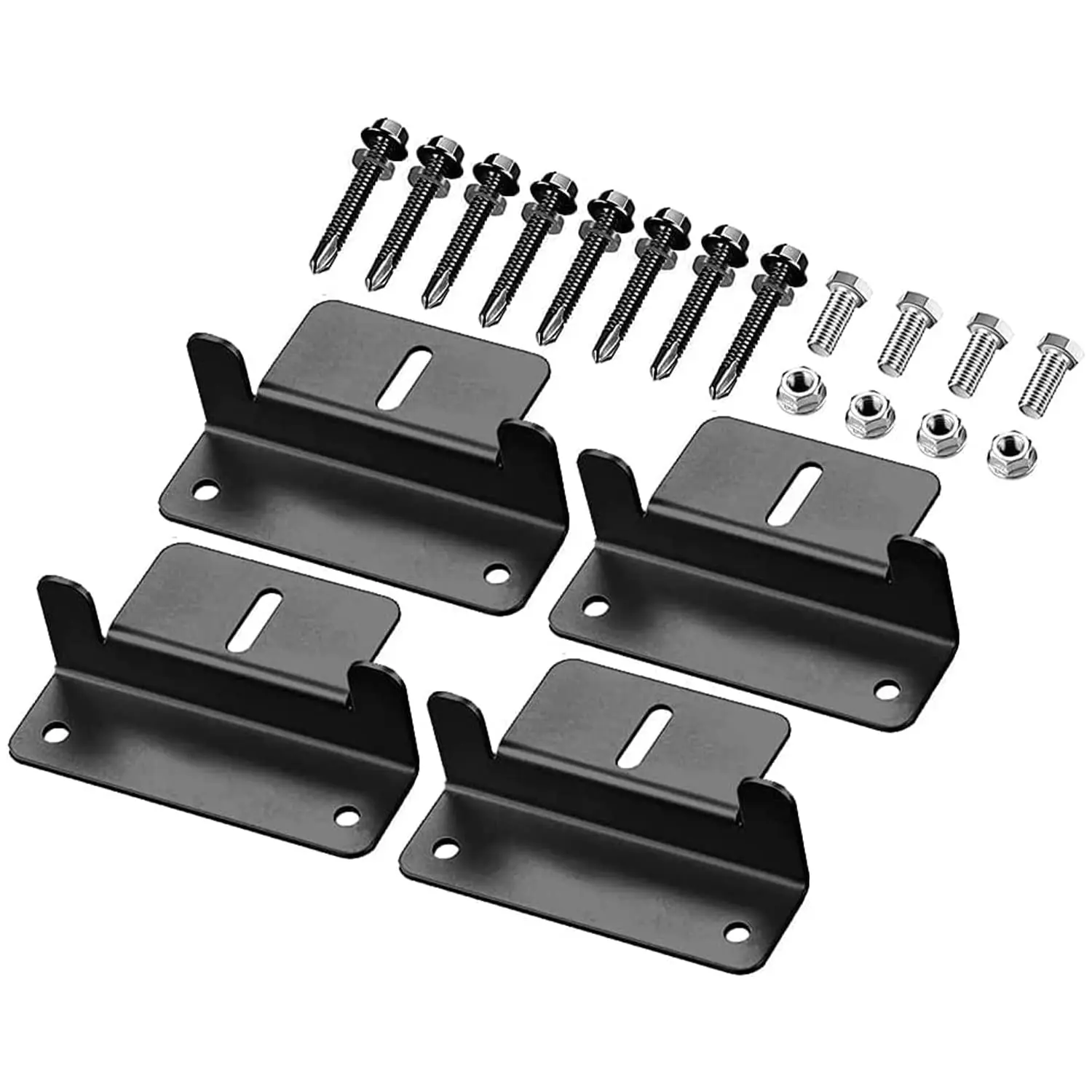 |
Spartan Power Black Solar Panel Z Bracket Mount | 4.7 | 132 | $11.26 | $1.98 | Black anodized aluminum, RV/vehicle, Highly rated, Low-profile |
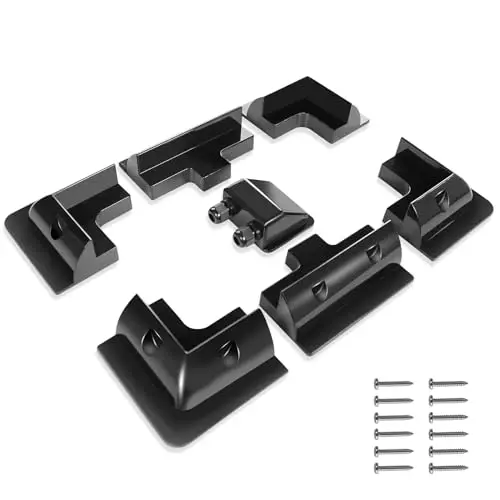 |
Solar Panel Mounting Brackets Kit, 7PCS RV Roof Mounts | 4.4 | 113 | $27.16 | $6.50 | No-drill, Campervan/caravan, Black finish, 7-piece full kit |
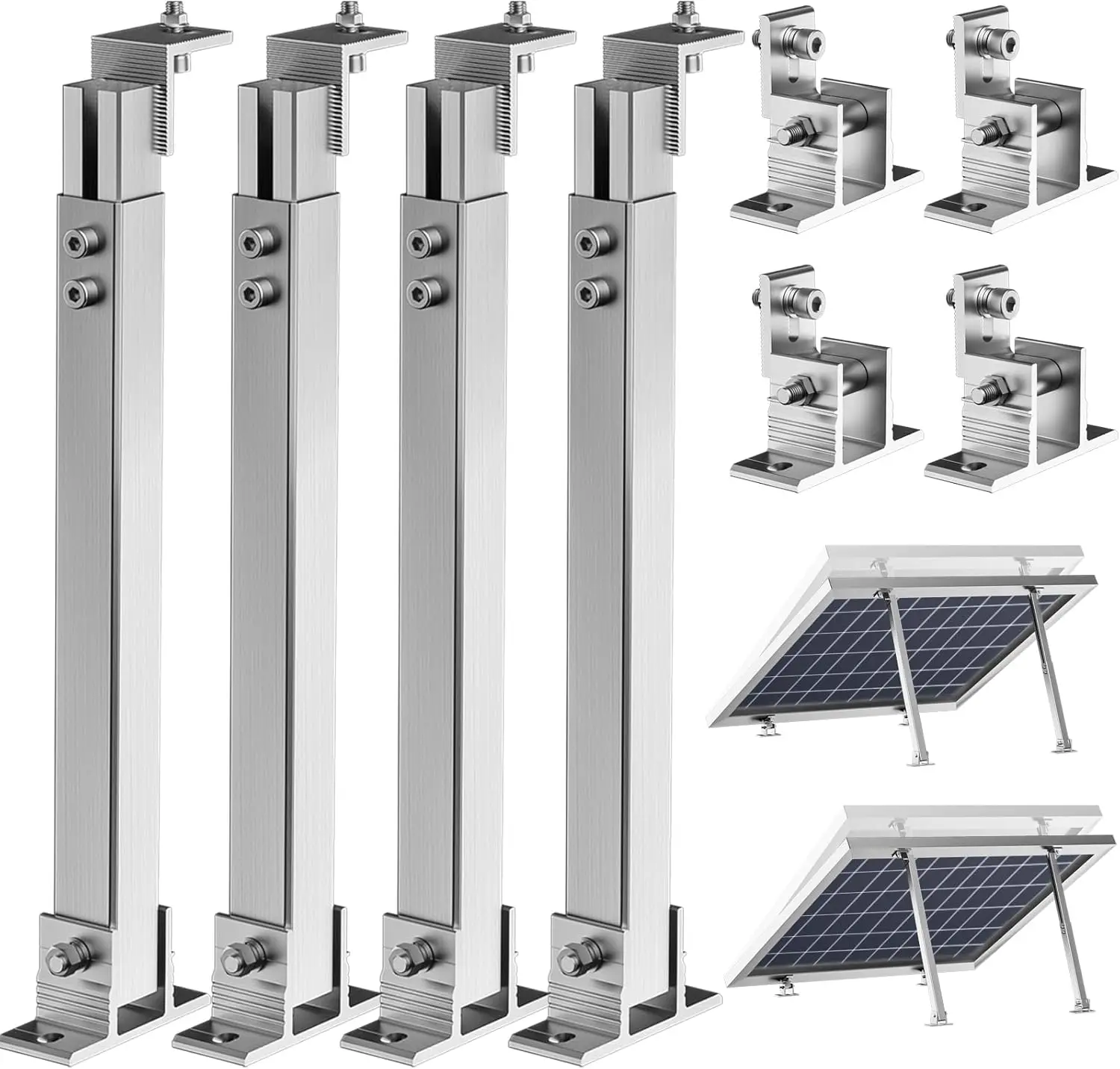 |
WOEFSTE Adjustable Solar Panel Tilt Mount Brackets Aluminum Alloy | 4.6 | 89 | $64.02 | $3.00 | Aluminum alloy, Adjustable tilt, Multi-panel support, Flat/roof mounting |
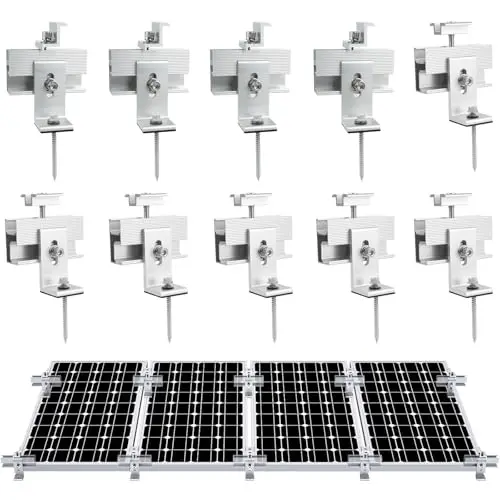 |
10PCS Solar Panel Mounting Brackets | 4.2 | 5 | $48.40 | $0.02 | 10 bracket/rail kit, Up to 4 panels, Multiple roof material compatibility |
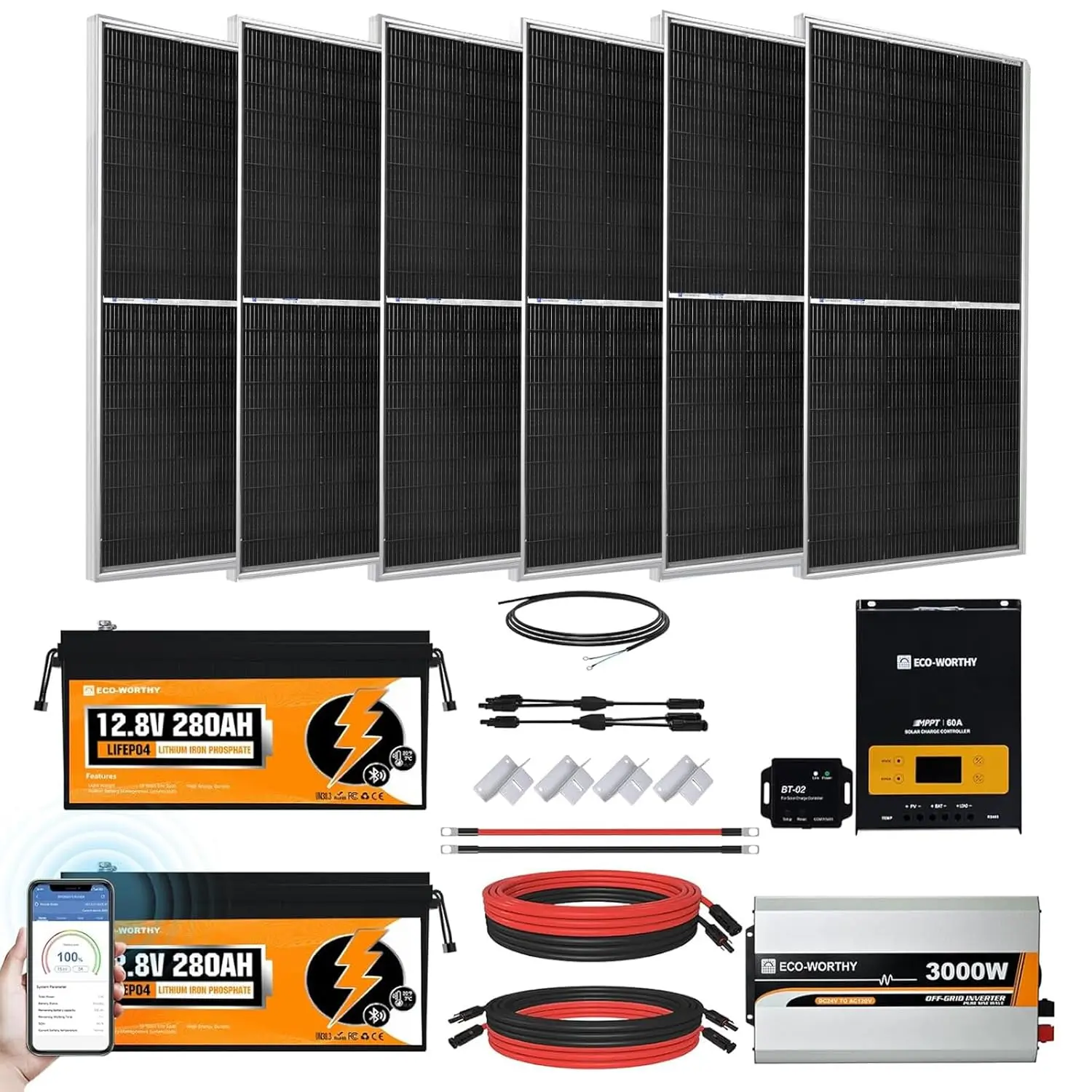 |
Ultra ECO-WORTHY 1200W 24V 5.52KWH Lithium Battery Solar System Off Grid (6pcs 195W Panels) | 4.1 | 5 | $2388.39 | $534.99 | Complete kit, 1200W system, Lithium battery+inverter+MPPT controller, Best for off-grid/remote |
Table data sourced from [1]
The top sellers are dominated by straightforward, highly compatible tilt and Z-bracket systems—these are affordable, high-volume and favored for basic panel mounting on RVs, boats, and remote sites. However, premium adjustable mounts and full solar system kits are seeing notable interest among professional and commercial buyers. Key features that drive sales include ease-of-install, multi-angle support, lightweight yet durable materials, and compatibility with both permanent and portable solar modules.
For B2B buyers, products with high average star ratings (above 4.5) also signal strong user satisfaction—a crucial factor for bulk procurement. Generally, wholesale price efficiencies become substantive in larger purchase volumes, particularly for aluminum-based mounts.
Achieving sourcing excellence for rotating solar panel stands requires a multidimensional approach. International procurement professionals should systematically evaluate suppliers against the following criteria:
A conversational relationship with suppliers helps surface technical queries from field deployment teams—wind rating, maintenance intervals, and local install support services are frequent pain points. For display stands (solar-powered turntables), thermal and load resistance must be confirmed, as product specs cited in niche vendors show variations in max load and operational temperature ranges[2][3][4].
Successful sourcing involves balancing cost-per-unit with risk mitigation: lower wholesale prices are attractive, but only if reliability and certification are firmly established. The best suppliers proactively provide complete performance documentation and offer post-sale field support.
The transition to smarter, more dynamic solar panel mounting solutions is reshaping the landscape of solar energy in 2026. Whether for personal green energy independence, commercial retail display, remote field deployment, or largescale off-grid installations, the market is moving decisively towards products that unite flexibility, durability, and ease of use.
Key conclusions drawn from the bestseller data and consumer sentiment analysis include:
For the next 6-12 months, buyers should leverage industry intelligence to anticipate demand spikes around energy transition events and seasonal surges, deepen supplier relationships for flexible procurement, and emphasize universal design compatibility to future-proof their product portfolios. Investing in rotating solar panel stands—whether for residential, commercial, or mobile applications—equips procurement professionals to meet rising energy efficiency needs while securing strategic competitive advantage.
Let this intelligence be your foundation for confident, forward-looking purchasing. With the right sourcing roadmap and a finger on the pulse of both technical evolution and user sentiment, you’ll navigate the 2026 solar landscape with power—literally and figuratively—in your hands.