All categories
Featured selections
Trade Assurance
Buyer Central
Help Center
Get the app
Become a supplier

Radar Module Bestseller Trends 2026: Surge in Smart Sensing and Intelligent Automation

Radar Modules at the Forefront: 2026’s Dynamic Shift in Sensor Technology and Smart Application

The turn into 2026 marks a remarkable acceleration in the adoption and innovation of radar modules across industries. Driven by rapid advances in smart automation, the expanding influence of IoT ecosystems, and heightened awareness around human presence detection in safety, security, and comfort applications, the radar module market exhibits dynamic growth. Several factors propel the momentum:

  • IoT proliferation into smart homes, cities, and industrial automation, fueling demand for reliable, non-contact sensor solutions.
  • Seasonal trends—such as winter’s rise in security technology upgrades and the approach of global technology expos—intensify procurement cycles for high-performance sensors.
  • Consumer and business buyers alike seek advanced alternatives to traditional motion detection, choosing millimeter wave radar modules for superior accuracy through environmental obstacles (smoke, darkness, or walls).
  • Cultural factors, including the mainstreaming of touchless interfaces and privacy-friendly human presence detection, further elevate radar technology’s relevance.
  • Market dynamics highlight strong competition between established radar vendors, automotive component suppliers, and DIY electronics platforms, each targeting distinct user profiles and procurement needs.
234

From Airborne Origins to Intelligent Sensing: Defining and Classifying Radar Modules

Radar modules are electronic units designed to emit and receive electromagnetic waves—usually in the microwave spectrum—allowing precise, non-contact measurement of distance, velocity, and presence detection. The term RADAR (Radio Detection and Ranging) traces its historical roots to mid-20th century military surveillance and aviation guidance systems, but contemporary radar modules are engineered for compactness, power efficiency, and flexible interfaces for industrial and commercial deployments [10]. The core operating principle involves radio wave emission, reflection off objects or surfaces, and time-of-flight or Doppler shift measurement to deduce location, range, or speed. Today’s radar modules utilize advanced processing algorithms, such as Frequency Modulated Continuous Wave (FMCW) methods for high-precision distance and motion detection, enabling effective operation even under challenging environmental conditions (fog, rain, dust, plastic casing) [2][9]. Major Categories of Radar Modules:

  • Pulse Radar Modules: Emit synchronized pulses, measure distance via propagation delay, ideal for long-range detection but less suited for high-resolution measurements at short distances [5][9].
  • Continuous Wave (CW) Radar Modules: Transmit uninterrupted signals to measure orthogonal velocity using Doppler effect, commonly used in speed and motion detection applications but limited positional accuracy [6][9].
  • FMCW (Frequency-Modulated Continuous Wave) Radar Modules: Utilize varying frequency emissions for precise range and velocity measurement, ideal for presence detection and high-resolution tasks in automation, robotics, and smart home senses [2][3][9].
  • Guided Wave Radar (GWR): Employ waveguides or probes to focus radio waves along a target path, highly resilient to process variations (temperature, pressure, vapor), heavily used in industrial liquid and solid measurement [3].
  • Doppler Radar Modules: Specialize in detecting speed and movement by analyzing the frequency shift of returned signals; widely implemented for traffic systems, sports analysis, and critical motion monitoring [8][6].
  • Imaging vs Non-Imaging Radar Modules: Imaging radars generate map-like representations for environments (weather, surveillance), while non-imaging types provide numerical data outputs, suitable for integration in speedometers and altimeters [5].
  • Operating frequency band (10GHz, 24GHz, 60GHz, etc.)
  • Measurement type (presence, distance, speed, imaging)
  • Signal processing capability (raw data output, processed presence detection, spatial multiplexing)
  • Interface type (UART, GPIO, SPI, I²C, analog)
  • Environmental robustness (waterproof, dustproof, temperature stability, material penetration)
  • Power consumption and module size (battery compatibility, integration with microcontrollers)
269

Community Perspectives and Tech Enthusiast Sentiment: How Buyers and Makers Experience Radar Modules

Driven by an active electronics and design community, radar modules have garnered significant buzz across social platforms—both among professional engineers and hobbyist makers. Discussion reveals several evolving trends and consumer sentiments in 2026:

  • Practical Integration for Presence and Motion Detection: Users are shifting from traditional IR sensors to Doppler radar modules due to improved performance in complex lighting and through walls, especially for DIY security upgrades and smart automation projects [11].
  • Demand for Customization and Transparency: Frequent forum exchanges highlight frustration among buyers regarding unclear output specifications, marketing jargon, and convoluted datasheets—particularly as buyers seek modules yielding raw data rather than firmware-locked processed outputs. Calls for transparent technical documentation and easy Python compatibility reflect a more technically adept audience [12].
  • Affordable Accessibility and Open Platform Compatibility: Community members value radar modules in the $1–$20 range, emphasizing ease of integration with popular DIY platforms (Arduino, ESP Home, Elegoo). Tutorials showcasing plug-and-play configuration and Home Assistant compatibility are widely circulated [14].
  • Module Selection for Distinct Use Cases: Buyers debate the merits of different module types: while millimeter-wave models excel at presence detection, dedicated Doppler modules remain popular for speed/motion measurement. Users highlight limitations, such as processed outputs that lose granularity, or challenges distinguishing stationary objects amid radio clutter [16][17].
  • Sentiment Toward Advanced and Niche Modules: Some makers explore advanced radar solutions like the IWR6843AOP evaluation boards, which enable sophisticated signal processing and application in robotics or automotive systems—but comment on high power draw as a limitation for battery operation in field deployments [17].
  • User-Generated Content and Tutorials: Informative videos and full tutorials provide step-by-step integration guides for popular radar modules, helping new adopters avoid common pitfalls and encourage confidence in sourcing decisions [14].
121417

Global Radar Module Market Trends and Purchasing Intelligence for 2026

The current radar module market presents:

  • Robust annual growth—estimated globally at above 20% YoY—driven by the pivot to smart living, industrial automation, and intelligent safety solutions.
  • Regional nuances—Asia-Pacific leads for price-competitive, high-volume modules in consumer and IoT segments; North America sustains growth for high-spec automotive, security, and industrial radar solutions; Europe shows increased B2B demand tied to sustainability and multi-sensor integration initiatives [3][4].
  • Application innovation—Radar modules are increasingly deployed in smart occupancy sensors, touchless automation, robotics navigation systems, automotive cruise control components, smart parking solutions, and industrial level measurement [10][7].
  • Price tier analysis—Segmented into budget modules (under $5 for basic presence/motion sensors), mid-range modules ($15–$40 for robust industrial/IoT models), and premium automotive/robotics modules ($60–$100+ per unit).
  • Technology shift—FMCW radar and millimeter-wave radar modules see accelerated adoption for their superior performance in varied and cluttered environments, far outpacing legacy ultrasonic and IR-based sensors [2][9].

Hot Selling Analysis: Top Amazon Radar Module Performers and Retail Market Insights

Retail procurement data illuminates downstream trends in module selection. The latest month’s top sellers reflect end-user priority for compact millimeter-wave presence sensors and automotive radar components. Below, the table presents the top 10 best-selling Amazon radar modules—with images, specifications, features, pricing, and ratings. This snapshot helps B2B buyers pinpoint high-demand SKUs for inventory management, private label opportunities, and product portfolio alignment [1].

Image Product Name & Model Specifications & Key Features Retail Price Wholesale Price Avg. Rating Latest Month Sale Volume
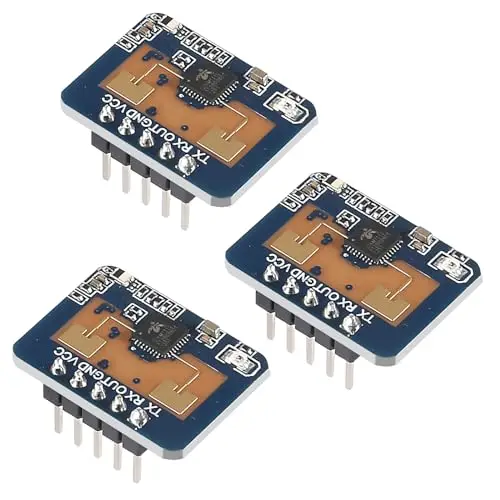
XIITIA LD2410C Human Presence Radar Sensor XIITIA 3pcs LD2410C Human Presence Radar Sensor Module HLK-LD2410 LD2410 24GHz millimeter-wave, non-contact sensing, ISM band, UART/IO level output, ideal for smart automation $19.05 $3.65 4.2 58
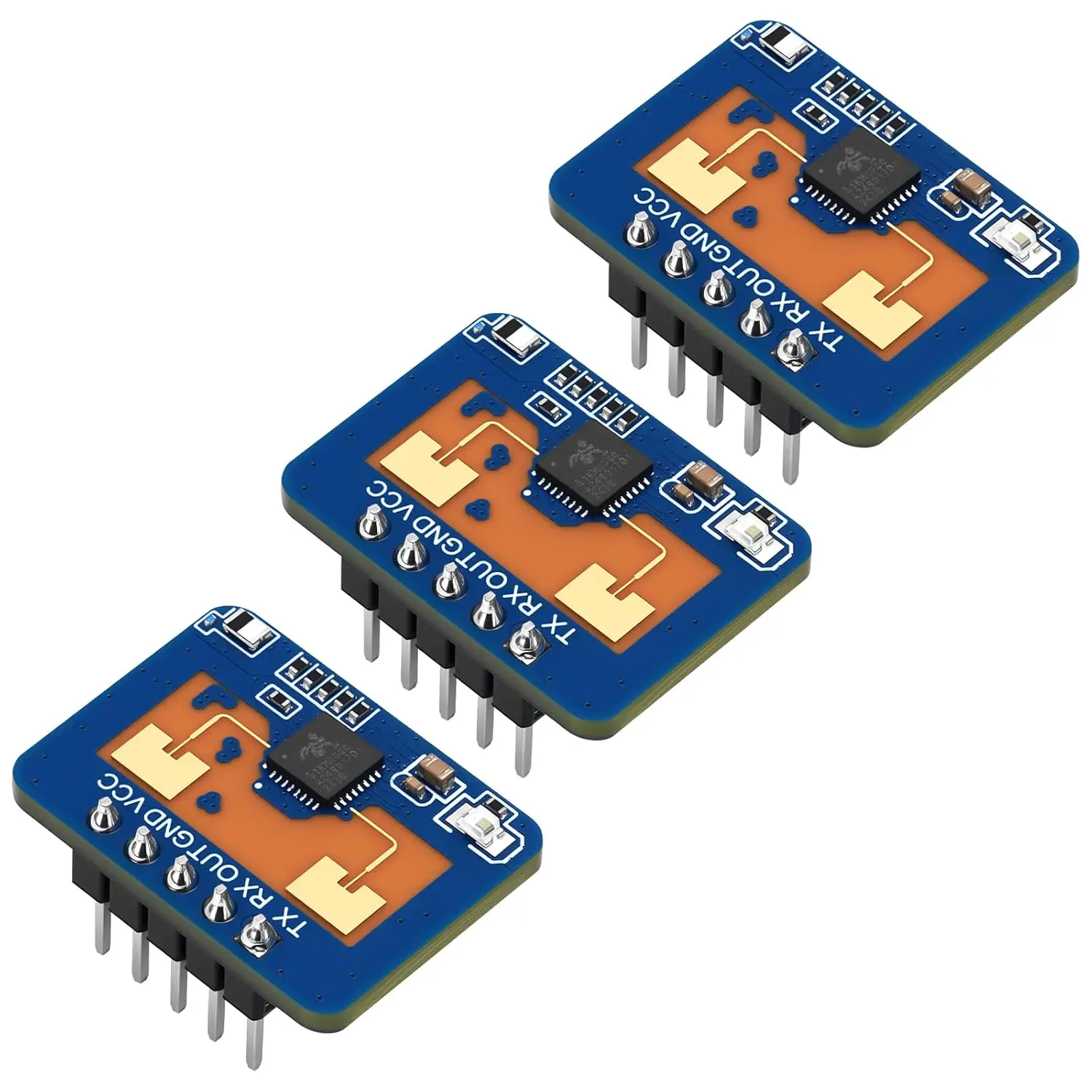
LD2410C mmWave Human Presence Sensor Module LD2410C mmWave Human Presence Sensor Module HLK-LD2410 24GHz, UART/GPIO output, max 6M range, 60° field, designed for smart home automation $19.99 $3.39 4.5 15
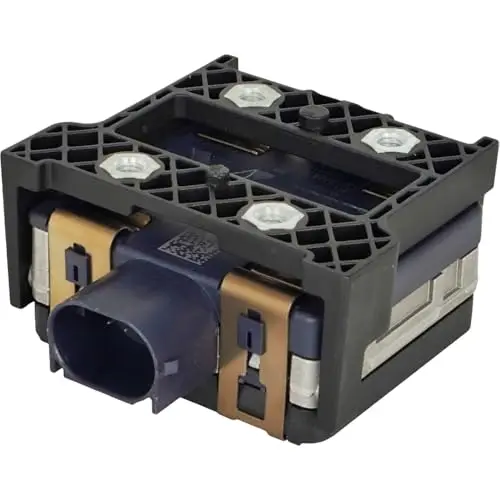
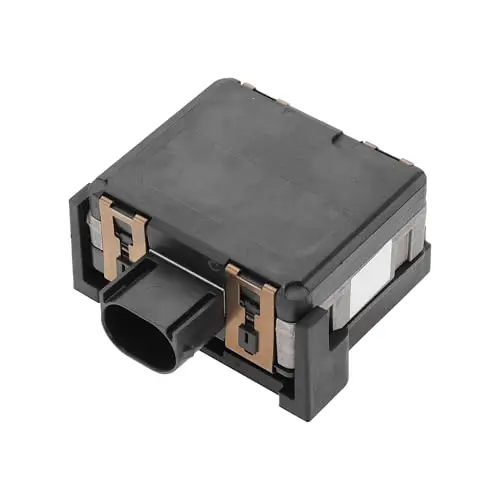
XYZIL Cruise Control Distance Radar Sensor XYZIL Cruise Control Distance Radar Sensor w/Bracket (Nissan Sentra 2017-2019) Automotive, cruise control, bracket included, compatible with Nissan Sedans, robust vehicle integration $92.63 $60.45 5 5
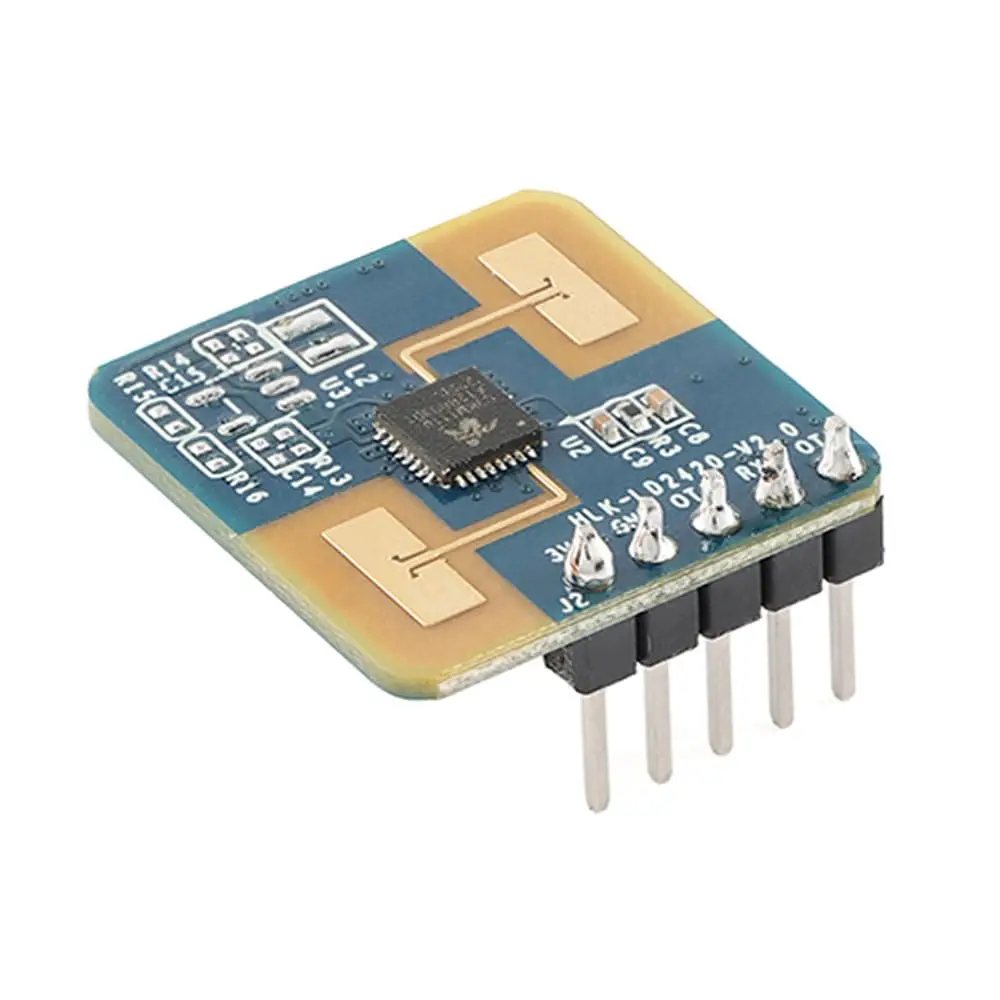
RAKSTORE HLK-LD2420 24G Millimeter Wave Radar Sensor RAKSTORE HLK-LD2420 24G Millimeter Wave Radar Sensor LD2420 24GHz FMCW radar, micro motion, intelligent human body detection, compact module size $6.40 $1.74 3 5
No.284385UD0A Cruise Control Distance Radar Sensor for Nissan No.284385UD0A Cruise Control Distance Radar Sensor (Nissan Sentra 2018-2019) Automotive module, cruise control, ABS and Metal build, single piece unit, black color $98.00 $61.67 0 5

Table data sourced from [1]

The retail landscape highlights strong demand for millimeter wave presence detection modules in smart home and automation use cases, as well as sustained niche for automotive radar sensors designed for cruise control, reflecting the broader industry’s shift toward intelligent transport and advanced driver assistance systems.

Sales Volume and Sentiment Analysis: Interpreting Amazon Retail Radar Module Trends

Monthly sales data evidences consumer preference for modules balancing performance, integration simplicity, and versatile application range. Charting latest sales volumes clarifies these patterns—below, a bar chart visualizes monthly purchase trends for top items. Review sentiment analysis reveals buyers rank high on criteria such as ease of use, detection accuracy, and module build quality, but note challenges around documentation clarity and customizability—factors procurement professionals should consider when selecting SKUs for distribution.

Monthly sales volumes for top 5 selling radar modules highlight human presence detection as the fastest-growing segment, with automotive applications forming a stable niche. Review sentiment clusters around "easy integration," "responsive detection," and "clear documentation."

Review clusters for leading radar modules emphasize:

  • “Easy plug-and-play integration” for smart automation and IoT platforms.
  • “Responsive detection” even through obstructions and adverse conditions.
  • “Good value for the price”, especially in bulk orders for smart home deployments.
  • Points of frustration occasionally emerge around unclear output formats or limited firmware customization, underscoring the need for transparent technical documentation and post-sales support [1].

Sourcing Strategy and Risk Assessment: Ensuring Success in Radar Module Procurement for 2026

The complex sourcing landscape for radar modules means buyers must adopt disciplined, intelligent evaluation strategies:

  • Supplier credibility: Vet for ISO9001 or ISO/TS certifications, documented production capacity, and verified quality control procedures. Prefer manufacturers who disclose full technical parameters and who provide customization options for OEM/ODM orders [2][4].
  • Quality control: Implement multi-point functional testing (detection accuracy, environmental tolerance, output consistency). Inspection should include both incoming module sample checks and batch-wise performance verification (signal integrity, frequency stability, RF emissions compliance).
  • Logistics: Assess suppliers for flexible lead times, robust packaging suited to electromagnetic-sensitive devices, and clear records of on-time fulfillment in prior shipments.
  • Certification & compliance: Ensure all sourced modules carry necessary regulatory marks (CE, FCC, RoHS, REACH) aligned with target export markets. Modules intended for automotive, industrial, or safety-critical applications require additional validation for electromagnetic compatibility (EMC), functional safety, and long-term durability.
  • Common pitfalls: Beware modules with ambiguous datasheets, inconsistent firmware updates, or lack of after-sales support. Project-specific customization (such as raw data output or advanced interface adaptability) should be documented contractually prior to order confirmation.
  • Competitive advantage: Sourcing from vendors with robust R&D and open platform compatibility (i.e., Arduino, ESP Home, etc.) provides differentiation in both retail and OEM channels, expanding market reach to makers, integrators, and industrial buyers alike.

Conclusion and Strategic Action Steps: Maximizing Opportunity in the Radar Module Market

The 2026 radar module landscape is distinguished by rapid product innovation, global application expansion, and highly informed end-user preferences. Key market themes—such as smart presence detection, automotive safety integration, and DIY robotics—exemplify the technology’s centrality to future-proofed IoT and automation solutions. Sourcing professionals are tasked with balancing performance requirements, compliance, and integration simplicity to respond to a diverse spectrum of application scenarios. **Top conclusions:**

  • Human presence millimeter-wave radar modules currently anchor retail bestseller lists—reflecting rising integration in smart homes and commercial environments.
  • Automotive radar modules sustain stable demand; modules solving cruise control and ADAS (Advanced Driver Assistance Systems) needs are valuable for high-margin distribution.
  • Success in radar module sourcing pivots on supplier transparency, technical documentation, and active support for integration (whether for consumer, industrial, or automotive customers).
  • End-users prize both ease of integration and customization capacity; products offering clear data output and flexible interfaces will dominate next-cycle procurement.
  • Review sentiment underscores the need for suppliers to invest in user education, robust technical aftercare, and transparent firmware configurations.
Action steps for 2026:
  • Proactively engage with suppliers offering multi-category radar solutions—including both retail-packaged and OEM modules—to secure portfolio diversity.
  • Prioritize modules with proven sales traction and positive sentiment for quick market entry and stable inventory turnover.
  • Establish robust QC protocols and pilot testing prior to scaling procurement.
  • Target integration kits, marketing partnerships, and technical support bundles to reduce buyer friction and encourage repeat orders.

Notice