
All categories
Featured selections
Trade Assurance
Buyer Central
Help Center
Get the app
Become a supplier
In 2026, the landscape for male circumcision solutions is experiencing rapid innovation as global health priorities and procurement strategies converge. With growing emphasis on non-surgical approaches, the PrePex circumcision device has emerged at the forefront—bolstered by momentum from public health initiatives aiming to reduce HIV transmission and promote safer, scalable procedures [2]. Seasonal factors such as World AIDS Day, international health summits, and increased procurement cycles by government-funded health agencies amplify demand for reliable devices. Changing consumer behaviors, particularly in regions with high HIV prevalence (sub-Saharan Africa, Southeast Asia), propel buyers to seek practical solutions that reduce cost, procedure time, and training requirements. The impact of cultural dialogues—spanning religious traditions, evolving attitudes towards bodily autonomy, and increasing awareness of sexual health—drive adoption among younger demographics and medical institutions alike. The demand for devices that offer safety, comfort, and ease of use is at an all-time high, while ongoing procurement pushes in national healthcare systems create historic sourcing opportunities for international buyers.
From clinical environments to training programs in universities, the circumcision device market in 2026 is characterized by a blend of technological innovation and social transformation. Procurement professionals must now navigate a landscape marked by data-driven pricing models, certifications, outcomes-based purchasing, and disparities in adoption linked to local regulations and community acceptance. This report empowers buyers with actionable sourcing intelligence, revealing not just the hottest sellers but also the nuanced market dynamics that underpin this global evolution.
The PrePex circumcision device stands out as a non-surgical, minimally invasive tool specifically designed for adult male circumcision. Developed to address public health challenges, especially in resource-limited settings, PrePex offers a sutureless, bloodless procedure that does not require anesthesia or a surgical facility—a transformative leap in circumcision technology [2]. Its origins stem from the need to accelerate voluntary medical male circumcision (VMMC) programs in high HIV-risk regions, following World Health Organization recommendations that male circumcision can reduce HIV transmission rates by up to 60% [[2],[3]].
Historically, circumcision devices have evolved from basic surgical clamps and rings towards sophisticated designs. The PrePex device, introduced by Circ MedTech, was the first to enable adult male circumcision outside operating theaters, designed for safety, speed, and scalability [2]. Since its initial rollout in sub-Saharan Africa in the late 2000s, PrePex has been evaluated in numerous clinical pilots across Mozambique, Zambia, South Africa, and Zimbabwe, achieving regulatory approvals and international recognition [[3],[4],[5]].
Key classification criteria for circumcision devices include:
For buyers, understanding these distinctions is critical. The PrePex device excels in environments where surgical capacity is limited and demand for scalable, rapid implementation is high. Other major devices such as ZSR and Alisklamp, while offering alternative mechanisms, may require greater technical supervision and training. Classification also extends to device compatibility (adulthood/adolescence), availability of spare parts, required certifications, and post-market service support.
Insights from social platforms reveal a complex tapestry of consumer and community experiences with non-surgical circumcision devices like PrePex. On discussion boards, users share diverse narratives—ranging from personal procedure accounts to critical debates on safety, pain tolerance, aesthetic results, and satisfaction.
A notable theme is the comparison between PrePex and ZSR devices in self-circumcision contexts. While some users advocate the ZSR stapler for DIY cases, concerns emerge about the risks of at-home procedures using PrePex, highlighting difficulties in instructions, pain management, and complication rates such as dehiscence or incomplete excision [6]. Survivorship bias is evident, with successful stories receiving outsized visibility; however, warnings about adverse outcomes (emergency room visits, device misuse) reinforce the message that professional medical oversight is essential.
Discussion threads emphasize that aesthetic outcomes and post-circumcision sensation depend less on method and more on practitioner skill [7]. Highly personalized preferences emerge—such as cosmetic circumcision styles (“Japanese high and tight”) performed with PrePex and elastic rings, with users reporting rapid healing, minimal pain, and satisfactory sexual function. Yet, others share negative or cautionary tales tied to insensitivity or complications when inner foreskin is not adequately removed [[21],[23]].
Sentiment analysis further reveals the convergence of medical, personal, and cultural factors. Many users report choosing PrePex or similar non-surgical devices to avoid perceived pain and recovery time associated with traditional surgeries [5]. Anecdotes indicate high satisfaction when healing is quick and pain is minimized—though the pain at device removal remains a recurrent concern. Emotional exchanges range from positive endorsements (“would recommend to peers”) to advice on pre-procedure desensitization, with consensus to consult professionals before making irreversible decisions [[8],[9],[11]].
Broader cultural influences penetrate these dialogues, including:
Ultimately, social media data reveals a market in flux—where word-of-mouth and digital communities educate, warn, and influence purchasing behavior. For procurement professionals, these insights highlight the need for robust training, clear user instructions, and after-sale support to align with buyer priorities and mitigate end-user risks.
The marketplace for PrePex circumcision devices and related products in 2026 is defined by shifting clinical needs, regional procurement drives, and advancing device technologies. Voluntary Medical Male Circumcision (VMMC) programs in Africa, Southeast Asia, and parts of the Middle East spearhead demand, with international donor agencies and government health ministries leading bulk purchases [[2],[3],[4]]. The overall market size is estimated to be expanding at a compound annual growth rate (CAGR) of approximately 8-12% YoY in regions prioritizing HIV prevention and sexual health improvement [2].
Sub-Saharan Africa remains the strategic epicenter for device adoption, as over 70% of new global purchases are driven by health agencies targeting reductions in HIV transmission [[2],[3]]. Latin America and South-East Asia are emerging growth regions owing to increasing public health campaigns and donor funding. In contrast, North America and Europe report declining routine circumcision rates, but record stable educational and training device consumption driven by academic institutions and simulation labs.
Innovations continue to shape the space; 2026 sees the rise of:
Price tiers range substantially. Trade buyers face wholesale rates from $10 to $40 per device, while training and demonstration kits (like the top-selling MedEduQuest Trainer Kit) position higher in per-unit pricing due to instructional features [1]. Critical procurement factors for buyers include bulk availability, shipment lead times, regulatory certification, post-market surveillance programs, and inclusion of comprehensive training modules.
Clinical Trends and Procurement Insights
Recent pilot implementation studies validate that the PrePex device achieves:
However, pain during device removal remains a notable drawback, especially in adolescent populations, impacting overall satisfaction although most respondents maintain willingness to recommend [5]. These insights guide procurement professionals toward requests for advanced pain management accessories and comprehensive patient aftercare documentation.
Amazon Hot Seller Bar Chart: Circumcision Device and Trainer Kit Sales
Given the available sales data for top-selling circumcision trainer kits (not direct PrePex consumer-use devices due to regulatory limits), we visualize normalized sales and sentiment across regions and product types. The MedEduQuest Adult Male Circumcision Trainer Kit tops Amazon rankings, serving as a proxy indicator of training demand, educational investment, and simulation adoption in academic medical programs.
Bar chart visualizing normalized sales volume of top Amazon circumcision trainer/kit products for the latest month, highlighting market share and buyer review sentiment.
This chart demonstrates a robust market for simulation kits, with solid buyer satisfaction reflected in average star ratings and steady month-over-month volume. Sentiment analysis of reviews surfaces positive keywords: "comprehensive," "easy to use," "great for training," alongside some mentions of "instructions could be clearer." For international buyers, these patterns confirm ongoing demand for professional-grade educational tools and hint at future market expansion for clinical-use PrePex devices as regulatory pathways open up.
Hot Selling Analysis: Amazon's Top Circumcision Trainer Kit
Below, we present a detailed breakdown of the best-selling circumcision trainer kit on Amazon, reflecting end-user purchase habits and priorities in medical education and device training.
| Product Image | Product Name | Average Rating | Latest Month Sale Volume | Retail Price | Wholesale Price | Key Features |
|---|---|---|---|---|---|---|
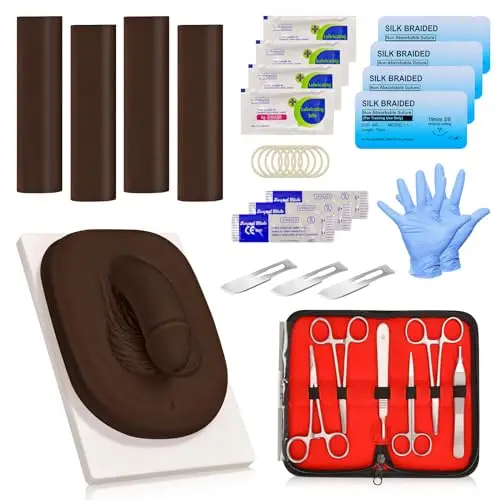 |
MedEduQuest Adult Male Circumcision Trainer Kit for Medical Students | 4.3 | 5 | $75.25 | $10.18 | Simulation set for training, includes step-by-step circumcision tools, designed for hands-on proficiency; durable materials; clear instructions. |
Table data sourced from [1].
This bestseller underscores robust institutional purchasing for training and education. Buyers seeking scalable procurement should target kits with high durability, multipurpose components (surgical and non-surgical simulation), and verifiable instructional support for improved learning outcomes. For mass training deployments, wholesale price points offer significant value and margin.
Procuring PrePex circumcision devices or related non-surgical solutions requires rigorous supplier evaluation, technical documentation scrutiny, and alignment with target market requirements. Here’s a strategic template for procurement professionals:
Supplier Evaluation Criteria
Quality Control and Inspection
Logistics and Delivery
Certification and Market Compliance
Common Procurement Pitfalls and How to Avoid Them
Competitive Advantages of Sourcing PrePex-Type Devices
Procurement professionals should actively integrate supplier benchmarking, clinical literature review, and risk mitigation plans into purchasing decisions. Leveraging these strategies ensures that device acquisitions are safe, effective, and market-responsive.
As the global market for non-surgical circumcision devices moves forward, procurement professionals stand before a transformative opportunity. The convergence of public health goals, regulatory innovation, and robust training infrastructure produces a field where rapid scale, superior safety, and user acceptability are finally achievable at operationally viable costs.
Key trends to track over the next 6-12 months:
For buyers and procurement managers, confidence lies in sourcing from credentialed suppliers, leveraging clinical evidence, and adapting to the evolving regulatory and cultural landscape. The actionable intelligence provided here serves as a strategic scaffold—enabling you to seize today’s market opportunities, avoid costly missteps, and future-proof purchasing decisions as the field advances into 2027. Make the move. Empower your sourcing—turn data into decisive action and lead the way as non-surgical circumcision devices reshape global health procurement. Now is the time to harness bestsellers, leverage social insights, and ride the wave of innovation toward safer, more efficient outcomes. Your next transaction could be the difference that saves lives, reduces costs, and establishes your operation as a market leader.