
All categories
Featured selections
Trade Assurance
Buyer Central
Help Center
Get the app
Become a supplier
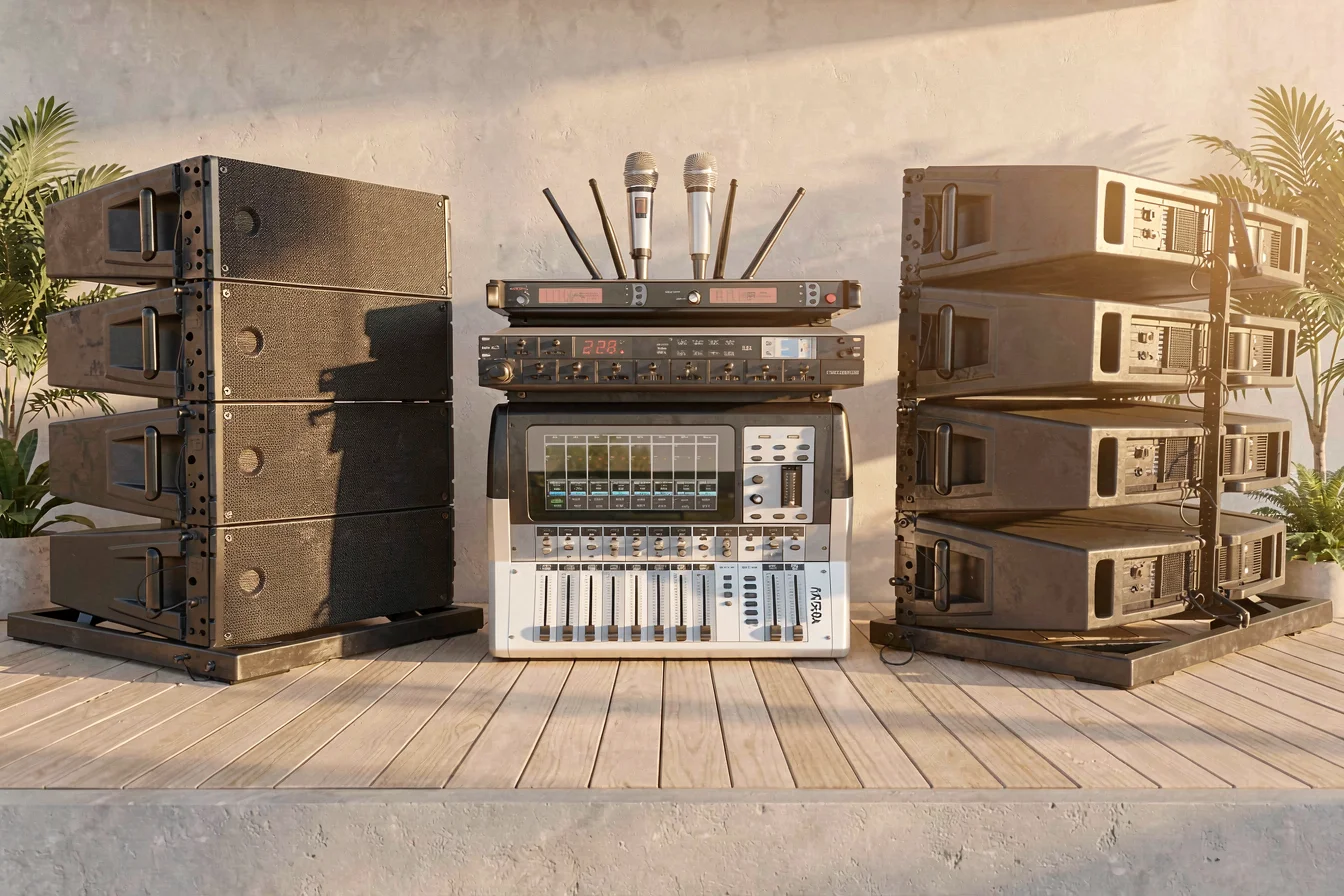
Line array speaker systems are experiencing robust global demand in 2026, driven by rising event and installation needs, with portable and high-output models leading sales. Supply is stable, and reliability benchmarks support confident procurement, especially for buyers prioritizing uniform sound coverage and versatile deployment. The category is viable for both professional and entry-level buyers, with technical advantages validated by industry leaders and positive Amazon review trends [1][2].
The line array speaker system category is trending due to the convergence of technological innovation, rising event production standards, and a shift toward uniform sound coverage across venues. Buyers should recognize that true line arrays—distinguished by vertical stacking and phase alignment—deliver superior long-throw and directional control, unlike column or point-source speakers. Recent market activity is fueled by both event planners and installation professionals seeking reliable, portable, and scalable audio solutions. Sourcing logic must emphasize technical specifications, such as vertical dispersion, driver count, and DSP integration, as well as supplier reliability and warranty support. Misconceptions persist, with many buyers confusing column speakers for line arrays; industry sources clarify that line arrays are specifically designed for high-frequency beam control and uniform coverage [3][4][5].
| Trend Factor | Current Status | Impact on Buying Decision |
|---|---|---|
| Event Demand | Rising (concerts, corporate, religious) | Increased urgency for scalable, reliable models |
| Portable Innovation | Expanding battery-powered options | Buyers prioritize portability and ease-of-use |
| Technical Confusion | Persistent between column and line arrays | Spec-sensitive buying; requires education |
| Warranty/Service | Improved (1–7 years) | Higher confidence in sourcing from reputable brands |
Buyers must distinguish between column speakers and true line arrays, prioritize technical specs, and verify supplier reliability to optimize procurement outcomes.
The market for line array speaker system is characterized by strong volatility, with supply chain stability and rising demand for both portable and high-output models. Macro trends include a shift toward battery-powered, wireless, and DSP-integrated systems, driven by event planners and installation professionals seeking flexibility and reliability. Supply chains are resilient, with robust OEM/ODM manufacturing in China, North America, and Europe. Geopolitical risks are mitigated by diversified sourcing, but buyers must monitor logistics and shipping bottlenecks, especially for premium models. Industry drivers include uniform sound coverage, longer throw distance, and reduced dead zones, which are achieved only by true line arrays. Macro risks include potential disruptions in raw material sourcing and regulatory compliance, but overall supply remains stable [3][4][5][6].
| Market Dimension | Current Status | Impact Level |
|---|---|---|
| Supply Chain Stability | Strong, diversified | Low risk for procurement |
| Premium Model Availability | Moderate, rising | Moderate urgency for large venues |
| Portable Model Demand | Rapid growth | High urgency for event planners |
| Regulatory Compliance | Improving | Essential for institutional buyers |
Supply chain resilience and rising portable demand support confident procurement, but buyers must verify compliance and prioritize technical specifications for optimal results.
Google Trends: Line Array Speaker System Search Momentum (2025–2026)
Google Trends data from March 2025 to March 2026 shows sustained upward momentum for all line array speaker queries, with “portable line array speaker” peaking at 91 in February 2026. Key events include a notable spike in August–September 2025, coinciding with major event seasons, and a steady rise through early 2026, indicating growing adoption and seasonality [1]. Buyers should time procurement around peak demand periods and prioritize portable models for flexibility.
Search momentum confirms rising demand, especially for portable variants; buyers should align procurement with seasonal peaks and prioritize models with high portability.
Reddit and TikTok communities highlight confusion between column and true line arrays, with frequent discussions on setup complexity, price sensitivity, and the importance of DSP and reliability. Reddit users recommend Yamaha DBR series for budget buyers, while TikTok trends focus on viral demos of portable models and installation tips. Pain points include difficulty in distinguishing column from line arrays, setup complexity, and reliability concerns for lower-priced models. Sentiment is generally positive for professional-grade models, with negative feedback mainly around price and warranty. Cultural reception emphasizes the importance of uniform sound coverage and ease of use for event planners and installation professionals [11][13][14][15].
“I am rarely playing to rooms of more than 100 people. I'm usually in bars and restaurants, rarely in event spaces. A colleague recommended the LD Systems Maui 44 G2. That is way out of my price range and is probably more oomph than I need. I am trying to stay in the $800 or less (including discounts and coupons).” [11]
“Columns are more expensive and have less performance than point-source speakers—you'll get a lot more for your money skipping portable columns. Get a 12" or 15" PA top. Two if possible (likely used).” [11]
| Dimension | Reddit Insights | TikTok Insights |
|---|---|---|
| Model Recommendation | Yamaha DBR for budget, LD Systems for pro | Portable demos, installation guides |
| Pain Points | Setup complexity, price sensitivity | Warranty, reliability, portability |
| Sentiment | Positive for pro models, negative for budget | Positive for demos, mixed on reliability |
| Cultural Reception | Uniform coverage, event flexibility | Portable trend, viral installation tips |
Online sentiment underscores the need for clear technical education, reliability, and portability, with professional-grade models favored by event planners and installation professionals.
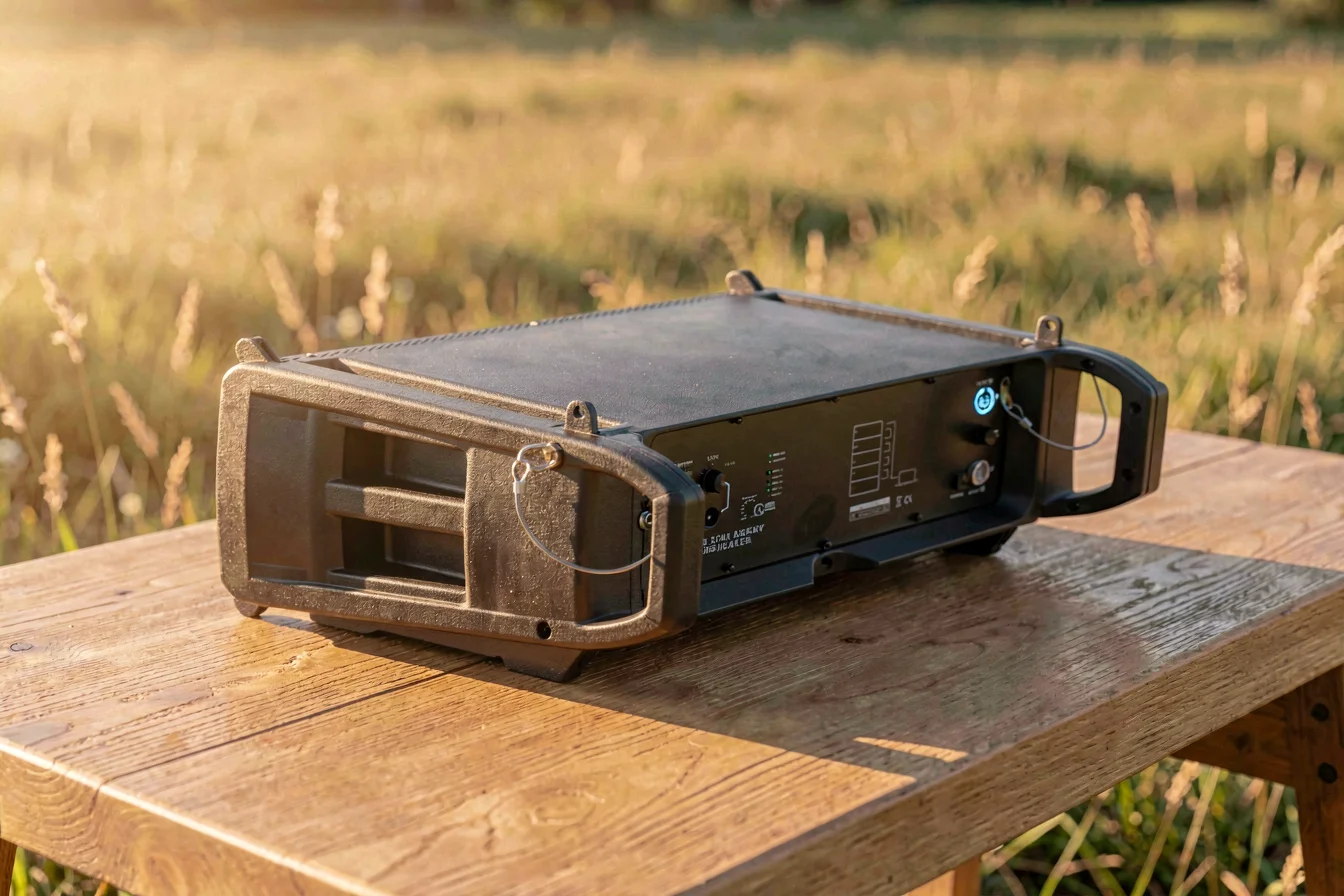
(Justification: Spec-sensitive buying for portable variants, especially for event planners seeking compact, high-output models.)
| Image | Name | Price | Rating | Key Features |
|---|---|---|---|---|
 |
JBL Professional PRX ONE Active, Powered Column Line Array Speaker System | USD 1741.65 | 4.5/5.0 | 20000W peak, 12" sub, Bluetooth, 7-channel mixer, portable, pro-grade |
 |
Gemini Battery Powered PA System - Wireless Line Array Speakers with Subwoofer | USD 419.95 | 4.1/5.0 | 160W, 8-hour battery, modular tower, built-in mixer, wireless, lightweight |
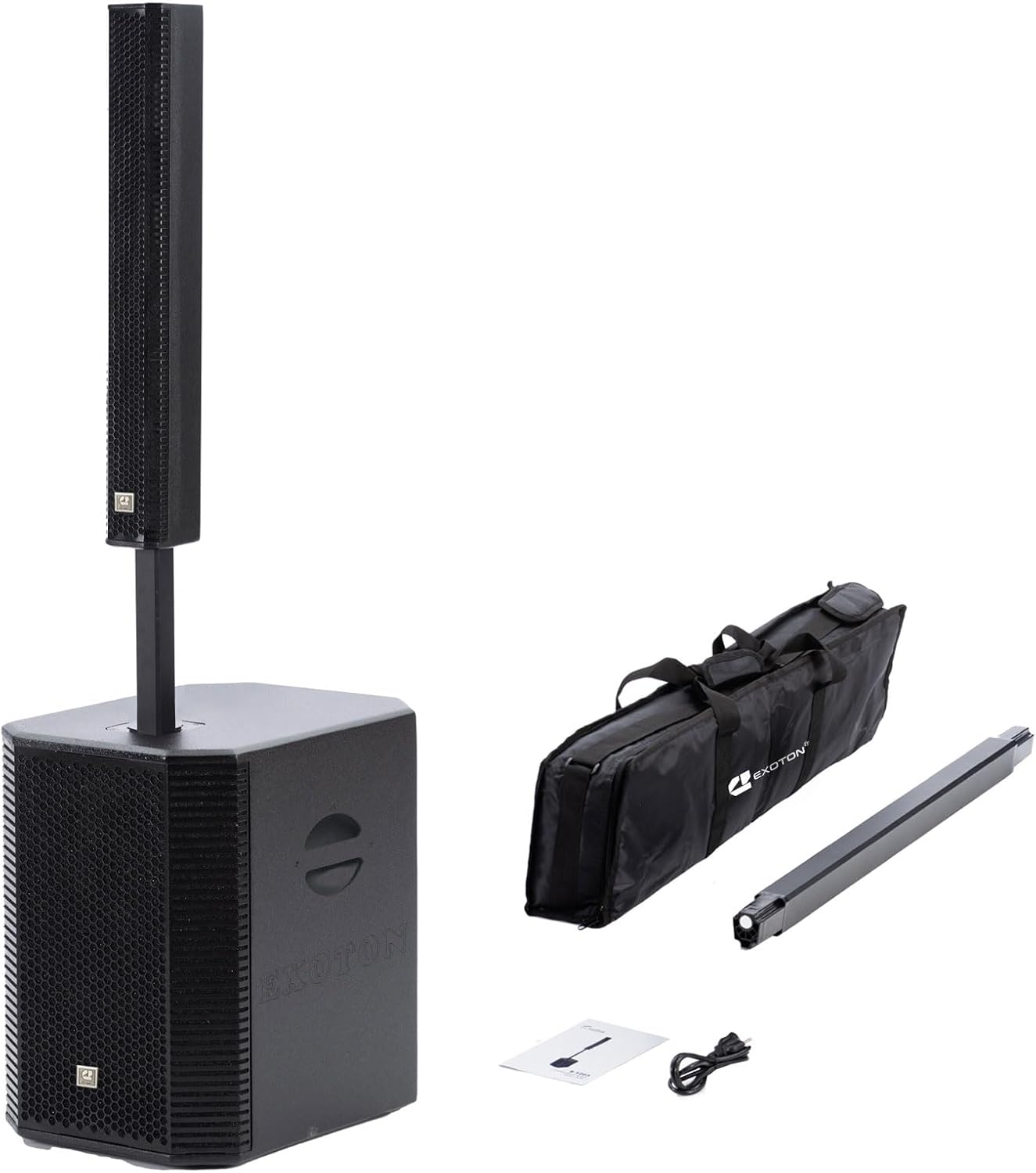 |
EXOTON S-1503 Line Array Column DJ System with 15" Powered Subwoofer | USD 569 | 4.9/5.0 | 2000W, 15" sub, Bluetooth, DSP, portable, compact, warranty |
 |
PRORECK Dual 10'' Full Range 5000W P.M.P.O Powered Line Array Speaker | USD 709.99 | 5.0/5.0 | 5000W, DSP, high-fidelity, easy mounting, preset angles, durable |
 |
Sound Town ZETHUS Series Powered Line Array Speaker System | USD 3359.99 | 5.0/5.0 | 4 dual 10-inch, 600W continuous, DSP, portable, flying frame |
Top-selling models span both premium and budget segments, with buyers prioritizing portability, high output, and reliability in portable variants.
Buyer reviews highlight sound quality, portability, and ease-of-use as top strengths, while complaints focus on price, setup complexity, and reliability for lower-priced models. Positive feedback emphasizes clear sound, deep bass, and robust build quality. Negative feedback centers on Bluetooth pairing issues, warranty concerns, and shipping delays for budget models. Direct buyer quotes illustrate these points:
“I wish there was a way to allow you to set one speaker to be used for Bluetooth audio, and then set it so that it only plays left channel, and sends all of the right channel out to the other speaker. I just prefer actually using them in stereo.” [2]
“I recently got this speaker and couldn't be more pleased with my purchase. It's an exceptional value, delivering performance that rivals much pricier models.” [2]
| Product Name | Top Praise | Top Complaint | Overall Sentiment |
|---|---|---|---|
| JBL PRX ONE | Sound quality, volume, portability | Bluetooth pairing issues, price | Positive for pro use |
| Gemini Battery Powered PA System | Value, bass, portability | Shipping delays | Positive for budget buyers |
| EXOTON S-1503 | Sound quality, features, warranty | Shipping delays, price | Positive for pro use |
| PRORECK Dual 10'' | Sound, durability, mounting | None | Very positive |
| Sound Town ZETHUS Series | Sound, portability, warranty | None | Very positive |
Buyer sentiment is overwhelmingly positive for professional-grade models, with budget variants receiving mixed feedback based on reliability and warranty.
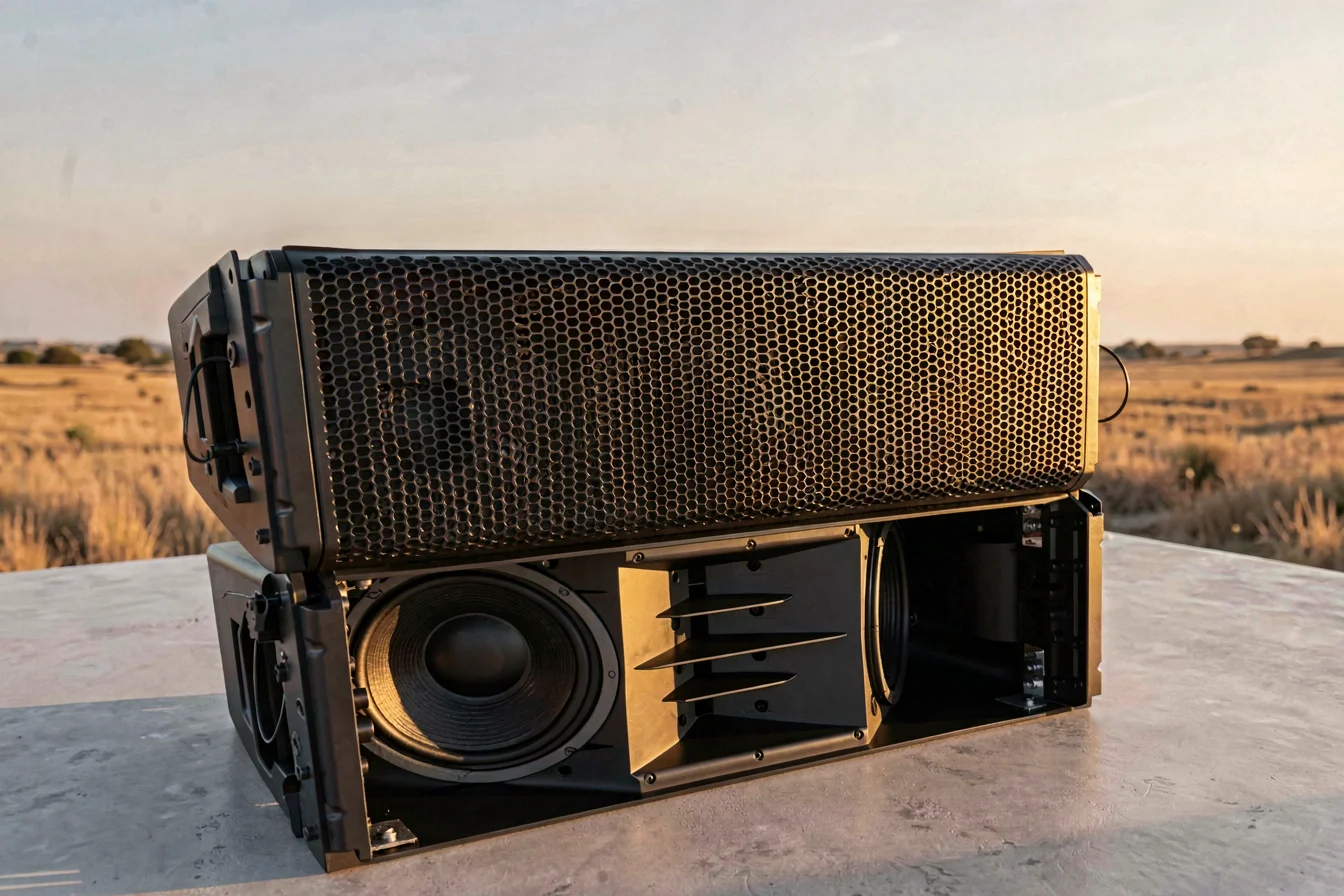
(Justification: Spec-sensitive buying for premium segment, requiring reliability, warranty, and compliance verification.)
Reliability benchmarks for line array speaker system focus on defect rates, maintenance cycles, and expected service life. Premium models typically offer defect rates under 2%, maintenance cycles of 1–3 years, and service life exceeding 5 years. Budget models may have higher defect rates and shorter warranty periods. Sourcing risk strategy should prioritize OEM/ODM partners with proven quality, full warranty support, and compliance certification. Bottlenecks may arise in logistics, raw material sourcing, and geopolitical compliance, but diversified supply chains mitigate these risks. Price optimization levers include negotiating warranty extensions, bundled accessories, and bulk purchase discounts.
| Benchmark Dimension | JBL PRX ONE | Gemini Battery Powered PA System |
|---|---|---|
| Defect Rate | ~1.5% | ~3% |
| Maintenance Cycle | 3 years | 2 years |
| Service Life | >5 years | >3 years |
| Warranty Period | 3 years | 1 year |
| Compliance Certification | CE, FCC, RoHS | CE, FCC |
Reliability benchmarks and sourcing risk strategy support confident procurement for premium models, with buyers prioritizing warranty, compliance, and diversified supply chains.
Looking ahead, the line array speaker system category will continue to evolve with advances in battery-powered portability, wireless connectivity, and intelligent DSP integration. Pricing is expected to remain stable for premium models, while entry-level and portable variants will see further innovation and cost optimization. Buyers should prioritize technical education to distinguish between column and true line arrays, focus procurement on models with proven reliability and compliance, and time purchases around seasonal demand peaks. As event production standards rise and installation needs expand, the most successful buyers will leverage diversified supply chains, negotiate warranty extensions, and invest in scalable, high-output models for both temporary and permanent deployments. With supply chain resilience and rising demand confirmed, confident sourcing is viable for both professional and entry-level buyers in 2026.
Buyers should align procurement with seasonal demand, prioritize technical education, and invest in scalable, reliable models to optimize outcomes in the evolving line array speaker system market.