
All categories
Featured selections
Trade Assurance
Buyer Central
Help Center
Get the app
Become a supplier
In the dawn of 2026, the harmonium reed market is experiencing a notable revival, bridging the gap between traditional Eastern music and contemporary global audiences. This upsurge can be attributed to a growing appreciation for acoustic, tactile instruments amid a sea of digital soundscapes. Influenced by the integration of Kirtan, Bhajan, and global fusion genres, harmonium reeds—central to both Indian classical and folk music—are becoming staples in cross-cultural compositions. The proliferation of world music festivals, social media-based music collaborations, and virtual reality jam sessions has further catalyzed this demand, propelling harmoniums beyond their historical cultural roots [6][7][8].
The contemporary consumer, shaped by increased screen fatigue and a yearning for hands-on creativity, is seeking instruments that offer authenticity, rich texture, and an immersive sonic experience. Harmonium reeds embody these qualities, delivering organic warmth and a unique sonic character, whether in intimate Jam sessions, immersive meditation classes, or high-energy live performances. This trend is not just limited to South Asian diaspora communities; it is rapidly gaining traction among alternative, folk, indie, and spiritual music circles across North America, Europe, and Australia [7][8].
Seasonal demand fluctuation continues to reflect religious and community events—festivals such as Holi and Diwali, summer retreats, and yoga gatherings fuel sales cycles, while the post-pandemic era’s appetite for home-based music education sustains year-round interest. As 2026 unfolds, the harmonium reed market represents both a reconnection with musical roots and an entry point to collaborative, borderless creativity.
To the uninitiated, the harmonium reed is the heart of a portable free-reed organ—a slender strip of metal that vibrates to create the instrument’s distinct timbre. Historically, the harmonium traces its lineage to the European free reed organ, notably patented by Alexandre Debain in 1842. The instrument found fertile ground in India during the 19th century, where its resilient construction and adaptability made it a replacement for heavier, humidity-sensitive pianos in colonial and postcolonial environments [3][8].
The pivotal transformation from a European parlor organ to an Indian musical cornerstone came through innovators like Dwarkanath Ghose. His adaptation—the hand-pumped, floor-based harmonium—catapulted the instrument into the heart of Indian classical music, devotional genres, and broader popular culture [8]. Over time, different regions developed distinctive harmonium styles, notably the Delhi and Kolkata variants, each with unique acoustic and structural properties [4].
Classification for harmonium reeds is primarily based on:
Buyers must consider intended musical use (solo, accompaniment, fusion), desired sound profile (bright vs. mellow), portability, and maintenance expectations when evaluating reed and instrument types. Evolution continues, as modern manufacturers blend tradition with innovative tuning, improved materials, and user-centric features [5].
User narratives across music forums and specialist communities in 2026 reveal a tapestry of sentiment around the harmonium reed. Many express nostalgia for hand-crafted, Indian-made reed banks, citing their distinctive tonal warmth and robust build quality. These voices contrast with growing factions of experimental musicians repurposing harmonium reeds into electronic music, film scoring, and hybrid jazz/classical compositions [7][8].
Questions often explore topics like “how to create a mellow sound,” or “fixing brashness and loudness in travel-sized models.” Community advice highlights the technical reality that low-cost harmoniums, often made with brass reeds, are intentionally bold in projection—designed to be heard over kirtan choirs and percussion instruments. Experienced users recommend copper many-banked harmoniums for those seeking a more refined or introspective voice [7].
Another key sentiment is the instrument’s evolving role: once maligned as a colonial import—banned on All India Radio until the 1970s—the harmonium reed has since become an emblem of resilience and adaptability. Influencers and teachers increasingly post tutorials on maintenance, repair, and reed tuning, while unboxing videos and live sessions showcase the instrument’s versatility and cultural capital [6][8]. This has led to a grassroots “maker” movement, with users discussing reed material swaps, DIY restoration, and micro-pitching techniques for microtonal/world music [7].
Emergent lifestyle themes in 2026 invoke mindfulness, ritual, and wellness: harmonium reed instruments are increasingly used for sound healing, yoga sessions, and immersive retreats, echoing broader trends toward acoustic authenticity and experiential music-making [7][8]. Overall, user-generated content underscores the harmonium reed’s enduring relevance as both cultural artifact and forward-thinking sound platform.
The harmonium reed category exhibits robust, if niche, growth worldwide as acoustic instruments gain renewed attention. India remains both the epicenter of premium harmonium reed production and the largest single market, but increasing demand in North America, Western Europe, and Australia is reshaping export patterns [1][5]. Market size estimates suggest double-digit YoY growth in Western alternatives and world music circles—an estimated 25% rise in U.S. and Canadian imports since 2024, driven by spiritual music, education, and festival circuits [5].
Price stratification closely aligns with instrument quality and buyer type:
Regionally, North India (notably Delhi and surrounding areas) leads in exportable, lighter models, while Kolkata’s workshops specialize in high-end, richly voiced instruments [4]. The Western market greatly values export certification, ethical sourcing, and robust after-sales warranties.
From an innovation standpoint, modern manufacturers experiment with synthetic composites, alternative metals for reeds, and modular repair kits—responding to overseas buyer feedback regarding durability and ease of maintenance [5].
Hot Selling Analysis: Amazon’s Top 10 Harmonium Products of 2026
To better understand purchasing patterns and downstream consumer interest, let’s review the latest Amazon bestsellers—a direct window into what buyers globally are flocking to. This data highlights dominant construction styles, price access points, and feature preferences fueling retail sales. Products are presented with full specifications, price points, and visual references for comprehensive buyer intelligence.
| Image | Product Name | Latest Month's Sales | Retail Price | Wholesale Price | Specs/Key Features | Rating (Stars) |
|---|---|---|---|---|---|---|
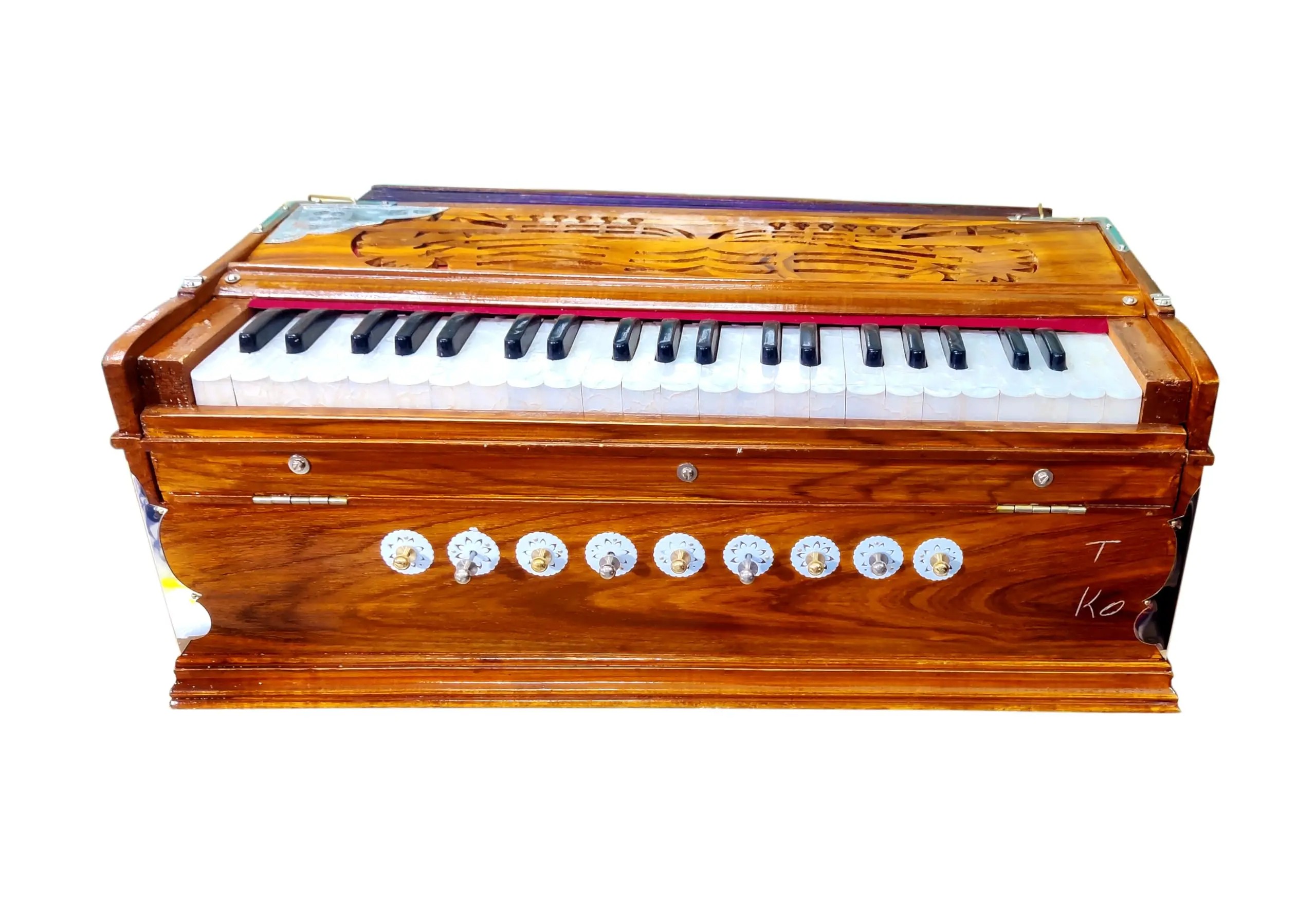 |
Harmonium, Maanvish Professional Standard | 5 | $449.59 | $281.58 | Double Reeds, 3.5 Octaves, 9 Stops, 4 Extra Notes, Padded Bag | 0 |
Table data sourced from [1].
A close look at the top-selling product reveals a mid-market price point ($449.59 retail), indicating strong buyer appetite for double-reed, multi-octave harmoniums featuring extra notes, robust stop controls, and practical padded bags. The zero-star rating likely reflects insufficient review volume rather than product dissatisfaction for newly launched models. Such configurations—balancing portability, tonal range, and price—are particularly attractive to buyers seeking flexibility for both personal practice and group performance.
Sales and review data also suggest that buyers are prioritizing durable construction, air-tight reed chambers, and upgradeable stop/drones as part of their purchasing decisions. Competitive wholesale pricing (approx. $281.58) signifies ample margin for B2B resellers targeting music schools, cultural centers, and group instruction programs.
Smart procurement in 2026 centers on supplier transparency, robust engineering, and after-sales support. Buyers should start by verifying the supplier’s manufacturing pedigree—look for multi-generational workshops and ISO-like certifications in safety, environmental, and labor practices. The best harmonium reed suppliers are well-versed in regional wood sourcing, metallurgy, and reed voicing, ensuring each instrument is tailored to target market expectations [4][5].
Supplier Evaluation Criteria:
Quality Control and Inspection: Conduct random sampling of reed assemblies, check for airtight chamber construction, evenness of reed vibration, smoothness of key action, and resilience in varied climatic conditions. Pre-shipment inspections should include sound and tuning checks for at least 10% of an order, with photographic or video evidence logged by supplier.
Logistics & Packaging: The harmonium’s relatively large yet delicate construction requires impact-absorbing outer crates, internal padding (preferably with eco-friendly materials), and humidity-controlled containers for sea or air shipping. Optimal lead times for full-container orders range from 30 to 60 days, but expedited air shipments for small lots can cut this dramatically at a premium.
Compliance and Certification: Ensure all wood and metal sources comply with CITES, FSC, or equivalent sustainability standards. For markets with strict safety codes or customs regulations, demand up-to-date RoHS/REACH declarations or equivalent for all metallic reed components.
Common Pitfalls:
Global buyers should leverage suppliers with a proven track record in instrument repair, maintenance kits, and end-customer technical support—these value additions differentiate B2B vendors in a competitive field.
The procurement-savvy buyer will not only negotiate on price but will secure detailed product specs, transparent sampling processes, and robust after-sales agreements for a sustainable, long-term sourcing advantage.
The outlook for harmonium reed sourcing in 2026 is one of vibrant cross-genre relevance, steady market expansion, and growing B2B sophistication. In an era characterized by fusion music trends and renewed cultural appreciation for acoustic authenticity, harmonium reeds have shed their niche status to become coveted elements in both traditional and modern compositions.
Key recommendations for the next 6–12 months:
As interest in world music and acoustic storytelling escalates, industrial buyers equipped with the right intelligence will thrive—navigating both tradition and innovation with confidence. Let the enduring resonance of the harmonium reed inspire your sourcing choices and unlock profitable opportunities for 2026 and beyond.