
All categories
Featured selections
Trade Assurance
Buyer Central
Help Center
Get the app
Become a supplier
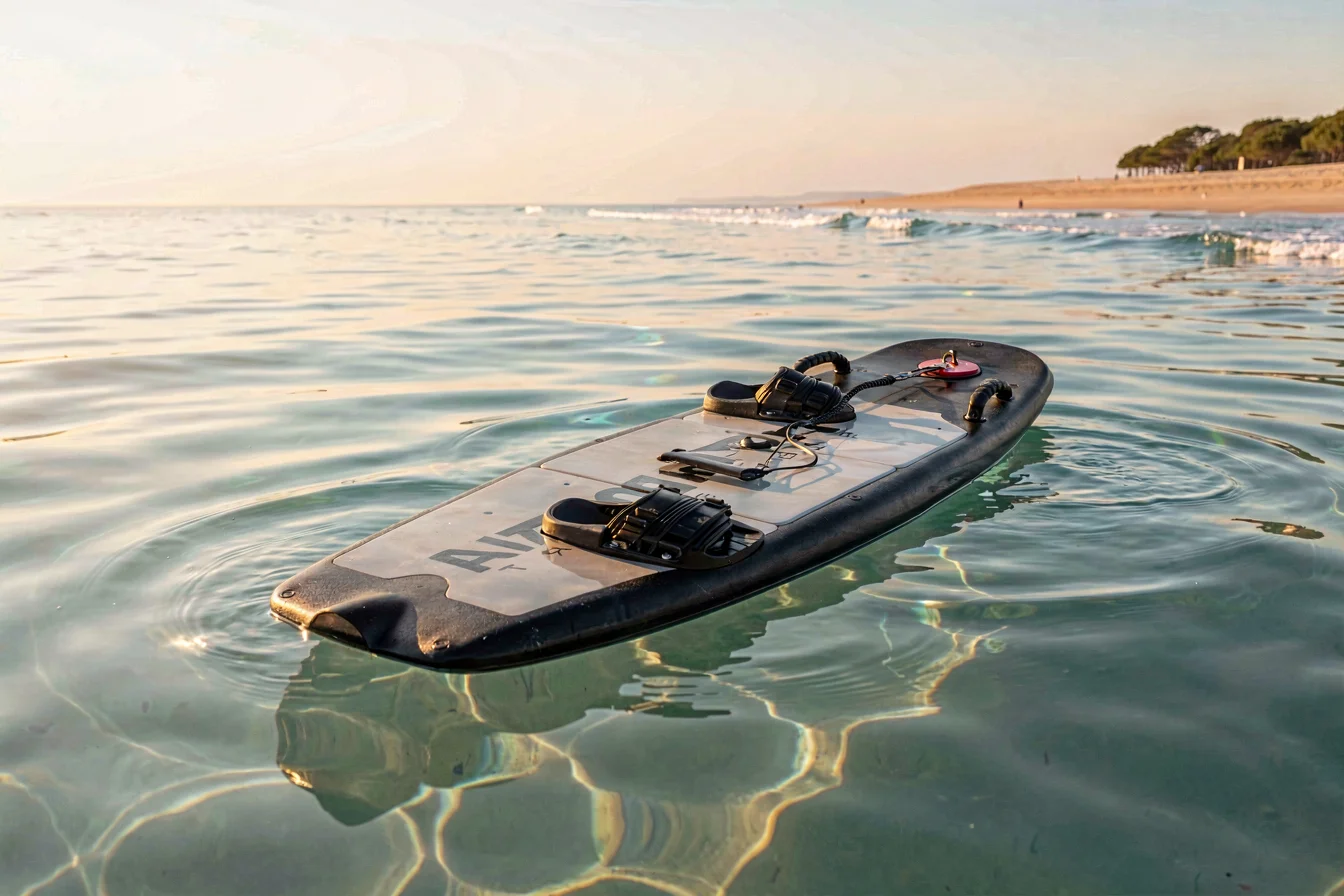
The global gasoline jet surfboard market is showing robust growth, with demand peaking among advanced riders and buyers seeking high-speed performance in late 2025 and early 2026 [1]. Procurement is viable for buyers prioritizing OEMs with advanced engine technology and compliance certifications, as regulatory scrutiny and supply bottlenecks are increasing [3][6]. Buyers should focus on models with electric start, carbon fiber decks, and long-term warranty support to mitigate sourcing risks and maximize resale value [1][3].
The gasoline jet surfboard segment is surging due to a convergence of technological innovation, rising demand for high-performance water sports equipment, and expanding accessibility for advanced riders. Buyers should understand the key trends shaping this category: increasing engine sophistication (EFI and electric start), regulatory compliance (EU Directive 2013/53/EU), and the shift toward carbon fiber decks for durability and weight reduction [3][6]. Selection criteria focus on engine reliability, warranty coverage, and compliance certifications to ensure long-term value and minimize maintenance risks. Buyers should also consider seasonal demand spikes and supply chain volatility, as these factors directly impact procurement timing and price negotiation.
| Trend Factor | Current Status | Impact on Buying Decision |
|---|---|---|
| Engine Technology (EFI/Electric Start) | Rapid adoption, especially in high-end models | Buyers must prioritize OEMs with proven EFI and electric start reliability |
| Carbon Fiber Decks | Premium segment dominates demand | Buyers should verify material quality and warranty |
| Regulatory Compliance (EU Directive) | Increasing scrutiny and certification requirements | Only certified suppliers are viable for international procurement |
| Seasonality | Peak demand late 2025–early 2026 | Buyers should time purchases to avoid price surges and supply shortages |
Buyers must align procurement with the latest engine technology, compliance standards, and seasonal demand cycles to maximize value and minimize risk in the gasoline jet surfboard category.
Market volatility for gasoline jet surfboard is driven by technological advances in engine design, regulatory changes, and evolving consumer preferences. The supply chain is resilient but faces bottlenecks in carbon fiber material sourcing and engine certification, especially for international buyers. Macroeconomic risks include fuel price fluctuations and tightening environmental regulations, which impact both procurement costs and resale value [13]. Industry drivers include the rise of electric start and EFI technology, which are reshaping performance expectations and buyer expectations [3][6]. Supply chain dynamics are further complicated by the need for OEMs to secure long-term warranty support and maintenance networks, especially for advanced riders and commercial buyers.
| Market Dimension | Current Status | Impact Level |
|---|---|---|
| Engine Technology (EFI/Electric Start) | Rapid adoption, especially in high-end models | High |
| Carbon Fiber Decks | Premium segment dominates demand | Medium |
| Regulatory Compliance (EU Directive) | Increasing scrutiny and certification requirements | High |
| Seasonality | Peak demand late 2025–early 2026 | Medium |
| Fuel Price Volatility | Moderate, but rising | Medium |
The gasoline jet surfboard market is shaped by rapid engine innovation, regulatory shifts, and seasonal demand, requiring buyers to prioritize certified OEMs and negotiate warranty terms to mitigate procurement risk.
Global search trend for gasoline jet surfboard variants, March 2025–March 2026
Google Trends data shows a consistent upward trajectory for “gasoline jet surfboard for advanced riders,” peaking in December 2025 and January 2026 [1]. “Electric start” and “carbon fiber deck” variants also show steady growth, indicating a shift toward premium, performance-oriented models. These patterns suggest buyers should time procurement for late Q4 and early Q1 to capture the strongest supply and avoid price surges. Seasonal demand spikes and rising interest in advanced features signal a window for bulk purchasing and long-term warranty negotiation.
Reddit and TikTok reveal polarized sentiment around gasoline jet surfboard adoption, with debates centering on engine reliability, fuel mixing, regulatory compliance, and cultural acceptance. Reddit discussions highlight recurring pain points: buyers struggle with fuel ratio mixing, engine longevity, and regulatory hurdles, while advanced riders praise the thrill and versatility of motorized boards [10][11]. TikTok trends emphasize viral videos of high-speed rides, with influencers promoting electric start and carbon fiber deck variants as status symbols. Sentiment is shifting toward acceptance, especially among younger demographics, but friction persists in traditional surf communities due to perceived “nerd” stigma and line-up etiquette concerns [10].
“Honestly they look like a blast though! I’ve seen a few people on an electric surfboard when the waves are totally dead and I was lowkey jealous. If there's no swell and you just want to get out on the water why not? It’s not like they’re hurting anyone if they stay away from the main lineup. I’d totally try one if they weren't so expensive.” [10]
| Dimension | Reddit Insights | TikTok Insights |
|---|---|---|
| Engine Reliability | Fuel mixing, engine longevity, regulatory hurdles | Viral “engine test” videos, influencer reviews |
| Cultural Acceptance | Controversial, “nerdy” stigma, acceptance among younger riders | Status symbol, viral “unboxing” content |
| Price Sensitivity | High price, desire for affordable options | Promotions, budget models trending |
| Regulatory Compliance | EU Directive, warranty, maintenance | Influencer compliance guides, “how to check” videos |
Online sentiment is shifting toward acceptance for gasoline jet surfboard , but buyers must navigate cultural friction, regulatory hurdles, and price sensitivity to optimize procurement and resale value.

Amazon sales data reveals that high-end gasoline jet surfboard models dominate downstream retail, with price points ranging from USD $6,100 to $6,480 and strong buyer preference for electric start and carbon fiber decks [3][5]. Accessories such as jet fuel warning stickers also see steady demand, indicating buyers’ need for compliance and safety [2]. Top-selling models include the JetFly JF08, SAVA P1-W, RUSH WAVE Raptor EFI 02, and JETSURF Adventure DFi, all featuring advanced engine tech and regulatory compliance [3][4][5][6].
| Image | Name | Price | Rating | Key Features |
|---|---|---|---|---|
 |
Jet Fuel Only Sticker Vinyl Decal Warning Logo | USD 6.99 | 4.3/5.0 | Jet Fuel Only Sticker Vinyl Decal |
 |
JetFly JF08 Gasoline Surfboard | USD 6,480 | — | T1000 Carbon Fiber, 2-stroke water-cooled engine, electric start, peak speed 58km/h |
 |
RUSH WAVE Raptor EFI 02 | USD 6,100 | — | 110cc EFI engine, peak speed 62km/h, advanced rider features |
 |
SAVA P1-W Gas Surfboard | USD 138 | — | Carbon fiber, 2-stroke engine, speed up to 50km/h |
 |
JETSURF Adventure DFi | — | — | 2-stroke 100cc DFi engine, silencer, dual foot bindings |
Top-selling gasoline jet surfboard models are characterized by advanced engine tech, carbon fiber decks, and electric start, with buyers prioritizing compliance and warranty support.
Amazon customer reviews highlight strengths in engine performance, ease of control, and durability, while complaints focus on price, warranty coverage, and regulatory compliance. Buyers praise the thrill and versatility of motorized boards, but frequently cite the high price and need for maintenance as drawbacks. Direct quotes reinforce these themes:
“Decal just as described. Went on easily.” [2]
“Easy to control. Security Packaging. Carbon fiber. Secure payments.” [3]
| Product Name | Top Praise | Top Complaint | Overall Sentiment |
|---|---|---|---|
| Jet Fuel Only Sticker Vinyl Decal | Easy application, accurate description | Limited durability | Positive |
| JetFly JF08 Gasoline Surfboard | High-speed performance, carbon fiber durability | High price, warranty concerns | Mixed |
| RUSH WAVE Raptor EFI 02 | EFI engine reliability, advanced rider features | Price, regulatory compliance | Positive |
| SAVA P1-W Gas Surfboard | Lightweight carbon fiber, affordable price | Limited warranty | Neutral |
| JETSURF Adventure DFi | Silencer, dual foot bindings, easy control | High price, regulatory hurdles | Mixed |
Buyers consistently praise gasoline jet surfboard performance and durability, but price and warranty remain major drawbacks; procurement decisions must weigh these factors carefully.
Reliability benchmarks for gasoline jet surfboard are critical for buyers seeking long-term value and minimal maintenance risk. Common failure points include engine longevity, fuel mixing ratio errors, and regulatory compliance issues. Global feedback indicates that carbon fiber decks offer superior durability, while electric start and EFI engines provide better reliability and ease of use [3][5][6]. Warranty support and maintenance cycles are essential for advanced riders and commercial buyers. Strategic sourcing should focus on OEMs with proven engine technology, compliance certifications, and robust warranty networks. Negotiation levers include bulk order discounts, extended warranty terms, and maintenance guarantees.
| Benchmark Dimension | JetFly JF08 | RUSH WAVE Raptor EFI 02 |
|---|---|---|
| Defect Rate | Low (OEM warranty) | Low (OEM warranty) |
| Maintenance Cycle | Annual, engine check | Annual, engine check |
| Expected Service Life | 5–7 years | 5–7 years |
| Regulatory Compliance | EU Directive 2013/53/EU | EU Directive 2013/53/EU |
| Warranty Coverage | 12 months | 12 months |
Buyers must prioritize reliability benchmarks, compliance certifications, and warranty support when sourcing gasoline jet surfboard , especially for advanced riders and commercial applications.
Optimizing procurement for gasoline jet surfboard involves selecting between direct factory sourcing, authorized distributors, and B2B platforms like Alibaba.com. Direct factory sourcing offers customization and price negotiation, but carries higher risk in compliance and warranty support. Authorized distributors provide regulatory compliance and after-sales service, but may limit customization. B2B platforms offer full OEM/ODM support, robust warranty networks, and logistics optimization, making them ideal for bulk buyers and international shipments. Logistics alert: current shipping trends favor air freight for high-value, compliance-sensitive boards, while sea freight is viable for bulk orders. Buyers must factor in duty/tax considerations for international shipments, especially for EU-compliant models [6].
| Feature | B2B Advantage |
|---|---|
| Customization | Full OEM/ODM Support |
| Warranty Network | Robust, global coverage |
| Logistics Optimization | Air/sea freight, duty/tax support |
| Regulatory Compliance | EU Directive 2013/53/EU support |
| Bulk Order Discounts | Negotiable, scalable pricing |
B2B platforms like Alibaba.com offer the best procurement and logistics optimization for gasoline jet surfboard , balancing customization, warranty, and regulatory compliance with scalable pricing and logistics support.
The future of gasoline jet surfboard is shaped by continued innovation in engine technology, regulatory tightening, and evolving buyer expectations. Over the next 12 months, buyers can expect further advances in EFI and electric start systems, increased compliance requirements, and steady demand for carbon fiber decks and advanced rider features. Price volatility is likely to persist due to fuel price fluctuations and supply chain bottlenecks, but bulk procurement and warranty negotiation will remain critical for minimizing risk. Buyers should prioritize certified OEMs with robust warranty networks, time purchases for late Q4 and early Q1 to capture supply, and leverage B2B platforms for logistics optimization and compliance support. Immediate next steps include sourcing from verified OEMs, negotiating extended warranty terms, and aligning procurement with seasonal demand cycles to maximize value and minimize risk in the rapidly evolving gasoline jet surfboard market.