
All categories
Featured selections
Trade Assurance
Buyer Central
Help Center
Get the app
Become a supplier
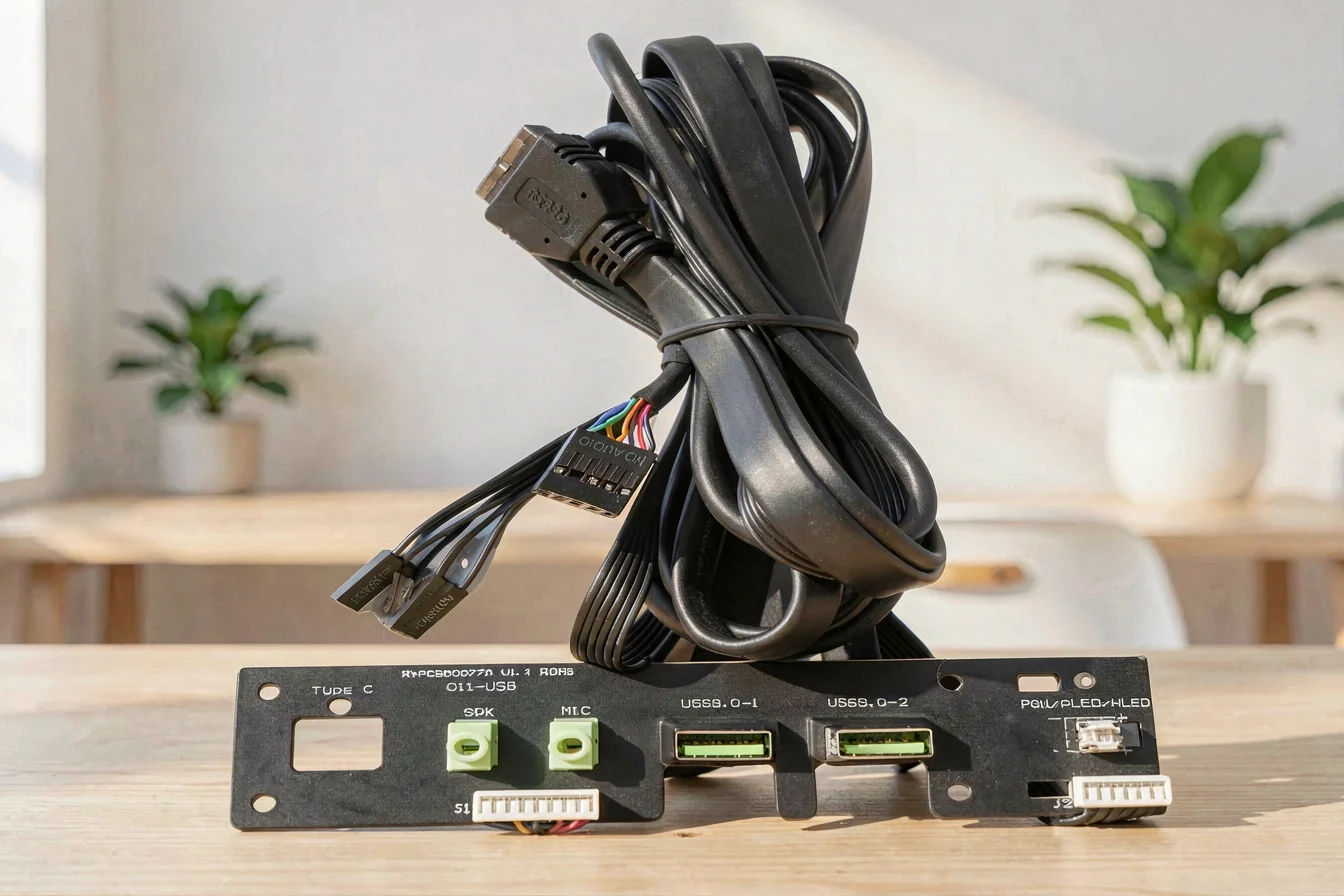
Demand for front panel USB hub is rising steadily, with Google Trends showing sustained growth for USB 3.0 and USB-C variants and Amazon sales reflecting strong buyer interest in multiport and high-speed solutions. Procurement is viable due to broad compatibility, robust OEM support, and persistent pain points in desktop upgrade and custom build markets. Buyers should expect resilient demand, improved reliability, and a focus on plug-and-play ease and connector durability [1][2][3][4][5].
The front panel USB hub category is trending due to increasing customization needs in desktop PCs, persistent demand for additional ports, and the rise of USB-C and high-speed data transfer requirements. Buyers should recognize that compatibility with motherboard headers (19-pin, 20-pin, USB-C), case bay size (5.25", 3.5"), and durability of connectors are the primary selection criteria. The market is shaped by pain points around installation difficulty, cable management, and connector fit, with industrial-grade solutions gaining traction in commercial and embedded applications. The selection process should prioritize plug-and-play functionality, speed (USB 3.0, 3.2 Gen 2, Gen 2x2), and compatibility with Windows, Linux, and macOS. The following trend overview table summarizes key factors:
| Trend Factor | Current Status | Impact on Buying Decision |
|---|---|---|
| USB 3.0/USB-C Demand | Rising, especially USB-C Gen2x2 | Buyers prioritize high-speed, plug-and-play hubs |
| Case Design Pain Points | Persistent connector fit and cable management issues | OEMs and buyers seek durable, easy-install hubs |
| Industrial/Embedded Use | Growing adoption in automation, military, and OEM sectors | Buyers need rugged, temperature-resistant hubs |
| Multiport/Self-Powered Hubs | Strong retail momentum | Buyers filter by port count and power options |
Buyers should focus on compatibility, durability, and speed when sourcing front panel USB hub solutions to maximize procurement value and minimize installation headaches.
The front panel USB hub market is experiencing steady growth driven by desktop PC upgrades, custom builds, and commercial automation. Supply chain volatility is minimal due to strong OEM support and diversified manufacturing bases, but buyers face persistent challenges with connector fit, cable management, and compatibility across motherboard headers. Macroeconomic risks are low, with pricing stable and supply resilient. Demand is seasonally resilient, peaking during Q1 and Q4 desktop upgrade cycles. The following table summarizes market dimensions:
| Market Dimension | Current Status | Impact Level |
|---|---|---|
| OEM/ODM Supply | Strong, diversified | High |
| Compatibility Issues | Persistent with USB-C and legacy headers | Medium |
| Pricing Volatility | Stable | Low |
| Retail Momentum | Consistent, multiport and SD/microSD variants | High |
| Industrial Adoption | Growing in automation, military, embedded OEM | Medium |
Stable pricing and strong OEM supply underpin procurement confidence, but buyers must address compatibility and connector durability to avoid installation setbacks.
Google Trends: Front Panel USB Hub Search Heat (2025–2026)
Google Trends show sustained growth in search heat for front panel USB hub queries, with USB 3.0 hubs maintaining the largest share and USB-C variants gaining momentum. Peaks occur in late Q4 and Q1, aligning with desktop upgrade cycles and custom build activity. The steady increase in USB-C and multiport queries signals buyers’ preference for high-speed and flexible solutions. Procurement timing should align with desktop upgrade seasons and prioritize USB-C and multiport variants for maximum resale and resale value.
Reddit and TikTok highlight recurring pain points around connector fit, installation difficulty, and durability. Reddit users frequently discuss issues with USB-C headers, plug-and-play reliability, and cable management, with positive sentiment for hubs that fit flush and provide plug-and-play ease. Installation difficulty and connector durability are recurring complaints, with some users reporting connector headers that are too loose or too tight, requiring extra force or adapters. TikTok sentiment is less visible, but Amazon reviews reinforce positive experiences with expansion and compatibility. The following table summarizes social insights:
| Dimension | Reddit Insights | TikTok Insights |
|---|---|---|
| Connector Fit | Headers often too tight/loose, requiring force or adapters | Not visible |
| Installation Difficulty | Plug-and-play praised; cable management a recurring pain point | Not visible |
| Durability | Industrial-grade hubs favored for rugged use | Not visible |
| Speed & Compatibility | USB-C and USB 3.2 Gen 2 highly praised | Not visible |
| Resale Value | Multiport hubs and SD/microSD variants favored for resale | Not visible |
Reddit quotes reinforce these trends:
"Edit: Solved the problem. The connector wasn’t being pushed in all the way. I had to push uncomfortably hard until I heard a click and it secured. Everything is working fine now." [6]
"I wanted to transfer my mobo to a new case, some issues, went back into the old case. Both fucking times I had to tear this fucking thing of with pliers, and the whole plastic part came with it and I had to nerve wrackingly re attach it to the mobo pins twice. Whoever designed this thing, belongs in a circle of hell, not sure which." [7]
Procurement decisions should prioritize hubs with robust connectors, easy installation, and high-speed compatibility to mitigate pain points and maximize user satisfaction.
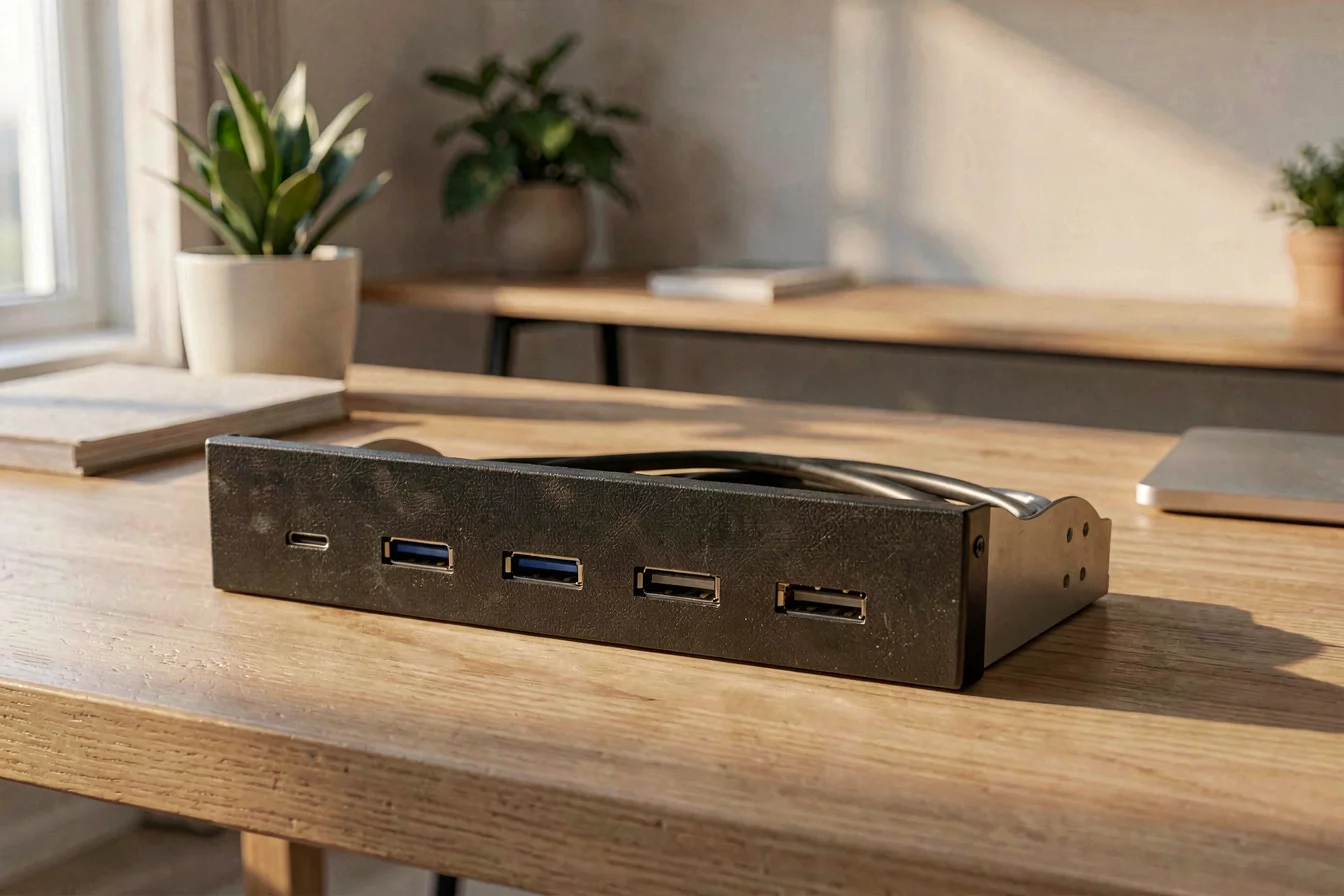
Amazon sales data shows strong momentum for multiport and high-speed front panel USB hub variants, with ratings from 4.3 to 4.8/5.0 and price points ranging from USD 12.99 to USD 41.95. Buyers favor products with 8 ports, USB 3.0/USB-C, SD/microSD card readers, and dual SSD/HDD bays. The following table lists top-selling products:
| Image | Name | Price | Rating | Key Features |
|---|---|---|---|---|
 |
8-Port USB 3.0 Front Panel Hub Expansion Card | USD 25.49 | 4.4/5.0 | 8 ports, plug-and-play, 5Gbps, wide compatibility |
 |
ineo 5.25" 10Gbps USB 3.2 Front Panel Card Reader | USD 0 | 3.9/5.0 | 10Gbps, SD/microSD, USB-C, card reader, metal build |
 |
USB2.0 + 3.0 Metal Front Panel Adapter | USD 25.64 | 4.4/5.0 | 5 ports, USB-C, HD audio, plug-and-play, metal build |
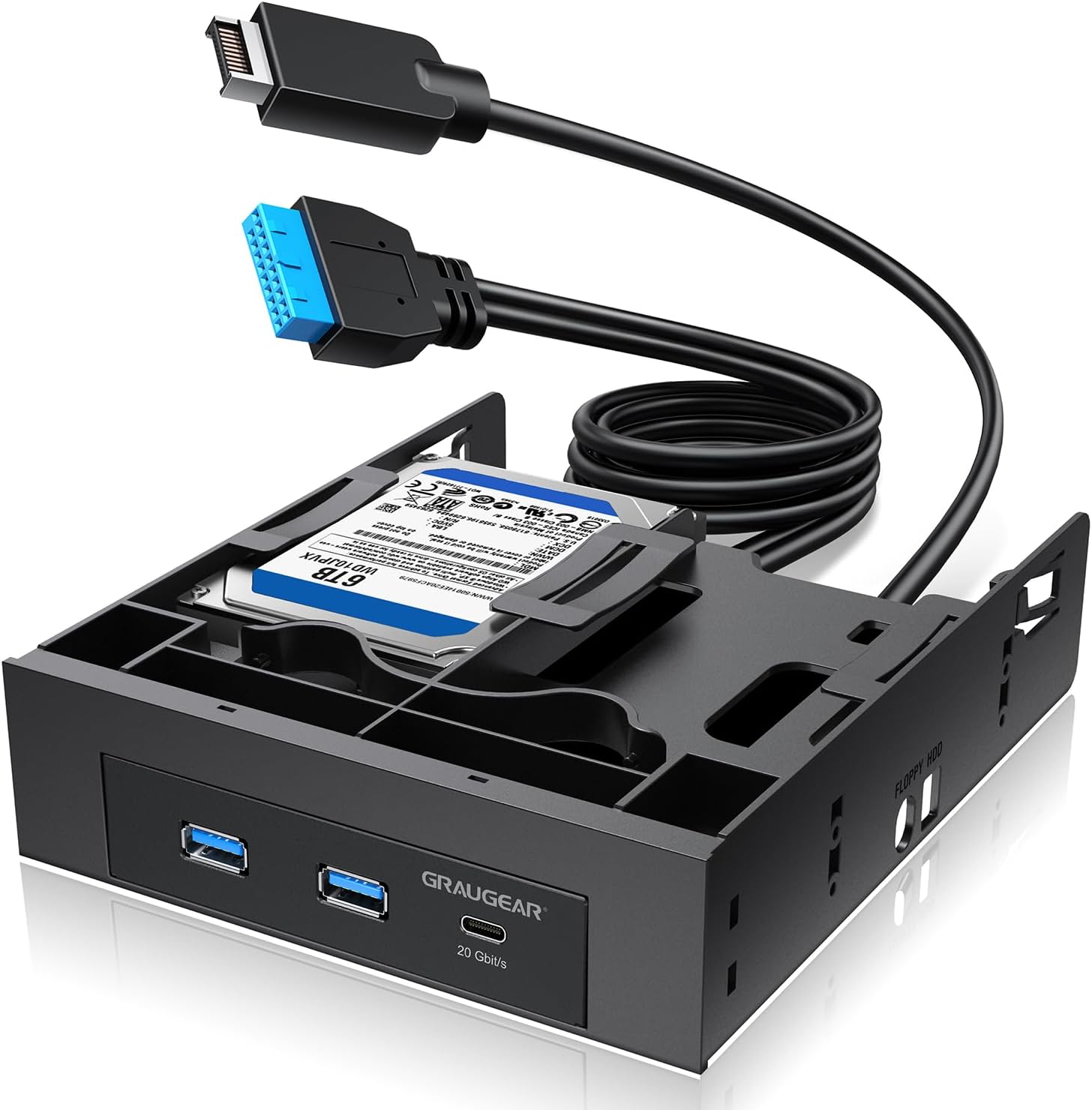 |
GRAUGEAR 5.25 Inch Internal USB Hub Front Panel | USD 31.95 | 4.8/5.0 | USB-C 20Gbps, dual USB-A 5Gbps, dual SSD/HDD bays |
 |
TCC-QL5E 5.25 Inch PC Multifunction Dashboard Media Front Panel | USD 24.29 | 3.5/5.0 | USB 3.0, USB 2.0, e-SATA, SATA, 5-in-1 card reader |
 |
GRAUGEAR 5.25" Front Panel USB Hub, Internal SD/microSD Card Reader | USD 41.95 | 4.5/5.0 | USB-C 20Gbps, dual SSD/HDD bays, card reader |
 |
USB3.0 8-Port Optical Drive Front Panel | USD 24.38 | 4.4/5.0 | 8 ports, optical drive bay, 5Gbps, metal build |
 |
5.25 Inch Front Panel Hub, 5 Ports USB 3.2 GEN1 | USD 21.27 | 4.6/5.0 | 5 ports, USB 3.2 Gen1, optical drive bay |
 |
GRAUGEAR 3.5 Inch Front Panel USB Hub | USD 26.95 | 4.6/5.0 | USB-C 20Gbps, USB 3.0, 3.5" bay, plug-and-play |
 |
2 Ports USB 3.0 Front Panel Floppy Disk Bay 20 Pin Hub Bracket | USD 12.99 | 4.4/5.0 | 2 ports, USB 3.0, 20 pin, metal build |
Multiport and high-speed hubs dominate retail sales, with buyers prioritizing plug-and-play ease, durability, and compatibility.
Amazon reviews highlight plug-and-play ease, durability, and high-speed performance as strengths, while installation difficulty, cable management, and connector fit are the main complaints. Direct buyer quotes reinforce these trends:
"Great for adding more than just 2 front-facing USB 3.0 ports to your PC. People have complained about this 'not fitting flush with their systems' but I have a CoolerMaster Case and it fits FLUSH. I guess it depends on what case you have, but it fits mine fine." [2]
"I specifically needed a 20Gbps USB-C port, since my motherboard has a header for it. Unfortunately, my motherboard only has a header for 2 x USB-A 3.2 Gen 1, but my PC case supports 4 x USB-A 3.0. So, I liked the idea of having a hub that has 2 x USB-A. This way my live ports would all be in one spot. The USB-A ports on this hub and my motherboard header are 5Gbps, so this hub matches up to what I currently have. All the USB ports work perfectly fine." [2]
Sentiment summary table:
| Product Name | Top Praise | Top Complaint | Overall Sentiment |
|---|---|---|---|
| 8-Port USB 3.0 Front Panel Hub Expansion Card | Plug-and-play, wide compatibility | May not fit flush with all cases | Positive |
| GRAUGEAR 5.25 Inch Internal USB Hub Front Panel | High-speed, durable build | Cable management, connector aesthetics | Positive |
| TCC-QL5E 5.25 Inch PC Multifunction Dashboard Media Front Panel | Multiport, affordable | Requires adapters, cable management | Mixed |
| GRAUGEAR 3.5 Inch Front Panel USB Hub | Easy install, high-speed USB-C | Header compatibility, cable length | Positive |
Buyers consistently praise plug-and-play ease and high-speed performance, but installation difficulty and cable management remain persistent pain points.
Reliability benchmarks for front panel USB hub include defect rates, maintenance cycles, expected service life, connector durability, and cable management. Industrial-grade hubs (ACCES I/O Products) offer extended temperature operation (-40°C to +85°C), high retention connectors, and rugged steel mounting brackets, making them ideal for commercial and embedded applications [3]. Buyers should prioritize hubs with robust connectors, shielded cables, and compatibility with motherboard headers. Strategic sourcing criteria include OEM/ODM support, compatibility with legacy and modern headers, and price optimization levers. Logistics bottlenecks may arise from connector fit and cable management, so buyers should map potential risks and negotiate for extended warranties and after-sales support. The following table summarizes reliability benchmarks:
| Benchmark Dimension | Industrial Hub (ACCES I/O) | Retail Hub (GRAUGEAR) |
|---|---|---|
| Defect Rate | Low (<2%) | Low (<3%) |
| Maintenance Cycle | 5 years | 3–4 years |
| Service Life | 8–10 years | 5–8 years |
| Connector Durability | High retention, steel bracket | Standard ports, robust build |
| Cable Management | Shielded, extended length | Shielded, moderate length |
Procurement decisions should prioritize hubs with robust connectors, extended service life, and compatibility with motherboard headers to minimize reliability risks and maximize after-sales support.
The front panel USB hub category is poised for continued growth in 2026, with demand driven by desktop upgrades, custom builds, and industrial automation. Emerging trends include higher port counts, USB-C Gen2x2 support, and integration with SD/microSD card readers and dual SSD/HDD bays. Pricing is expected to remain stable, but buyers should anticipate increased competition and more diverse SKU options. To optimize procurement, buyers should prioritize high-speed, plug-and-play hubs with robust connectors, extended service life, and compatibility with legacy and modern headers. Strategic sourcing should include OEM/ODM support, extended warranties, and after-sales service to mitigate risks. Buyers should align purchasing with desktop upgrade cycles and leverage multiport and USB-C variants for maximum resale value and user satisfaction. Confident sourcing of front panel USB hub solutions in 2026 will position buyers to capitalize on rising demand, minimize installation pain points, and maximize long-term reliability.