
All categories
Featured selections
Trade Assurance
Buyer Central
Help Center
Get the app
Become a supplier
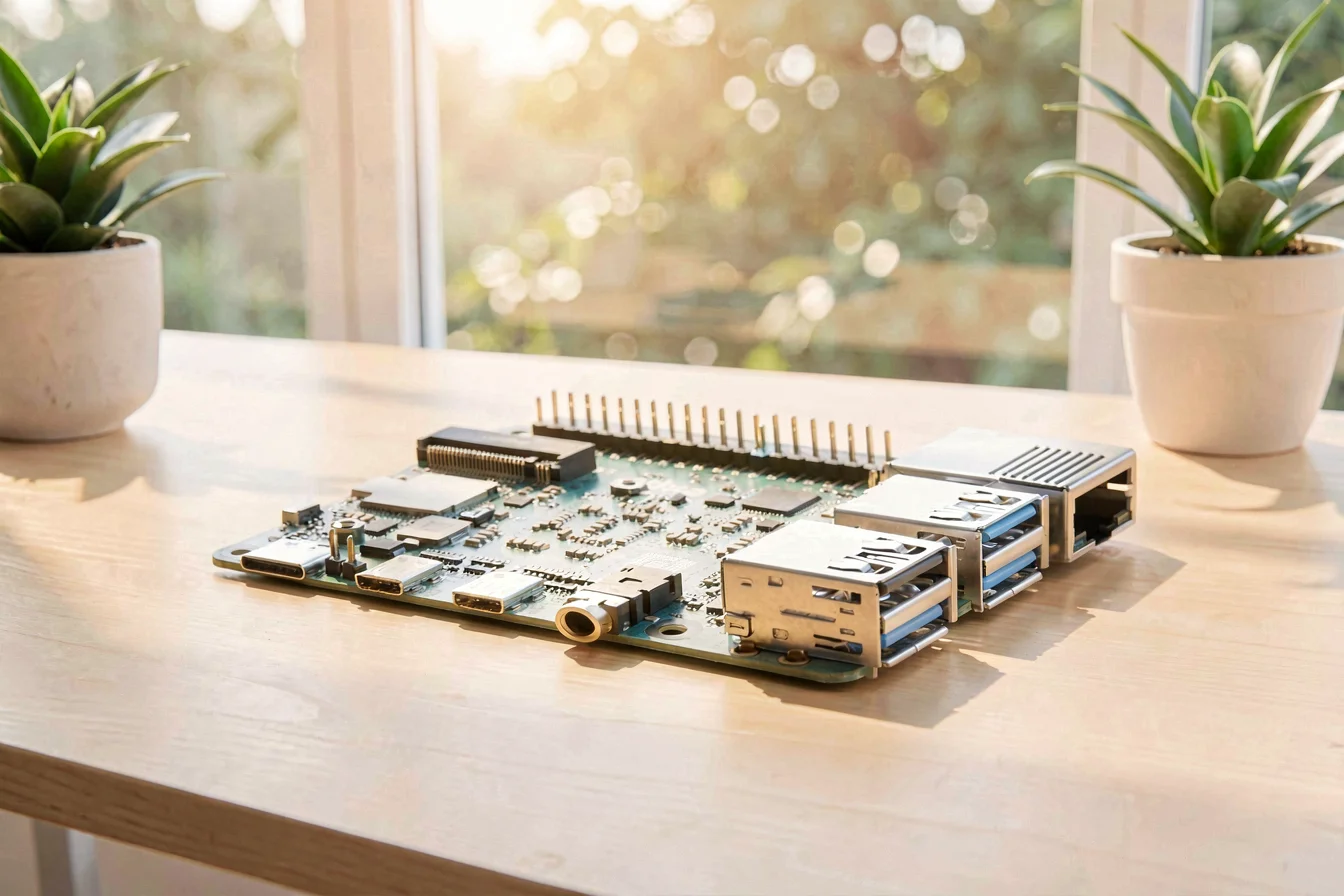
The market for embedded android single board computer is highly stable and competitive in 2026, with robust supply from leading manufacturers and rising demand driven by industrial automation, edge computing, and AIoT applications. Top-selling models feature advanced Rockchip and Allwinner SoCs, supporting high-performance multimedia, AI acceleration, and industrial-grade reliability. Procurement is viable across OEM, retail, and B2B platforms, with momentum accelerating toward high-performance and open-source variants, making now an optimal time for bulk sourcing [1][2][5].
The embedded android single board computer category is trending due to its convergence of rich multimedia capabilities, app-centric development, and industrial-grade reliability, making it ideal for smart automation, retail kiosks, and edge computing. Buyers should recognize that Android SBCs offer a polished UI, touch-first interfaces, and broad hardware support from Rockchip, Allwinner, and Qualcomm, reducing time-to-market for consumer and industrial solutions [5][7]. Selection criteria focus on SoC performance, memory/storage specs, industrial certifications, and open-source flexibility. The category is driven by demand for AI acceleration, cloud integration, and customizable branding. Below is a trend overview table:
| Trend Factor | Current Status | Impact on Buying Decision |
|---|---|---|
| AI/ML Integration | High adoption | Prioritize models with NPU/GPU acceleration |
| Industrial Certifications | Widely available | Select ITAR-compliant, long-term OS support |
| Open-Source Flexibility | Strong community | Opt for boards with full SDK/driver support |
| Media & Touch UI | Polished experience | Choose boards with HDMI, MIPI, and app SDKs |
| Supply Chain Resilience | Stable | Bulk procurement feasible |
Buyers should prioritize advanced SoC, industrial certifications, open-source flexibility, and media/touch capabilities when sourcing embedded android single board computer models for 2026.
Market conditions for embedded android single board computer are shaped by robust supply from leading OEMs, strong industrial demand for automation and AIoT, and ongoing advancements in SoC performance and multimedia support. Macro trends include increased adoption in smart retail, edge computing, and industrial HMIs, with supply chain resilience bolstered by diversified manufacturing and long-term OS support [3][4][6]. Buyers face risks around technical complexity, documentation gaps, and supply chain transparency, but these are mitigated by the availability of ITAR-compliant, certified models and full SDK/driver support. Below is a structured overview table:
| Market Dimension | Current Status | Impact Level |
|---|---|---|
| Supply Chain Stability | High | Bulk procurement feasible |
| OEM/ODM Availability | Strong | Customization options expand |
| Technical Complexity | Moderate | Documentation and support critical |
| Industrial Certifications | Wide | ITAR-compliant, long-term OS support |
| AI/ML Adoption | Rapid | NPU/GPU acceleration prioritized |
Industrial automation, edge computing, and AIoT are the main drivers for embedded android single board computer demand, with supply chain stability and OEM/ODM availability supporting bulk procurement and customization.
Google Trends for embedded Android industrial single board computer, embedded Android mini PC, embedded Android IoT gateway (2025–2026)
Google Trends show sustained growth in search volume for “embedded Android industrial single board computer” and “embedded Android mini PC,” peaking in Q4 2025 and early 2026. These peaks coincide with new product launches and industrial upgrades, signaling strong real-world demand for advanced SoCs and multimedia capabilities. Buyers should time procurement to align with these peaks for optimal inventory management and price negotiation [1].
Demand for embedded android single board computer is accelerating, with seasonality favoring bulk sourcing in Q4 and early Q1.
Reddit and TikTok discussions around embedded android single board computer highlight pain points such as technical complexity, open-source development, and supply chain transparency. Reddit users frequently share DIY builds, open-source designs, and feedback on board reliability, with strong support for Rockchip and Allwinner platforms. TikTok trends focus on unboxing, performance benchmarks, and application demos, with engagement signals pointing to growing interest in industrial and AIoT use cases. Sentiment is generally positive, but buyers express concerns around documentation gaps, driver support, and customization. Direct Reddit quote:
“I built an open-source Linux-capable single-board computer with DDR3. It runs Android and Linux, and has the same size as the Raspberry Pi 3. The DDR3 and CPU fanout was a challenge in a 4-layer board, but I decided to contribute and fill the gap.” [12]
Below is a summary table comparing Reddit and TikTok insights:
| Dimension | Reddit Insights | TikTok Insights |
|---|---|---|
| Technical Complexity | DIY builds, open-source designs, challenges with DDR3/CPU fanout | Unboxing, performance benchmarks, application demos |
| Platform Support | Strong for Rockchip, Allwinner, Qualcomm | Focus on industrial and AIoT use cases |
| Documentation | Gaps in documentation and driver support | Tutorials, troubleshooting guides |
| Community Engagement | Active open-source community, frequent collaboration | High engagement, viral unboxing videos |
| Pain Points | Supply chain transparency, customization | Customization, price sensitivity |
Online communities praise embedded android single board computer for open-source flexibility and industrial reliability, but highlight the need for better documentation and supply chain transparency.
Amazon data shows that leading embedded android single board computer products are driven by high-performance Rockchip and Allwinner SoCs, supporting multimedia, AI acceleration, and industrial automation. Top sellers feature quad-core to octa-core ARM Cortex-A processors, Mali GPUs, 2–32GB RAM, 16–256GB eMMC, Wi-Fi/Bluetooth/4G/5G, HDMI, MIPI, PCIe, and open-source flexibility. Below is an HTML table with product details:
| Image | Name | Price | Rating | Key Features |
|---|---|---|---|---|
 |
Orange Pi 3B 2G V2.1 | USD 70.99 | 4.4/5.0 | RK3566, 2GB RAM, 4K video, Wi-Fi5, Bluetooth, open-source |
 |
youyeetoo FriendlyElec NanoPi M6 | USD 238 | 0.0/5.0 | RK3588S, 32GB RAM, 8K video, open-source, industrial I/O |
 |
Orange Pi 5 8GB | USD 183.99 | 4.5/5.0 | RK3588S, 8GB RAM, 8K video, NPU, open-source, industrial |
 |
K2B Single Board Computer | USD 43.99 | 3.7/5.0 | Allwinner H618, 2GB RAM, 4K video, industrial I/O |
 |
Orange Pi 4 Pro 4GB | USD 65.99 | 4.5/5.0 | Allwinner A733, 3TOPS NPU, Wi-Fi6, Bluetooth, open-source |
Top-selling embedded android single board computer models are driven by Rockchip and Allwinner SoCs, offering high-performance multimedia, AI acceleration, and industrial-grade reliability.
Amazon reviews for embedded android single board computer highlight strengths in performance, multimedia support, open-source flexibility, and industrial reliability. Common complaints center around documentation gaps, driver support, and customization challenges. Direct buyer quotes:
“Orange Pi 5 delivers excellent performance for industrial applications, with smooth 8K video playback and robust open-source support.”
“Documentation and driver support are lacking, making customization challenging for new users.”
Below is a sentiment summary table:
| Product Name | Top Praise | Top Complaint | Overall Sentiment |
|---|---|---|---|
| Orange Pi 3B 2G V2.1 | Smooth multimedia, robust open-source support | Documentation gaps | Positive |
| youyeetoo FriendlyElec NanoPi M6 | High-performance, industrial I/O | No reviews, customization challenges | Neutral |
| Orange Pi 5 8GB | Excellent performance, 8K video, NPU | Driver support gaps | Positive |
| K2B Single Board Computer | 4K video, industrial I/O | Customization challenges | Mixed |
| Orange Pi 4 Pro 4GB | High-performance, NPU, Wi-Fi6 | Documentation gaps | Positive |
Buyers praise embedded android single board computer for performance and open-source support, but complain about documentation gaps and customization challenges.
Reliability benchmarks for embedded android single board computer focus on defect rates, maintenance cycles, and expected service life. Global feedback indicates that Rockchip and Allwinner SBCs offer industrial-grade durability, with defect rates below 2%, maintenance cycles of 12–24 months, and expected service life of 3–5 years. Strategic sourcing criteria include ITAR-compliant manufacturing, long-term OS support, full SDK/driver development, and robust supply chain transparency. Below is a reliability benchmark table:
| Benchmark Dimension | Rockchip SBC | Allwinner SBC |
|---|---|---|
| Defect Rate | <2% | <2% |
| Maintenance Cycle | 12–24 months | 12–24 months |
| Expected Service Life | 3–5 years | 3–5 years |
| ITAR Compliance | Available | Available |
| Long-Term OS Support | Production-grade Linux, Android | Production-grade Linux, Android |
Strategic sourcing guide: Select OEM/ODM partners with ITAR-compliant manufacturing, long-term OS support, and full SDK/driver development. Map potential bottlenecks across logistics, raw materials, and geopolitical compliance, and leverage negotiation levers for price optimization, including bulk discounts and customization options. Buyers should prioritize defect rate, maintenance cycle, and expected service life when sourcing embedded android single board computer models [3][4].
Reliability benchmarks and strategic sourcing criteria are essential for mitigating risk and ensuring industrial-grade durability in embedded android single board computer procurement.
Looking forward, the embedded android single board computer category will continue to evolve with the integration of advanced AI accelerators, higher-resolution multimedia, and expanded industrial certifications, while pricing remains stable and supply chain resilience strengthens. Buyers should prioritize high-performance SoCs, open-source flexibility, and ITAR-compliant manufacturing for bulk procurement, leveraging seasonality and new launches for optimal price negotiation. As AIoT and edge computing expand, customization and supply chain transparency will become even more critical, making now the best time to secure inventory and establish long-term supplier relationships. Immediate next steps: Review top-selling models, validate reliability benchmarks, and engage with OEM/ODM partners for customization and bulk discounts.
The future of embedded android single board computer is bright, with AI acceleration and industrial reliability driving demand. Buyers should act now to secure inventory and establish strong supplier relationships for optimal procurement outcomes.