
All categories
Featured selections
Trade Assurance
Buyer Central
Help Center
Get the app
Become a supplier
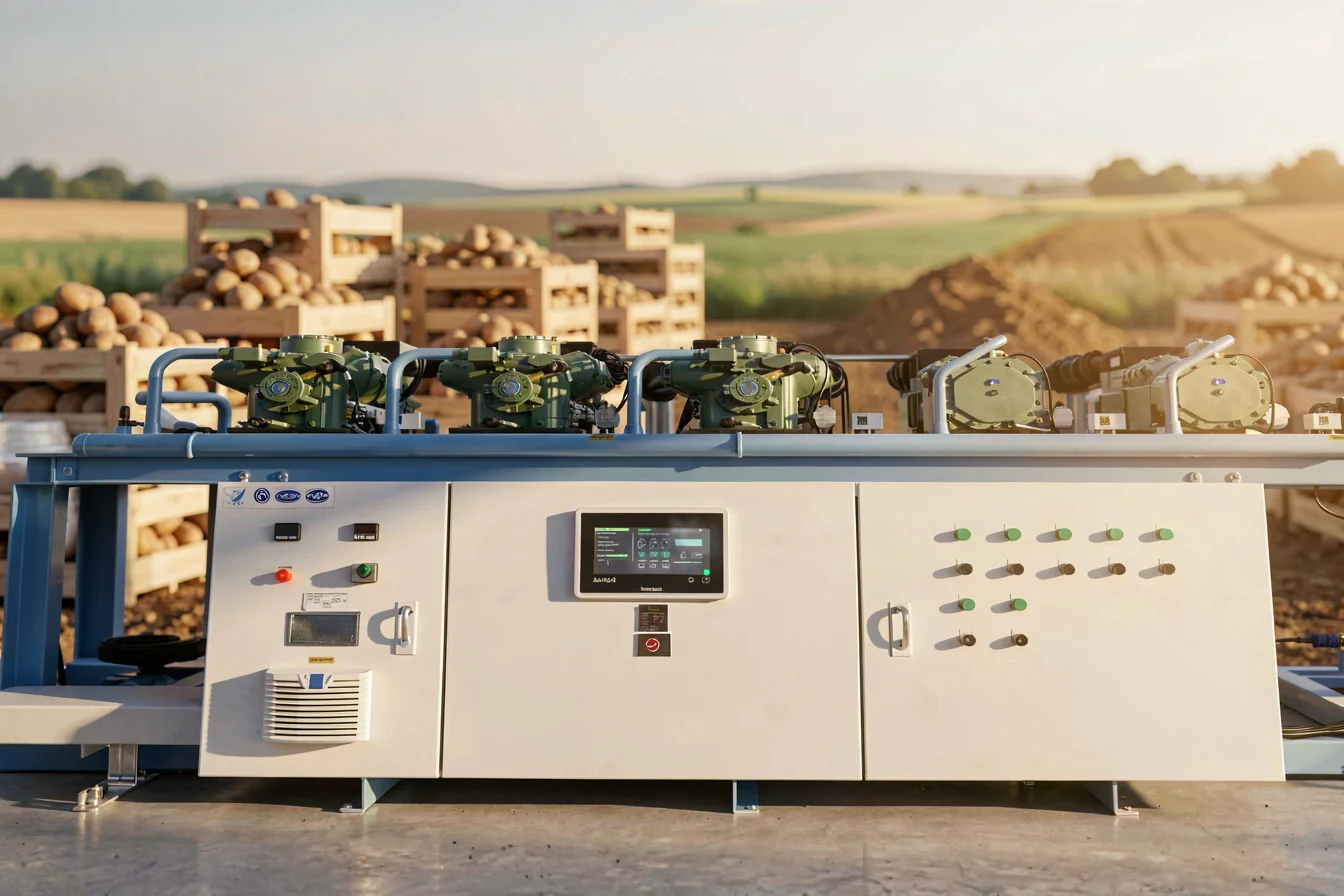
The market for cold storage for potato is experiencing robust growth, with search demand peaking in early 2026 and retail sales favoring storage solutions that prioritize temperature, humidity, and airflow [1][2]. Buyers should focus on scalable, high-humidity storage systems with reliable airflow management and compliance with food safety standards to optimize procurement and minimize spoilage. Supply chain resilience and technical facility upgrades remain critical for both industrial and retail segments [3][4][5][6][7].
Interest in cold storage for potato is surging due to increased global demand for fresh, processed, and seed potatoes, combined with stricter food safety regulations and the need for extended shelf life. The market is shaped by post-harvest logistics, supply chain volatility, and regional climate variability, making temperature, humidity, and airflow control essential for buyers. Retailers and industrial buyers must understand the technical specifications and compliance requirements to ensure quality preservation and minimize spoilage. The curated list below focuses on facilities and products that meet industry standards for storage volume, airflow, and material safety [3][4][5][6][7].
| Trend Factor | Current Status | Impact on Buying Decision |
|---|---|---|
| Search Demand | Peaking in early 2026 [1] | Drives urgency for procurement upgrades |
| Storage Technology | Advanced airflow, humidity control [3][4][5][6] | Mandatory for quality preservation |
| Retail Solutions | High demand for stackable, ventilated bins [2] | Influences SKU selection and order volumes |
| Supply Chain Volatility | Seasonal peaks, regional logistics risks [3][4] | Requires resilient sourcing strategies |
| Regulatory Compliance | Food safety, material certifications [3][4][5] | Critical for industrial buyers |
The cold storage for potato market is driven by global supply chain resilience, harvest seasonality, and regulatory demands for food safety. Industrial buyers face rising costs for high-capacity storage, while retail demand favors stackable, ventilated bins and eco-friendly materials. Macroeconomic risks include logistics bottlenecks, fluctuating raw material prices, and geopolitical disruptions, especially in high-volume regions like India, Africa, and Saudi Arabia [3][4]. Facility upgrades are increasingly required to meet both seed and processing potato storage needs, with optimal temperature ranges (2°C–10°C) and humidity (90–95%) mandated by leading industry sources [3][4][5][6][7].
| Market Dimension | Current Status | Impact Level |
|---|---|---|
| Storage Capacity | 2,000–10,000 MT [3][4] | High for industrial buyers |
| Temperature Control | 2°C–10°C (varies by potato type) [3][4][5][6][7] | Critical for quality preservation |
| Humidity Management | 90–95% RH [3][4][5][6][7] | Essential for minimizing weight loss |
| Airflow Distribution | Uniform airflow required [3][4][5][6] | Affects facility design and maintenance |
| Regulatory Compliance | Material safety, food certifications [3][4][5] | Mandatory for export and retail |
Global Search Interest in Cold Storage for Potatoes (2025–2026)
Search demand for “refrigerated storage for potatoes” surged in late Q4 2025 and early Q1 2026, reflecting seasonal harvest cycles and increased supply chain activity [1]. Peaks in late September and January coincide with potato harvest and distribution periods, signaling heightened buyer interest in storage solutions. This trend indicates buyers should time procurement to align with harvest cycles and prioritize facilities with scalable, flexible storage capacity. Buyers should leverage search trend data to optimize procurement timing and select storage solutions that match seasonal demand spikes.
| Image | Name | Price | Rating | Key Features |
|---|---|---|---|---|
 |
Razab 17 Cups Glass Storage Container | USD 27.99 | 4.7/5.0 | Airtight, leakproof, oven/freezer safe, BPA-free |
 |
HOTEC 5-Pack Fruit Storage Container | USD 21.79 | 4.6/5.0 | Leakproof, removable colander, BPA-free, stackable |
 |
Stackable Wire Basket Produce Organizer | USD 29.99 | 4.8/5.0 | Stackable, openable top, sturdy, bamboo lid |
 |
ZICOTO Metal Vegetable Bin Set | USD 32.99 | 4.7/5.0 | Powder-coated metal, vented, food safe, decorative |
 |
Verano Garden Potato Storage Bin | USD 89.99 | 5.0/5.0 | Rustic design, mesh doors, four-tier partition, removable drawer |
 |
Ventilated Potato Storage Bin Set | USD 34.97 | 4.2/5.0 | Matte black finish, ventilation holes, easy handle |
 |
Organic Cotton Potato Sacks | USD 15.99 | 4.5/5.0 | Washable, breathable, drawstring, eco-friendly |
 |
Kitchen Vegetable Storage Tins Set | USD 38.99 | 4.5/5.0 | Ventilation, stackable, printed patterns, food-safe |
 |
Potato Onion Garlic Storage Bag | USD 14.24 | 4.4/5.0 | Blackout lining, drawstring, large capacity, easy access |
 |
Ollieroo Bread Box | USD 54.99 | 4.6/5.0 | Double layer, bamboo, magnetic latch, multifunctional |
Buyer reviews highlight the importance of airtight seals, stackability, and material durability for cold storage for potato bins and containers. Stackable wire baskets and ventilated metal bins receive praise for holding heavy produce and maximizing countertop space. Cotton sacks and blackout-lined bags are favored for breathability and freshness, while bamboo bread boxes are appreciated for their rustic design and multifunctional use. Common complaints include boxes being smaller than expected, lids not fitting securely, and insufficient ventilation in some models.
"Very nice sizeable & sleek glass bowl! Can bake with it or use for various storage needs! Can store in freezer as well! The lid has a very excellent vacuum tight seal but still comfortable to open and easy to clean!" (Razab Glass Storage Container)
"I got these stackable storage bins to finally get my onions and potatoes under control, and it’s totally working. They look really nice, and the clear plastic sides make it super easy to see exactly what you have without opening anything." (Hudgan Pantry Organizers)
| Product Name | Top Praise | Top Complaint | Overall Sentiment |
|---|---|---|---|
| Razab Glass Storage Container | Durable, leakproof, versatile | Price moderate | Highly positive |
| HOTEC Fruit Storage Container | Drainage, stackable, easy to clean | Some lids fit loosely | Positive |
| Stackable Wire Basket | Sturdy, holds heavy produce, easy to stack | Small size for bulk | Very positive |
| ZICOTO Metal Vegetable Bin | Decorative, food-safe, vented | Boxes smaller than expected | Positive |
| Verano Garden Potato Storage Bin | Attractive, spacious, well made | Heavy, not portable | Very positive |
| Organic Cotton Potato Sacks | Breathable, washable, eco-friendly | Drawstring can loosen | Positive |
| Kitchen Vegetable Storage Tins | Ventilated, stackable, durable | Lids fit loosely | Positive |
| Ollieroo Bread Box | Sturdy, multifunctional, easy to assemble | Not airtight | Positive |
Reliability benchmarks for cold storage for potato facilities and products include defect rates, maintenance cycles, service life, and compliance with food safety standards. Industrial facilities must maintain uniform airflow, precise temperature (2°C–10°C), and humidity (90–95%) to prevent spoilage, sprouting, and weight loss [3][4][5][6][7]. Retail storage bins are evaluated for durability, stackability, and material safety. Buyers should select OEM/ODM partners with proven facility design, airflow management, and compliance credentials. Risk mitigation strategies include negotiating for scalable storage capacity, ensuring material certifications, and mapping logistics bottlenecks for raw materials and facility upgrades.
| Benchmark Dimension | Industrial Facility | Retail Bin |
|---|---|---|
| Defect Rate | ≤2% (with proper maintenance) [3][4] | ≤5% (material-dependent) [2] |
| Maintenance Cycle | Annual (airflow, humidification) [3][4] | Quarterly (cleaning, ventilation) [2] |
| Service Life | 10–15 years [3][4] | 5–10 years [2] |
| Compliance | Food safety, material certifications [3][4][5] | Material safety, stackability [2] |
| Airflow Management | Uniform distribution [3][4] | Ventilation holes [2] |
The outlook for cold storage for potato is shaped by continued innovation in airflow and humidity control, rising demand for eco-friendly materials, and the integration of smart monitoring systems in industrial facilities. Over the next 12 months, buyers should anticipate incremental price increases for high-capacity storage solutions, especially in regions facing supply chain bottlenecks and regulatory tightening. The procurement strategy should emphasize scalable, certified facilities with advanced airflow management, material safety compliance, and flexible storage options for both industrial and retail buyers. To maximize shelf life and minimize spoilage, buyers must time procurement to align with harvest cycles, leverage search trend data, and prioritize suppliers with proven reliability and compliance credentials. Immediate action includes sourcing upgrades, negotiating for scalable storage, and ensuring facility maintenance aligns with industry benchmarks. Buyers should prioritize temperature, humidity, and airflow management when sourcing cold storage for potato solutions, aligning procurement with harvest cycles and regulatory demands for maximum supply chain resilience.