
All categories
Featured selections
Trade Assurance
Buyer Central
Help Center
Get the app
Become a supplier
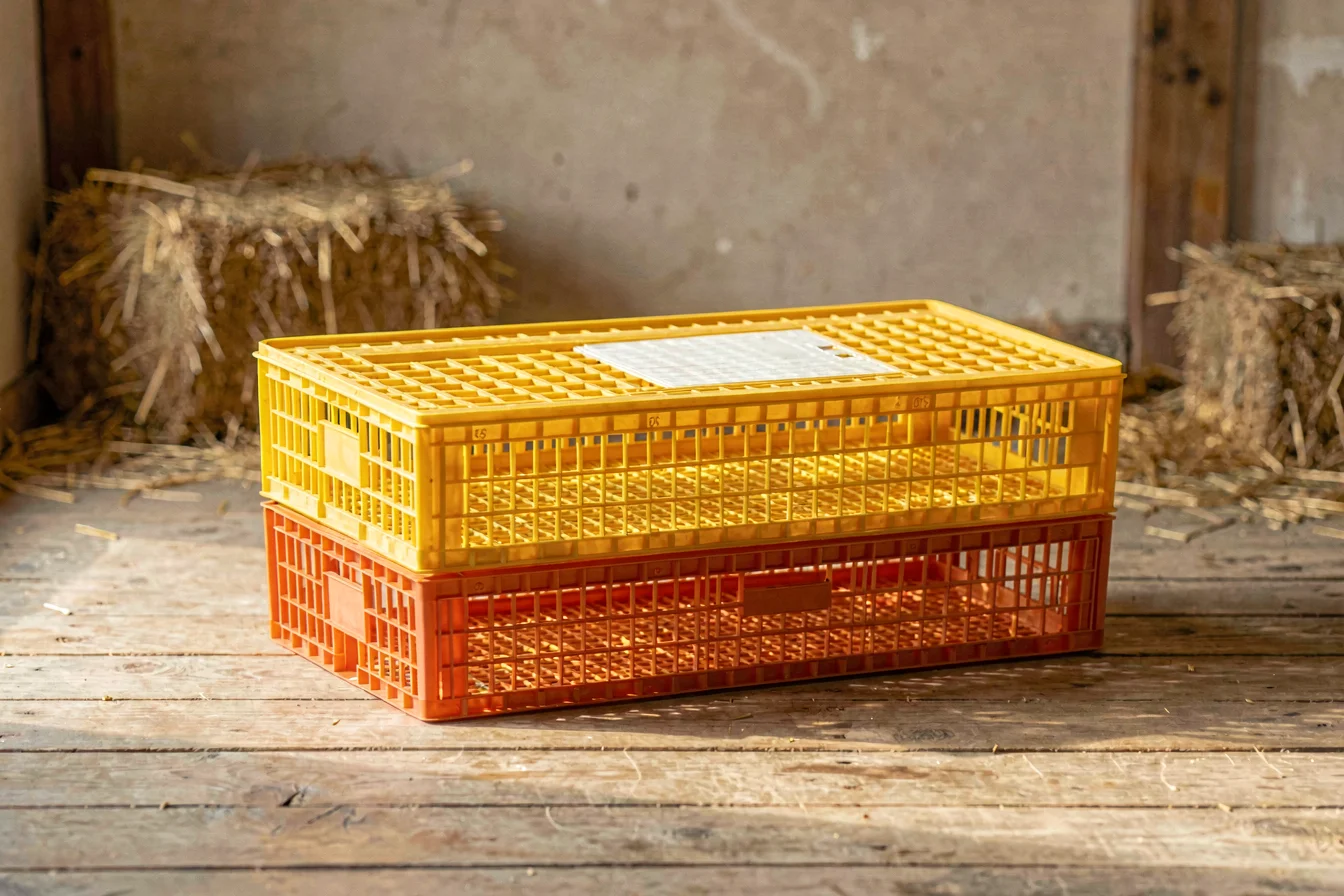
Demand for chicken crates is surging in 2026, driven by expansion in commercial poultry farming and increased focus on animal welfare standards. Supply remains robust, with durable, ventilated, and stackable designs dominating the market. Buyers should prioritize heavy-duty plastic crates and seek modular solutions for optimal procurement and logistics efficiency[1][2][3].
The global poultry industry is undergoing rapid modernization, with farms increasingly adopting standardized, animal-friendly chicken crates to improve productivity and compliance. Buyers must understand the critical differences between cage types—battery, stepped, and transport—each tailored for specific stages of poultry rearing, processing, or shipping[4][5][6]. The selection criteria for sourcing include load-bearing capacity, ventilation, stackability, ease of assembly, and animal welfare compliance. As farms scale up and export volumes rise, the market is shifting toward high-resistance materials and modular designs that facilitate efficient transport and reduce injury rates[3][7].
| Trend Factor | Current Status | Impact on Buying Decision |
|---|---|---|
| Animal Welfare Standards | Strict compliance rising globally | Buyers must prioritize ventilated and stress-reducing designs |
| Material Innovation | Heavy-duty plastic and reinforced ribs | High durability and low injury rates drive demand |
| Stackability & Modularity | Stackable designs up to 10 layers | Efficient logistics and cost savings |
| Poultry Farm Expansion | Rapid growth in commercial farms | Bulk procurement favored; modular solutions preferred |
| Export Volume | Increasing international shipments | Need for compliance and easy assembly |
The global chicken crates market is experiencing sustained volatility due to rising poultry production, regulatory changes, and supply chain disruptions. Macro forces include increased farm automation, stricter animal welfare regulations, and a shift toward standardized, modular crates for both layer and broiler operations[5][6][8]. Supply chain dynamics are shaped by the availability of high-resistance plastic, reinforced ribs, and modular stackable designs, which are preferred for their durability and ease of handling[3]. Buyers face moderate price competition, with suppliers offering tiered pricing for bulk orders. Geopolitical risks are minimal, but logistics bottlenecks can arise during peak export seasons. The industry is moving toward integrated cage systems that maximize space and reduce labor costs, with battery and stepped cage types dominating commercial farms[7].
| Market Dimension | Current Status | Impact Level |
|---|---|---|
| Poultry Production Growth | Rapid expansion, especially in Asia and Africa | High |
| Animal Welfare Regulations | Increasingly strict | Medium |
| Material Innovation | Heavy-duty plastic, reinforced ribs | High |
| Supply Chain Disruption | Moderate, mostly during peak seasons | Medium |
| Bulk Procurement | Preferred by large farms | Medium |
Google Trends for Plastic, Ventilated, and Stackable Chicken Crates (2025–2026)
Google Trends show sustained growth for “plastic chicken crates,” “ventilated chicken crates,” and “stackable chicken crates,” with peaks in early 2026 indicating strong momentum[1]. The upward trend signals rising buyer interest and supply chain responsiveness, especially for modular and animal-friendly designs. Buyers should time procurement to coincide with peak demand periods for best pricing and inventory availability.
Google Trends confirm that demand for ventilated, stackable, and heavy-duty chicken crates is accelerating, favoring buyers who prioritize modular, animal-friendly designs.Reddit discussions highlight cost concerns, DIY alternatives, and compatibility with processors, with users debating between commercial crates and makeshift solutions like dog crates or wire fencing[9]. TikTok data is unavailable, but Reddit sentiment is generally pragmatic: buyers want crates that are safe, easy to assemble, and accepted by processors. DIY solutions are considered viable for short-term transport, but commercial crates are favored for long-term durability and compliance. Resale value is moderate, with buyers prioritizing crates that are easy to clean, sturdy, and stackable. Sentiment analysis reveals a preference for heavy-duty plastic crates, especially for large-scale transport and processing.
"I transport all my young birds in an xl-dog crate with puppy pads down, some hydrated feed and covered in the back of my pickup. Never had a problem." [9]
"It's not just what is most comfortable for the birds (though that would be paramount for me) or what is most economical for you, but rather what is best for your processor to most safely and easily extract the birds for processing." [9]
| Dimension | Reddit Insights | TikTok Insights |
|---|---|---|
| Cost Concerns | Crates seen as expensive; DIY alternatives considered | — |
| Processing Compatibility | Processor acceptance is critical | — |
| Durability | Heavy-duty plastic crates favored | — |
| Resale Value | Moderate; stackable crates preferred | — |
| Animal Welfare | Ventilation and ease of cleaning prioritized | — |
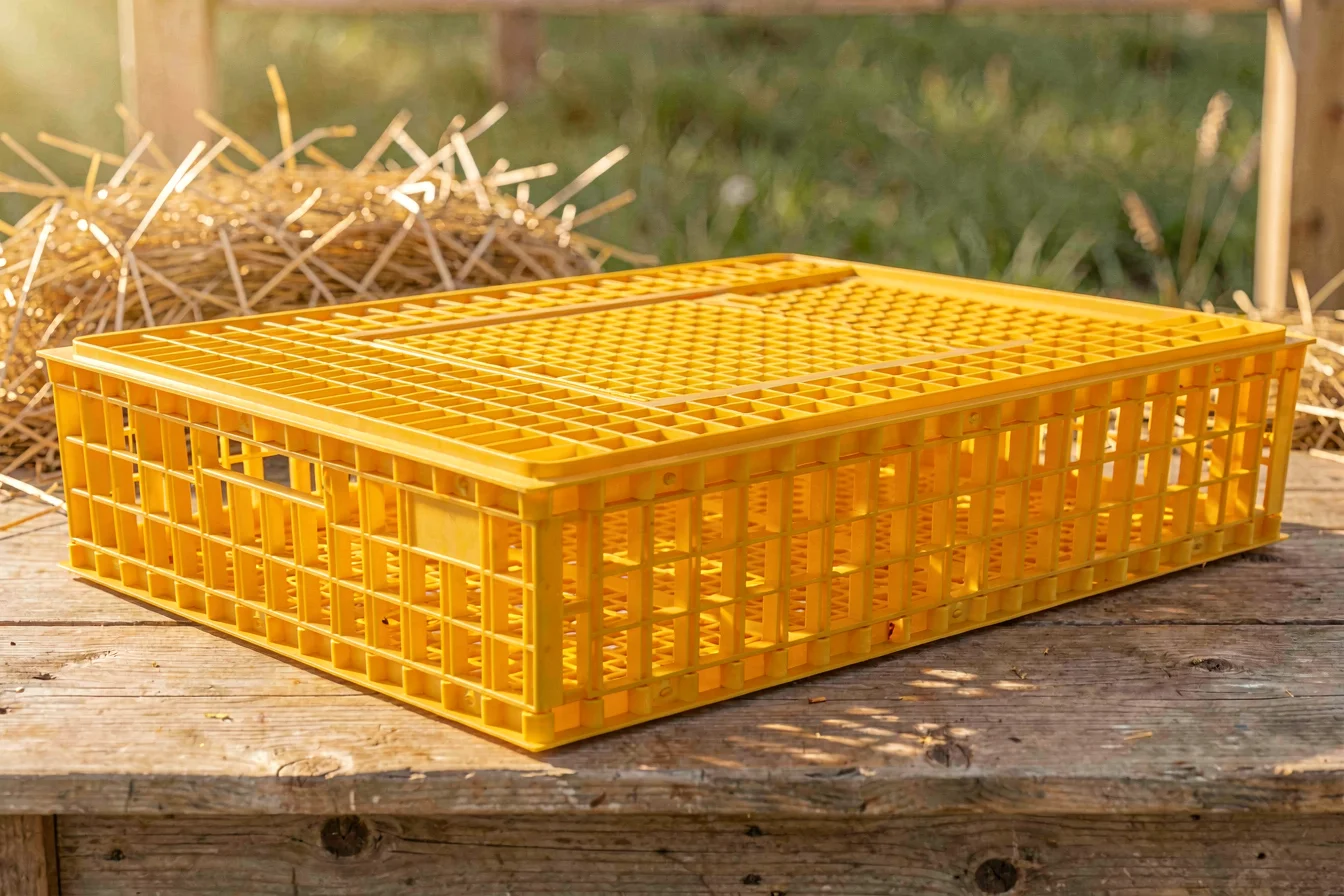
Amazon sales data reveals that heavy-duty plastic crates dominate the market, with modular designs, easy assembly, and strong ventilation as key selling points[2]. Buyers prefer crates that are stackable, durable, and suitable for both transport and processing. Price tiers range from USD 44.99 to 209.99, with ratings from 3.0 to 5.0. The best-selling crates feature reinforced ribs, large openings, and easy-to-clean surfaces, supporting high-capacity transport and frequent use.
| Image | Name | Price | Rating | Key Features |
|---|---|---|---|---|
 |
Poultry Carrier Crate Plastic Chicken Transport Crate | USD 49.6 | 4.7/5.0 | Heavy-duty plastic, easy assembly, good ventilation |
 |
4 Pcs Poultry Carrier Crate | USD 164.99 | 5.0/5.0 | Multi-crate efficiency, slip-resistant grips, military-grade toughness |
 |
Poultry Carrier Crate 2PCS Orange Chicken Transport Cage | USD 65.67 | 0.0/5.0 | High-class plastic, efficient ventilation, stackable design |
 |
RITE FARM PRODUCTS 29x21x10.5 Poultry Transport Crate | USD 46.99 | 4.4/5.0 | Heavy-duty, washable, stackable, swing open top door |
 |
Irenare Poultry Carrier Crate | USD 44.99 | 3.8/5.0 | Stackable, easy install, mesh ventilation, strong plastic |
Buyer reviews highlight easy assembly, sturdy construction, and good ventilation as the main strengths of top-selling chicken crates . Complaints focus on assembly difficulty, lack of instructions, and limited side doors. Buyers appreciate crates that are durable, stackable, and suitable for frequent transport, while expressing concern about complexity and the need for tools.
"It came not damaged. Looked at instructions snapped together with no tools in 5 minutes. Haven't used yet but seemed very sturdy. Quality felt good for the money easy to assemble and use." [2]
"No directions! But pretty obvious how it fits. I did have to use a rubber hammer to make it connect. Could not push it together with my hands. Very sturdy. It only has a top opening. There is not one on the side. Door move easily." [2]
| Product Name | Top Praise | Top Complaint | Overall Sentiment |
|---|---|---|---|
| Poultry Carrier Crate Plastic Chicken Transport Crate | Sturdy, easy to assemble, good ventilation | Requires rubber hammer for assembly | Positive |
| 4 Pcs Poultry Carrier Crate | Multi-crate efficiency, military-grade toughness | No complaints | Very positive |
| RITE FARM PRODUCTS 29x21x10.5 Poultry Transport Crate | Stackable, easy to clean, strong plastic | Small door for large birds | Positive |
| Irenare Poultry Carrier Crate | Stackable, easy install, mesh ventilation | Assembly complexity | Moderate |
Reliability benchmarks for chicken crates include defect rates, maintenance cycles, and expected service life. Global feedback indicates that heavy-duty plastic crates with reinforced ribs and modular designs offer the lowest injury rates and longest service life, with load-bearing capacity up to 400kg and stackability up to 10 layers[3]. Common failure points are assembly difficulty, lack of instructions, and limited side doors. Buyers should prioritize crates that are easy to clean, ventilated, and compliant with animal welfare standards. Sourcing risk strategy involves selecting OEM/ODM partners with proven quality, mapping logistics bottlenecks, and negotiating for bulk pricing and compliance certifications.
| Benchmark Dimension | Heavy-Duty Plastic Crate | Modular Stackable Crate |
|---|---|---|
| Defect Rate | Low (qualitative, no direct data) | Low (qualitative, no direct data) |
| Maintenance Cycle | Minimal (easy cleaning) | Minimal (easy cleaning) |
| Expected Service Life | High (years) | High (years) |
| Injury Rate | Low | Low |
| Assembly Complexity | Moderate | Moderate |
Strategic sourcing guide: Select OEM/ODM partners with proven quality, prioritize crates with easy assembly and compliance certifications, map logistics bottlenecks (peak season, export routes), and negotiate for bulk pricing and replacement parts. Risk mitigation includes regular maintenance and compliance audits, with price optimization levers such as bulk discounts and modular customization.
Reliability benchmarks favor heavy-duty, stackable chicken crates with low injury rates, minimal maintenance, and high service life, making them ideal for bulk procurement and long-term use.Procurement channels for chicken crates include direct factory sourcing, authorized distributors, and B2B platforms like Alibaba.com. Direct factory sourcing offers customization and bulk pricing, while authorized distributors provide warranty and compliance support. B2B platforms facilitate transparent supplier comparison and bulk order management. Logistics optimization involves selecting stackable crates for efficient transport, negotiating for duty/tax reductions, and timing shipments to avoid peak season bottlenecks. Current shipping trends show moderate delays during peak export periods, but overall reliability is high. Buyers should consider modular designs for easier logistics and compliance with international standards.
| Feature | B2B Advantage |
|---|---|
| Customization | Full OEM/ODM Support |
| Bulk Pricing | Negotiable |
| Compliance Support | Warranty & Certification |
| Logistics Optimization | Stackable, modular designs |
| Duty/Tax Considerations | Reduced rates for bulk shipments |
The future of chicken crates is shaped by continued innovation in materials, modular designs, and compliance with animal welfare standards. Buyers should anticipate further price competition and increased demand for stackable, ventilated crates as poultry farming expands globally. Emerging technology trends include automated cage systems and integrated transport solutions, with pricing expected to remain moderate due to supply chain resilience. Buyers should act now by sourcing heavy-duty, ventilated, stackable crates, negotiating for bulk discounts, and prioritizing compliance certifications. Strategic procurement on B2B platforms like Alibaba.com will ensure optimal supply chain efficiency and long-term resilience. With momentum accelerating in 2026, buyers who invest in modular, animal-friendly designs will benefit from improved productivity and reduced operational risk.
Buyers should invest in heavy-duty, ventilated, stackable chicken crates now to capitalize on rising demand, ensure compliance, and optimize logistics efficiency in the evolving poultry market.