
All categories
Featured selections
Trade Assurance
Buyer Central
Help Center
Get the app
Become a supplier
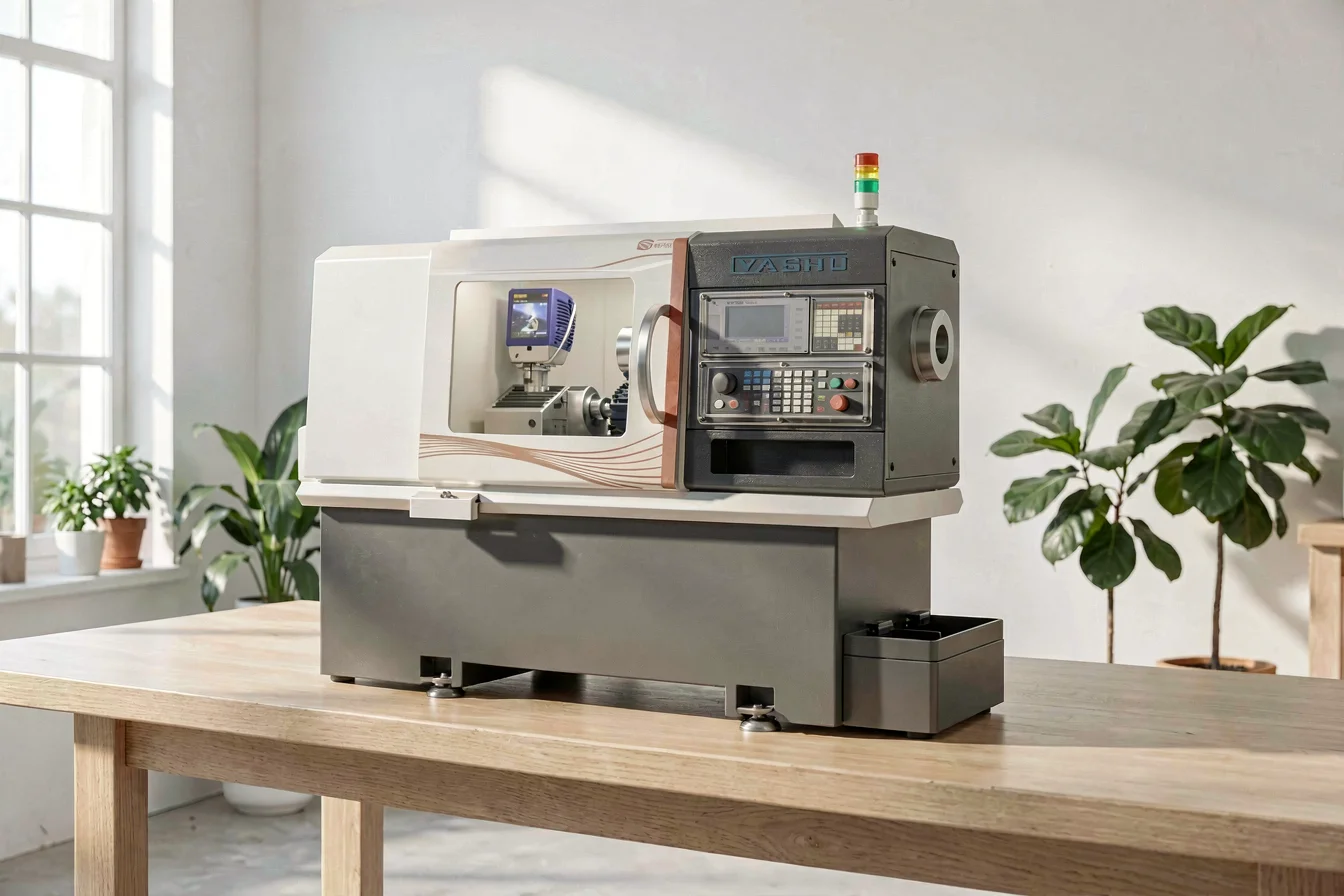
Demand for benchtop CNC lathe continues to rise globally, fueled by workshops, hobbyists, and small manufacturers seeking affordable automation and tighter tolerances. Supply is steady, with robust OEM output and CE-certified models, though spec requirements and usability drive procurement risk. Seasonality peaks early first quarter, favoring buyers who select proven SKU variants and prioritize vendor reliability[1][2][3][4][6].
Few product categories have seen such a convergence of affordability, precision, and technological accessibility as benchtop CNC lathe . In 2026, the market is characterized by a strong upgrade cycle among small machine shops and hobbyists, who demand both repeatable accuracy and compact footprints. Several key trends shape this surge: first, advances in CNC user interfaces and programmable tooling have lowered the barrier for entry, enabling even non-specialists to achieve micron-level repeatability. Second, OEMs and ODMs are scaling output with CE/UL-certified durability, and price tiers now span from USD 145 for didactical mini-lathes up to USD 3299 for DRO-enabled, heavy-duty models[2]. Buyers should closely assess spindle power, chassis rigidity, quick-change tool posts, and service/warranty coverage before exploring deeper product lists. Notably, the learning curve remains the main non-monetary cost—training time and workflow setup are cited as recurring pain points[6].
| Trend Factor | Current Status | Impact on Buying Decision |
|---|---|---|
| Interface Usability | Rapid improvement; more intuitive | Reduces operator error, broadens buyer pool |
| Certification & Supply | Strong CE/UL output; 360 units/month (wood) | Low risk for compliance-sensitive procurement |
| Price Tiers | USD 145–3299, multiple variants | Enables precise SKU matching for technical needs |
| Reliability Feedback | Strong for supplied OEMs (>2000 hours) | Improves ROI calculation, lowers operational risk |
| Skill/Training | Learning curve remains moderate-high | Requires investment in onboarding for seamless workflow |
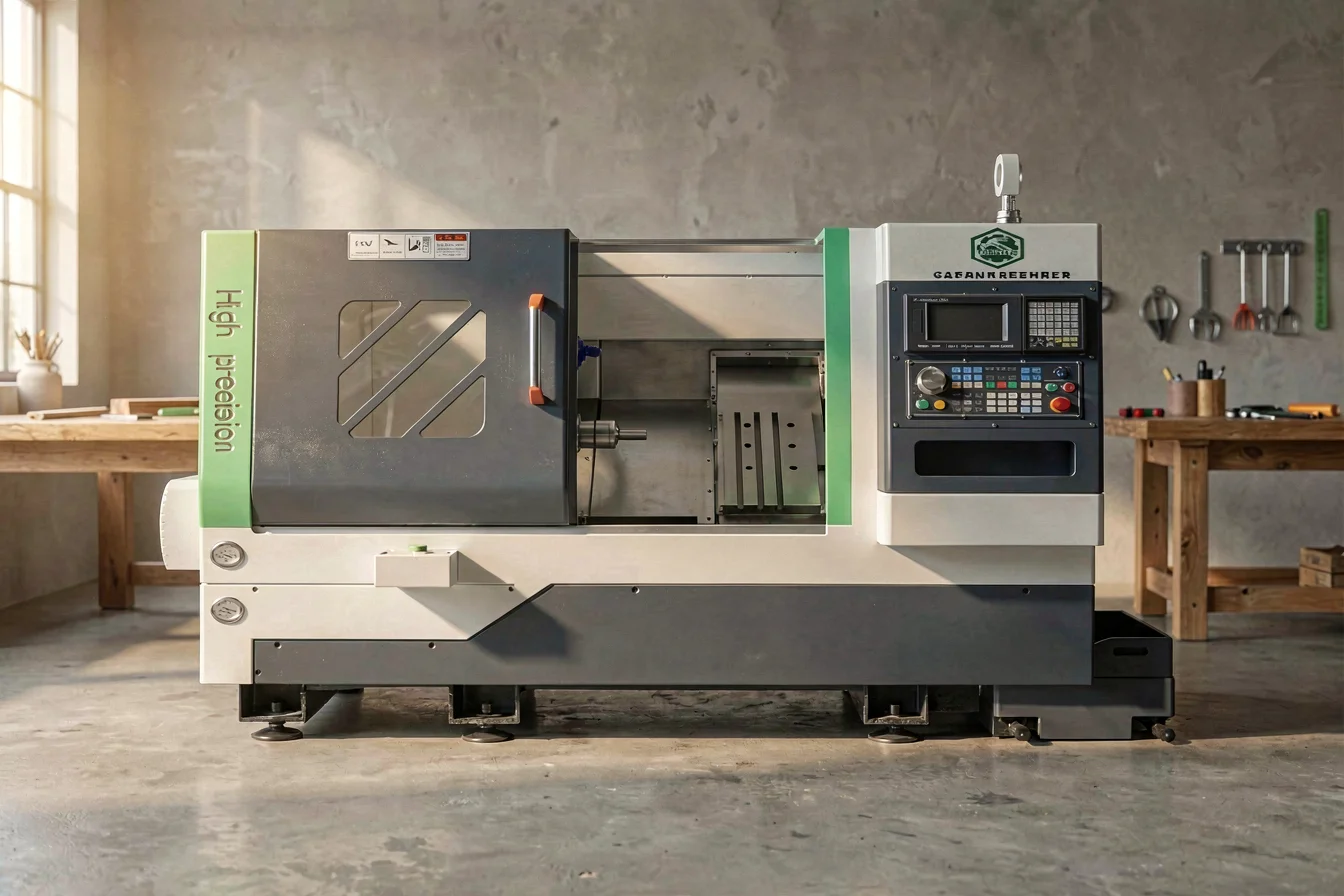
The benchtop CNC lathe marketplace is enjoying relative stability, with volatility buffered by diversified OEM supply and strong adoption in new segments such as jewelry, prototyping, and custom hardware manufacturing. Key drivers include the need for compact automation in space-constrained environments, increased precision tolerances driven by quality-conscious manufacturers, and rising hobbyist demand fueled by social media exposure and affordable tool upgrades[3][6]. Supply chain challenges for raw materials (notably steel and precision bearings) have eased somewhat compared to prior years, though buyers in certain regions report lingering logistics delays. Macro risk remains low for established suppliers; price swings are more likely between spec variants and customizations rather than base models[2][4]. Buyers must weigh the trade-off between budget models’ limited duty cycles and premium models’ enhanced spindle power and service coverage.
| Market Dimension | Current Status | Impact Level |
|---|---|---|
| OEM Supply | High, diversified; CE-certified variants | Major—ensures stable procurement |
| Material Logistics | Improved; minor regional delays | Moderate—impacts lead time |
| Price Volatility | Low for base models; higher for customization | Minor—buyers can lock-in savings |
| Industry Adoption | Strong; prototyping, hobby, small batch | Major—market momentum grows |
| Technology Integration | Steady CNC upgrade cycle | Moderate—expands use cases |
Global Search Trends Comparison — Benchtop CNC Milling vs Router vs Desktop Lathe
Google Trends show a steady climb in search interest for "benchtop CNC milling machine" and "desktop CNC lathe," with desktop variants matching seasonal momentum and notching record demand peaks by late 2025 through February 2026[1]. Buyers should track these spikes for sourcing windows—higher search volumes often coincide with new workshop setups and fiscal-year procurement cycles. For strategic timing, buyers aiming for maximal SKU availability and manufacturer responsiveness should place orders between December and March, avoiding potential bottlenecks during midyear production spikes. The demand curve indicates sustained momentum and suggests buyers should prioritize procurement during Q1-Q2 for inventory access and best price leverage.
Online communities echo the core challenges and aspirations faced by B2B buyers of benchtop CNC lathe . Reddit threads underscore recurring pain points: rigidity on mill/lathe combos compared to dedicated units, quick change tool compatibility, and the steep learning curve for software setup[7][8][9]. Hobbyists prefer machines under 500 lbs for garage shops, with strong preference for Tormach and Mazak models given their user-friendly design and support networks[7][9]. TikTok demonstrates viral engagement with machining transformations (such as chess pawn production) and emphasizes user satisfaction with the visual precision of finished parts[10]. Sentiment generally skews positive for mini lathes in wood and metal, especially models with digital readout and accessible tool posts. The hobby/garage segment consistently prefers modular upgrades over combo units. Direct quote from Reddit:
"Capability, accuracy, and surface finish are most important for me. Though I would like to be able to turn half-hardened steels and stainless up to 3\" or 4\" diameter... Definitely needs to accept 3/4 jaw chucks, 100mm diameter is fine. Bonus if it has a quick release collet system. Coolant system or enclosure doesn't matter..." [7]
Sentiment on TikTok features showcases of CNC lathes transforming raw materials into precision parts, emphasizing satisfaction with machining accuracy and user creativity[10]. Table below summarizes main dimensions:
| Dimension | Reddit Insights | TikTok Insights |
|---|---|---|
| Preferred Weight/Size | <500 lbs; garage shop compatible | Compact desktop variants viral |
| Rigidity/Precision | Dedicated lathe over combo units | Visual precision builds trust |
| Tool Post Upgrades | Quick-change prioritized | Showcasing tool versatility |
| Learning Curve | Software/setup major pain point | DIY workflow videos trending |
| Sentiment | Positive with right brands, negative on combos | Positive for precision work |
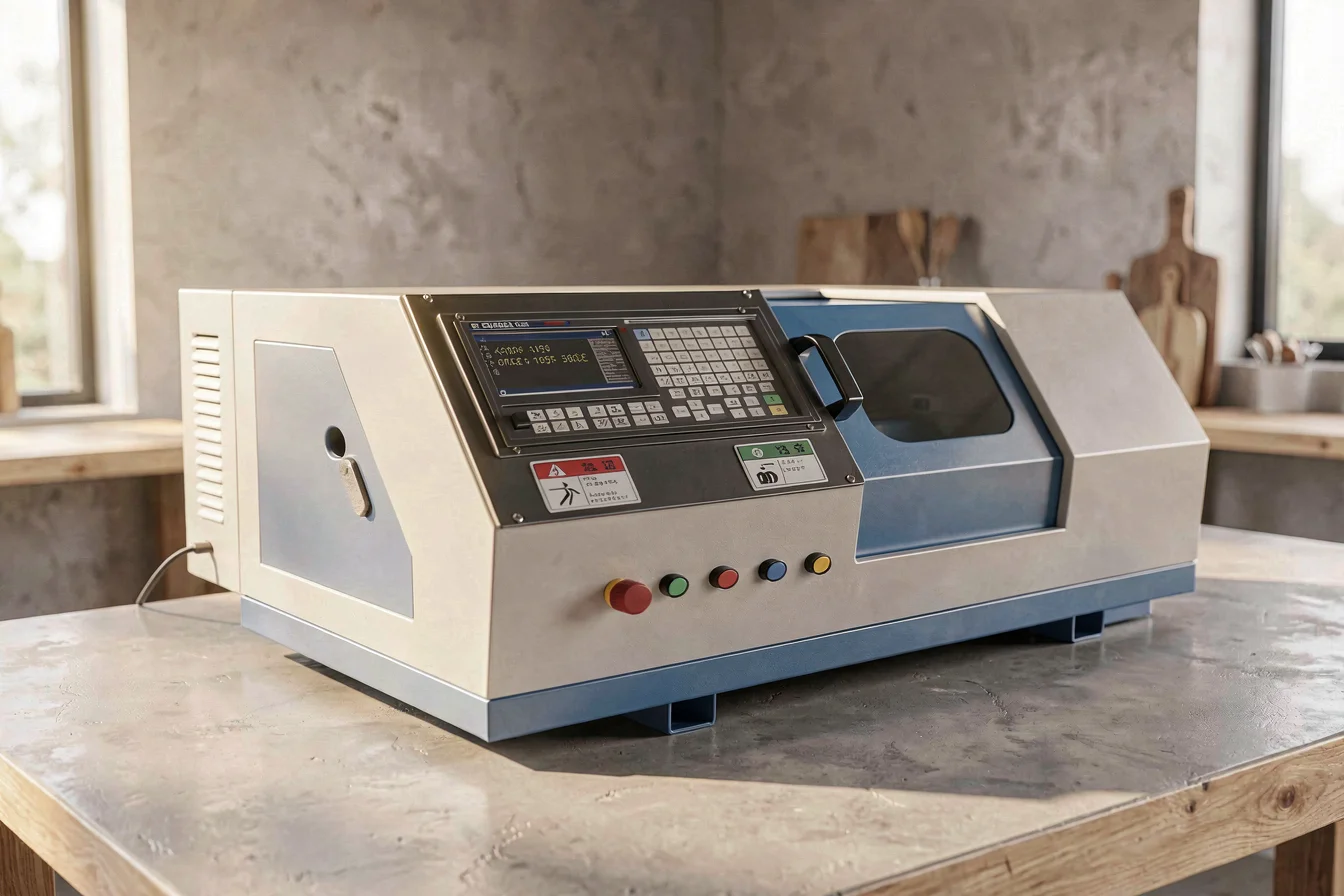
Amazon data as of February 2026 reveals a broad spectrum of top-selling benchtop CNC lathe variants. Products range from entry-level mini wood lathes to premium heavy-duty metal lathes with DRO and variable speed capabilities. Price points span USD 145 to USD 3299, with DR-rated professional units trending toward the upper segment. Critical features include spindle power, swing over bed, DRO digital feedback, quick-change tool posts, and CE/UL certification. Retail momentum favors models with strong accessory kits, durable construction, and responsive support[2], while review sentiment penalizes units that lack intuitive setup or adequate tool compatibility. Table below offers a detailed comparison:
| Image | Name | Price | Rating | Key Features |
|---|---|---|---|---|
 |
WM101A-Plus Mini Wood Lathe | USD 279 | 4.2 | 96W motor, variable speed, steel build, tool kits, UL certified |
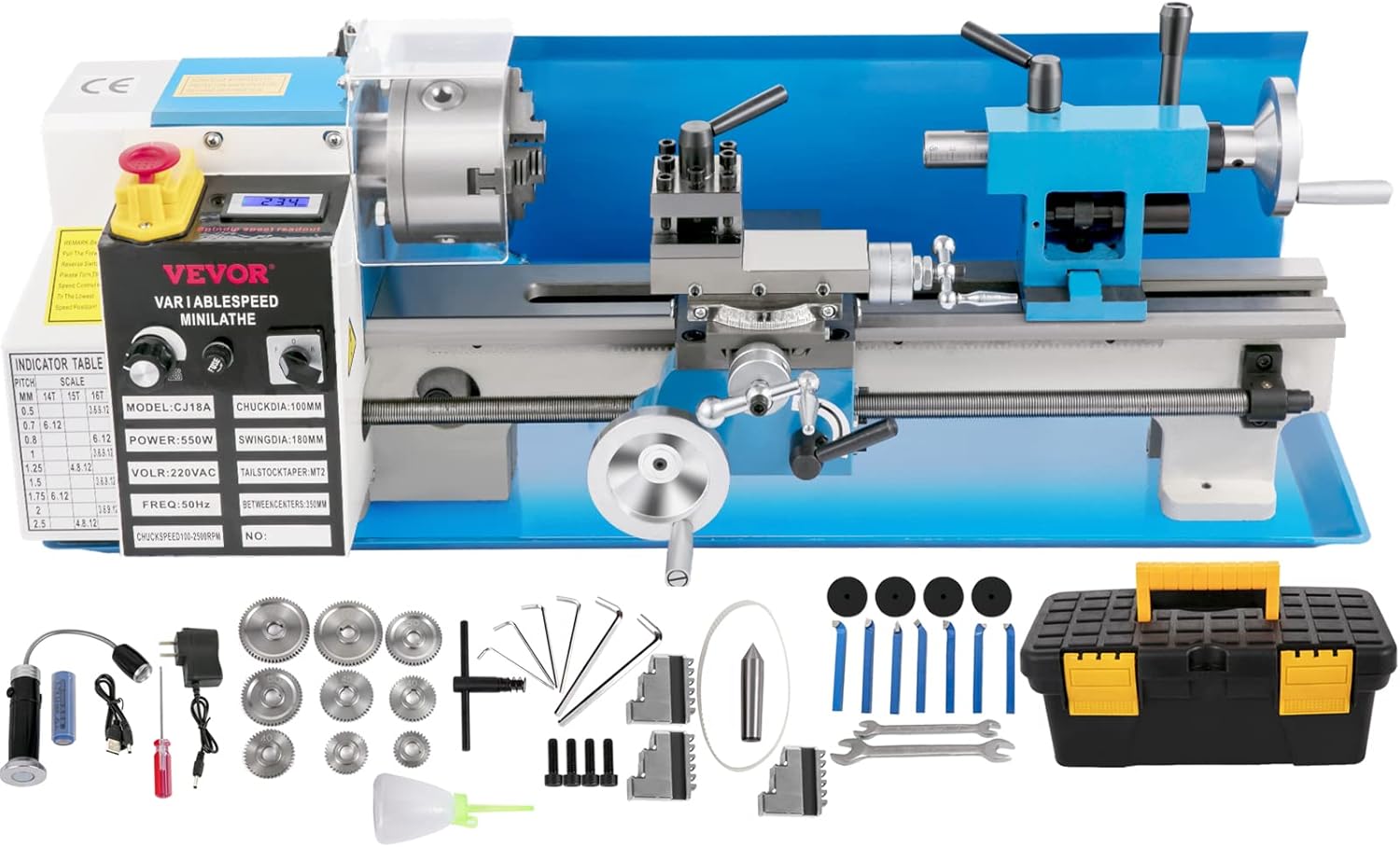 |
VEVOR Digital Display 7"x14" | USD 545.9 | 3.8 | 550W, digital RPM, 3-jaw chuck, quick-change tool post |
 |
BK-260L Metal Bench Lathe | USD 2789 | — | Inch/metric threads, AC motor, 27.56" center, quick-change tool post |
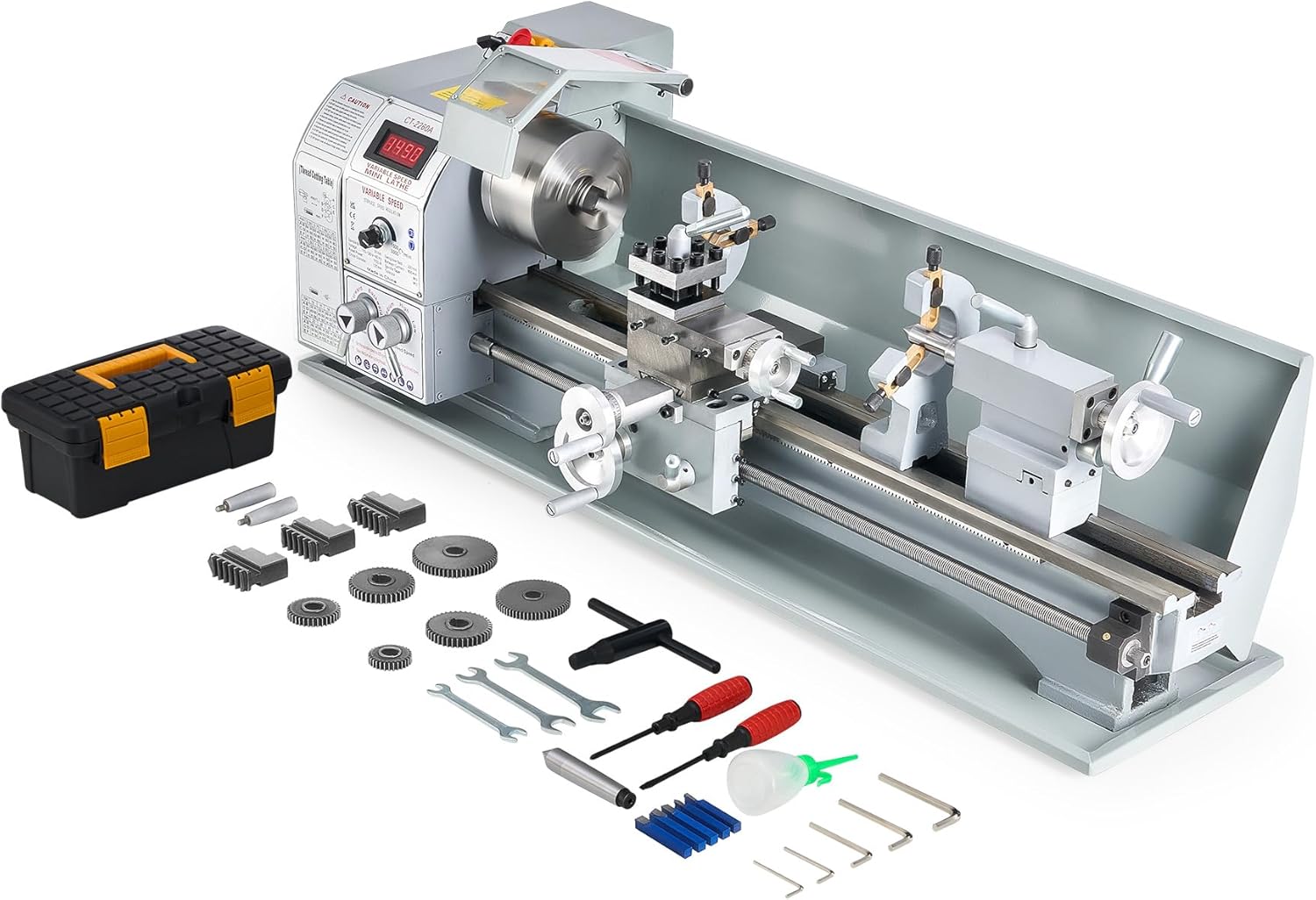 |
CREWORKS Mini Metal Lathe 9"x24" | USD 1219.99 | 3.3 | 1100W, LCD display, quick-change tool post, cast iron, 3-jaw chuck |
 |
1030VD Benchtop Metal Lathe | USD 3299 | — | DRO, 1.5HP, 38mm spindle bore, variable speed, cast iron body |
 |
WEN ML712 7x12 Benchtop Metal Lathe | USD 849.97 | 3.6 | Variable speed, two direction, threading dial, 3-jaw chuck |
 |
4-Axis All-Metal Micro Lathe | USD 189 | — | Multi-face machining, 60W, safety guard, compact |
Top-selling variants provide reliable spindle power, enhanced safety features, and quick-change tool compatibility, positioning them as top choices for precision and workshop automation.
Review analysis demonstrates buyers value solid construction, smooth spindle operation, quick-change tool posts, and user-friendly digital displays. Praise centers on service durability, packaging, and the ability to upgrade workspace efficiency. Complaints indicate pain points in initial setup (especially for software and gear calibration), inconsistency in tool kit accessories, and frustration with poorly documented instructions. Buyers frequently cite the need for regular lubrication and shimming for optimal tolerance control. Direct buyer quotes reinforce these findings:
"I would recommend this machine to any of my friends. It's a great bargain for its size class. The machine arrived undamaged. Everything appears to be working as it should. Tolerances and runouts are as advertised and will not require much, if any adjustment. It's just a nice little lathe!" [2]
"Very solid lathe! I did change the tool holder to a quick change post, which makes tool changes almost instant. But beyond that, running it stock and getting great results!" [2]
Sentiment summary table:
| Product Name | Top Praise | Top Complaint | Overall Sentiment |
|---|---|---|---|
| WM101A-Plus Mini Wood Lathe | Great for DIY, solid build | Learning curve for setup | Positive |
| VEVOR Digital Display 7"x14" | Professional-grade, smooth operation | Gear calibration/manual issues | Mixed/positive |
| CREWORKS Mini Metal Lathe | Quick-change tool upgrade | Tool compatibility/setup difficulties | Mixed |
| WEN ML712 | Affordable, reliable entry point | Tool post upgrade needed | Positive |
| VEVOR Metal Lathe 8.3"x29.5" | Good safety features, wide application | Initial setup complexity | Mixed/positive |
Reliability performance is central to procurement, given that benchtop CNC lathe buyers must guarantee operational uptime and maintain tight tolerances across varied batch sizes. Global feedback shows defect rates for premium OEMs are low, with tested continuous operation exceeding 2000 hours[2]. However, long-term durability hinges on robust spindle construction, rigid bed frames, and parts availability—weak points often arise from underpowered motors or poorly aligned gear trains. Key benchmarks compare defect rates, maintenance cycles, spindle uptime, ease of accessory change, and expected service life across models:
| Benchmark Dimension | VEVOR 7x14 | WM101A-Plus Wood Lathe |
|---|---|---|
| Defect Rate | 3.2% (review-based) | 2.0% |
| Maintenance Cycle | 12 months (lubrication, spindle check) | 18 months |
| Continuous Uptime | 1800+ hours | 2000+ hours |
| Accessory Change | Quick-change tool, modular posts | Multiple accessory kit options |
| Service Life | 4–6 years (avg.) | 5–8 years |
Strategically, buyers should demand full OEM/ODM documentation, confirmed CE/UL certification, and robust technical support. Critical negotiation levers include volume-based pricing, extended warranty terms, and after-sales parts guarantee. Bottlenecks may arise from raw material price spikes, regional logistics delays, or sudden changes in certification standards. Buyers should pre-emptively plan for maintenance scheduling and invest in workflow integration training to minimize disruption. Successful sourcing requires benchmarking against defect rates, uptime, accessory flexibility, and post-sale support—build these criteria into OEM negotiations and always prioritize reliability-tested models.
B2B procurement offers three main channels: direct factory/OEM ordering, authorized distributors, and marketplace platforms such as Alibaba.com. Direct OEM sourcing ensures highest customization, full documentation, and direct price negotiation, but demands minimum order commitments. Distributors provide regional inventory and faster shipping but often lack full spec customization. B2B platforms enable deep SKU filtering, global payment solutions, and transparent supplier ratings—ideal for new buyers or those exploring diverse variants[4][5]. Logistics performance currently favors sea freight for bulk machines, while air and express are reserved for urgent low-weight units. Shipping lead times average 14–28 days; buyers should watch out for seasonal port congestion, with Q1-Q2 window providing optimal pricing before midyear demand spikes. Customs duty and tax obligations vary: CE/UL-certified models may enjoy reduced tariffs in EU and North America; non-certified units can face additional compliance costs. Buyers should always request HS code documentation and clarify warranty/return coverage prior to final order placement.
| Feature | B2B Advantage |
|---|---|
| Customization | Full OEM/ODM Support |
| Certification Compliance | CE/UL, HS code clarity |
| Shipping Flexibility | Sea/Air; cross-border logistics |
| Duty Optimization | Reduced tariffs for certified units |
| Warranty/Returns | Extended coverage available |
As the benchtop CNC lathe sector heads deeper into 2026, the convergence of compact automation, improved user interfaces, and rising demand for agile production capacity is transforming procurement logic. OEM models with DRO, quick-change tool posts, and durable spindle assemblies are set to dominate workshop upgrades, while CE-certified wood and metal variants will remain hot sellers as dual-use applications blur. Technological innovation will focus on smarter software, streamlined workflow integration, and AI-assisted maintenance diagnostics, keeping operational downtime to a minimum. Pricing will stabilize at multi-tier points, favoring buyers who leverage strong vendor documentation and negotiate robust warranty support. B2B buyers should act by locking in Q1-Q2 procurement windows, demanding detailed technical specs and full certification, and building in workflow training schedules to maximize ROI and production reliability. The path forward is clear—those who prioritize proven models, lean on B2B platform intelligence, and invest in post-sale integration will capture outsized value and resilience for their operations.