
All categories
Featured selections
Trade Assurance
Buyer Central
Help Center
Get the app
Become a supplier
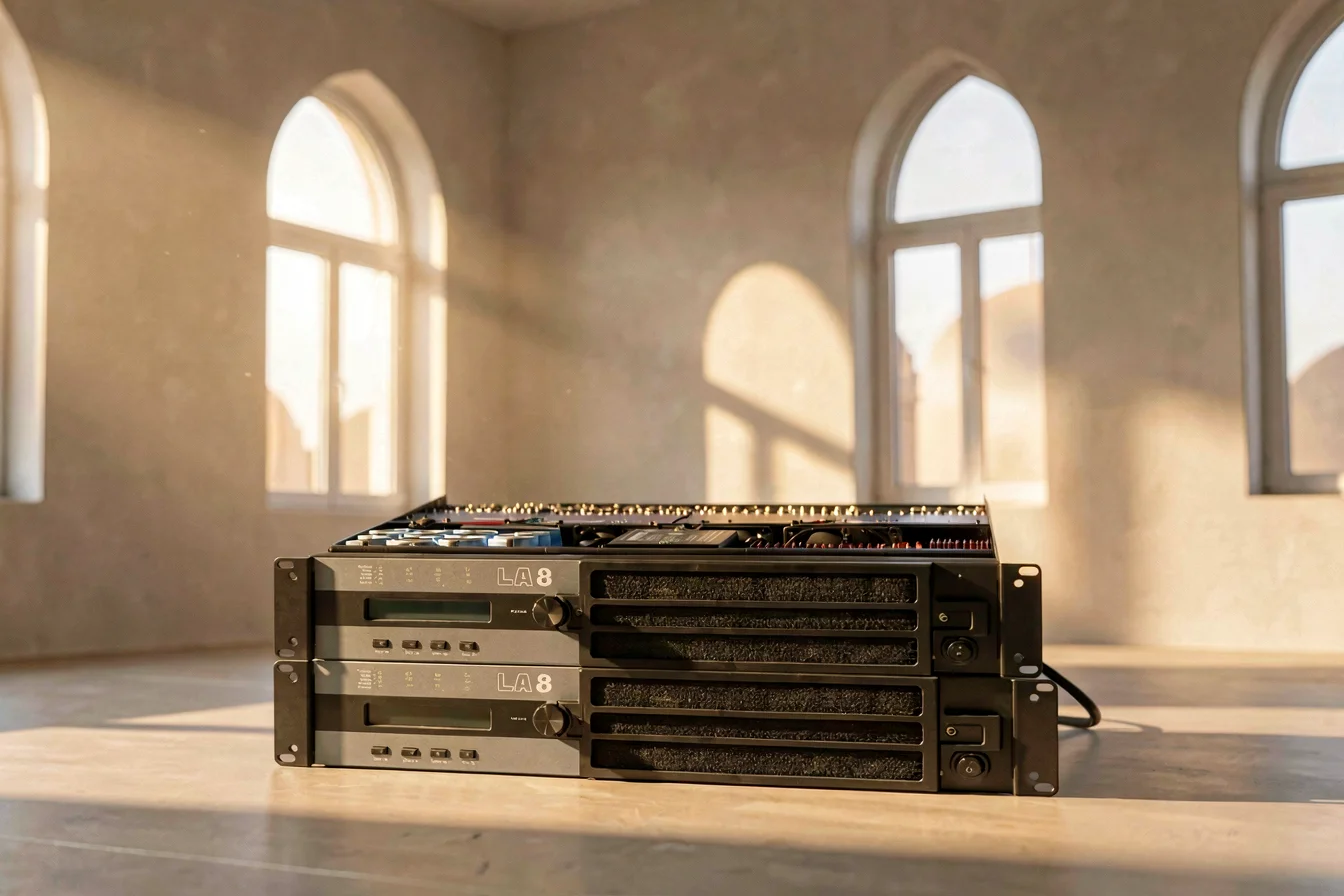
Market momentum for amplifier for mosque has risen steadily, driven by demand for reliability, DSP processing, and anti-feedback solutions in small-to-mid-sized venues. Recent supply aligns with integrated mixer designs and multi-input flexibility, enabling optimized procurement for buyers seeking user-friendly, durable systems. Buyers should focus on DSP-powered, anti-howling amplifiers, robust input options, and supplier-proven reliability for consistent performance across regional noise regulations[1][3][4][5].
The demand for amplifier for mosque is surging due to a confluence of factors: urban expansion, stricter noise regulation, and the need for improved vocal intelligibility in religious venues. Amplifiers are the critical link in the mosque PA chain, dictating clarity, reach, and operational stability for daily prayer calls and sermons. Buyers should understand that modern mosque amplifiers now integrate digital sound processing (DSP), multi-channel mixing, and user-lockable controls, effectively reducing sound distortion, feedback, and unauthorized tampering. These refinements are not only technical but also meet rising expectations from communities, authorities, and religious officials for compliance and audibility. Decision-makers require a clear grasp of power ratings matching venue size, anti-feedback algorithms, and the importance of input versatility (USB, Bluetooth, balanced mic) alongside simple, intuitive user interfaces. Procurement priorities should focus on durability, regional compliance, and after-sales support.
| Trend Factor | Current Status | Impact on Buying Decision |
|---|---|---|
| Urban Expansion | Rising mosque builds in cities | Increases demand for scalable systems |
| Noise Regulation | Stricter decibel limits in residential zones | Promotes DSP and anti-feedback features |
| Digitalization | DSP mixer integration | Favors all-in-one, configurable devices |
| Operator Simplicity | Focus on lockable/interlock controls | Reduces training and maintenance effort |
| Supplier Support | OEM/ODM technical after-sales | Ensures rapid troubleshooting and upgrades |
Buyers must prioritize robust DSP-equipped amplifiers, cross-checking supplier reputation, power match to venue, and compliance with local regulations to minimize sourcing risk and optimize long-term value.
Current supply-chain dynamics for amplifier for mosque are defined by technology shifts toward DSP-powered mixer amplifiers, growing preference for digital control, and critical importance of reliability benchmarks amidst noise complaints and regulatory oversight. Manufacturer portfolios are moving rapidly from legacy analog models to compact digital devices that simplify operation and expand input versatility (optical, USB, Bluetooth, RCA, balanced mic). Integrated anti-feedback algorithms and customizable DSP presets are now baseline requirements, especially in regions facing noise disputes. Supply resilience depends on key vendor platforms with scalable factory output, proven QC records, and adaptability to regional feedback. Procurement is increasingly risk-managed around defect rates in controls/connectors, service cycles exceeding five years, and lockable, tamper-proof designs. Buyers face macroeconomic risks: currency fluctuations, import duties, and local noise regulation changes.
| Market Dimension | Current Status | Impact Level |
|---|---|---|
| DSP Integration | Standard in most new SKUs | High (core performance) |
| Multi-Input Support | Broad (Bluetooth, USB, Optical, RCA) | Medium (versatility/futureproofing) |
| Reliability/Defect Rates | Controls/connectors most at risk | High (MTBF/sustainability) |
| Noise Regulation Sensitivity | Stringent decibel limits emerging | Medium (value drivers, procurement limits) |
| OEM/ODM Sourcing Channels | Strong for top vendors (TOA, ITC, AHUJA) | High (logistics, customization) |
Resilient supply depends on matching digital amplifier specs to venue scale and operational requirements, while anticipating regulatory shifts and tracking defect-prone components during sourcing and negotiation.
Google Trends: Global interest in 'mosque public address system', 'mosque loudspeakers', 'mosque sound system amplifier' (Mar 2025–Feb 2026)
The Google Trends chart shows steady growth in searches for amplifier for mosque and related PA system terms, with notable peaks in August, November, and a surge in late January 2026[1]. The search data indicates robust seasonality, likely tied to religious periods and venue upgrades, but the upward trend persists year-round. Buyers should capitalize on pricing and early procurement in off-peak months, preparing for seasonal spikes where availability and price premiums increase. Supplier selection becomes critical in high-interest windows, as demand outpaces supply for feature-specific SKUs.
Trend analysis confirms consistent and rising momentum for mosque-specific amplifiers: Strategic buyers should position procurement cycles ahead of known religious seasons and venue renovation periods.
Reddit threads suggest two major pain points for amplifier for mosque procurement: community backlash over noise pollution and buyer frustration with complex controls or unreliable hardware. Complaints about excessive decibel output and lack of regulatory enforcement are frequent in both Ghana and UK contexts[6][7]. Installers and buyers prioritize lockable controls (“all analog so no one touches things they aren't supposed to”), tamper-resistance, and DSP anti-feedback solutions to minimize operator error and legal risk[8]. On TikTok, content skewed toward mosque amplifier installations emphasizes ease-of-use and clear, powerful sound, with influencers showcasing plug-and-play rack solutions and simple remote controls. Sentiment is bifurcated: mosque communities value clarity while neighbors resent loud, poorly managed systems. Viral content focuses on decor and speaker setups, not technical procurement.
“I wish there was a law to ban noise above a set decibel after 10 pm. If you want to play anything loud, soundproof your building.” [6]
“Prefer going the all analogue route so no one touches things they aren't supposed to. Paired up with 14 x Bose Panaray 402 V And Sennheiser EW wireless Mics.” [8]
| Dimension | Reddit Insights | TikTok Insights |
|---|---|---|
| Noise Regulation | Strong complaints, legal focus | Minimal, more decor/installation content |
| Control Simplicity | Lockable/analog preference | Remote control, plug-and-play |
| DSP/EQ Features | Desire for anti-howling/easy EQ | Showcases “celestial” sound effects |
| Sentiment Trends | Split: community use vs. neighbor backlash | Positive on clarity, negative on loudness |
| Durability | Worries about controls/connectors | Occasional mention of brand reliability |
The social pulse reinforces that sound quality, control accessibility, and regulatory compliance are the top procurement drivers; buyers must actively engage communities and select amplifiers with anti-feedback and tamper-resistance features.
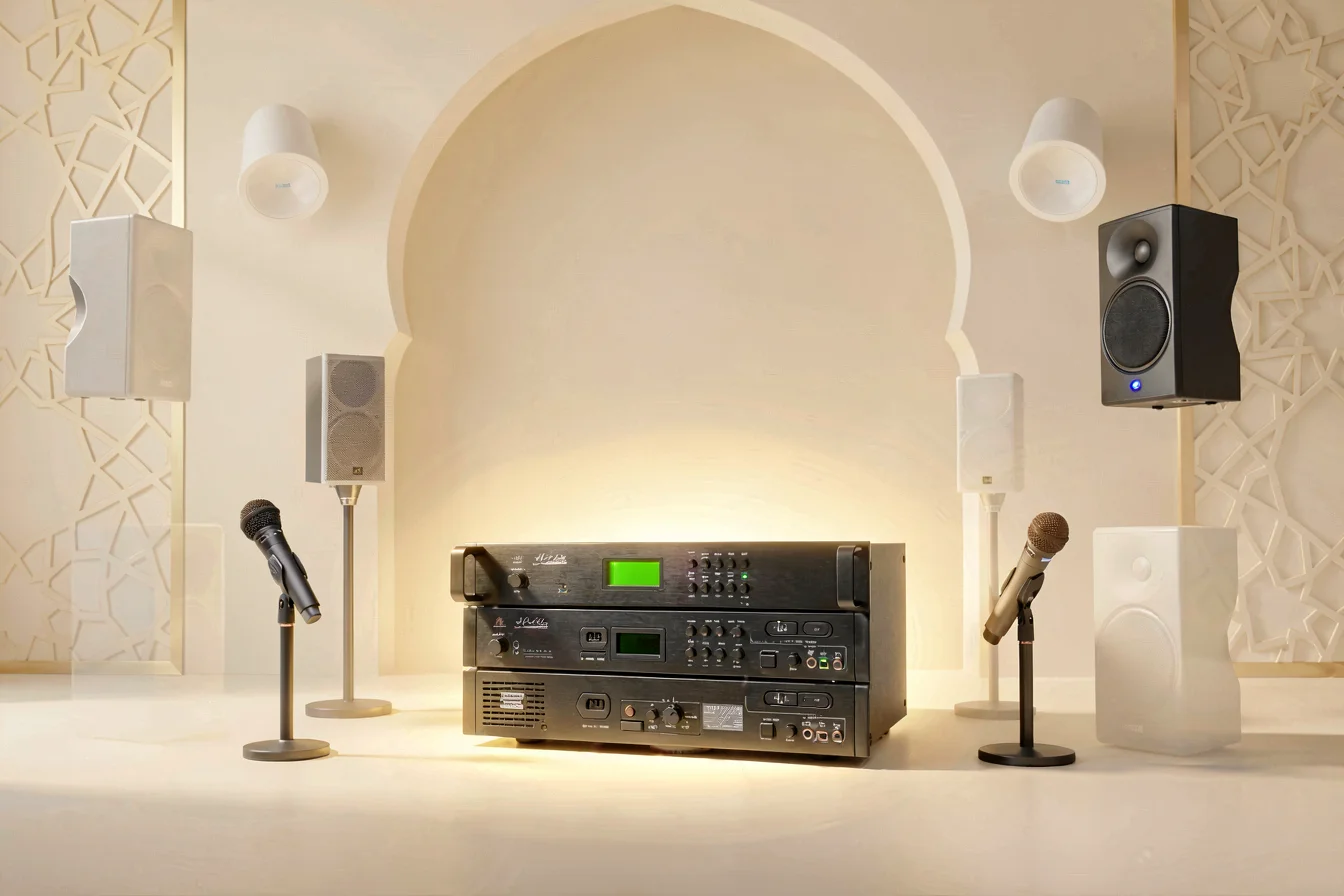
Amazon sales rankings highlight two amplifier SKUs relevant to mosque applications: MUSYSIC Professional Audio Receiver & Sound Processor Preamp and Rockville RPM1870 6000W Powered Mixer, with sales supported by their multi-input design, rack-mount suitability, and strong DSP/EQ functionality[2]. Other “mosque” products in the rankings are decor items or Islamic prayer aids, indicating keyword confusion; only the MUSYSIC and Rockville products directly satisfy mosque amplification needs. Feature highlights for top sellers include rack-mount compatibility, Bluetooth/USB input, digital LCD navigation, and high-powered audio output suitable for large congregations. Price points range from $124.99 (entry DSP model) up to $449.95 for a fully powered 18-channel mixer-amplifier with integrated effects[2]. Ratings are positive but nuanced, reflecting mix of hardware performance and user interface quality.
| Image | Name | Price | Rating | Key Features |
|---|---|---|---|---|
 |
MUSYSIC Professional Audio Receiver & Sound Processor Preamp | USD 124.99 | 3.7/5.0 | Rack-mount, Bluetooth, USB/SD, LCD, multiple input/output, FM radio |
 |
Rockville RPM1870 6000W Powered Mixer 18-Channel | USD 449.95 | 4.5/5.0 | 18-channel, USB/Bluetooth, 6000W, 24-bit effects, dual graphic EQ, rack-mount |
| — | Gunes Islamic Wall Decor Elegant Plaque | USD 36.98 | 4.7/5.0 | Decorative plaque, not audio amplifier |
| — | Muslim Wooden Tasbih 33 Beads | USD 6.99 | 4.0/5.0 | Prayer beads, not audio amplifier |
Top-selling mosque amplifier SKUs are rack-mount, multi-input, DSP-driven models delivering clear sound and flexible input/output for venues up to 500+ guests; buyers should disregard decorative listings when sourcing technical hardware.
Amazon reviews for amplifier for mosque highlight high praise for amplified clarity, versatile connectivity, and ease of rack-mount installation, especially for the MUSYSIC and Rockville mixers. Some buyers love the sound quality and built-in preamp/processor features, but recurring complaints focus on cheap-feeling controls, inconsistent labeling on knobs, and durability of connectors. The MUSYSIC digital preamp scores with its ability to boost signals for main amps, but control calibration is a weak point. Rockville’s high-powered mixer draws appreciation for strong audio output and advanced EQ/functionality, while suggestions include using “speak-on cables” for cleaner setups. Decorative mosque items, although top-rated, draw praise mainly for quality and appearance, but are not relevant to technical evaluation.
“I love the sound quality that this machine produces, it’s a great machine for the price, the only thing that I don’t like is the controls, they make the unit look cheap because they don’t line up with the numbers.” MUSYSIC Preamp [2]
“It works really good but I do recommend getting speak-on cables for it but it’s an amazing piece of equipment!!” Rockville RPM1870 [2]
| Product Name | Top Praise | Top Complaint | Overall Sentiment |
|---|---|---|---|
| MUSYSIC Professional Audio Receiver | Sound quality, preamp power | Cheap controls, misaligned knobs | Mixed-positive |
| Rockville RPM1870 6000W Mixer | Strong audio output, advanced features | Cable quality/setup complexity | Highly positive |
| Gunes Islamic Wall Decor | Quality, appearance | Minor imperfections in resin | Positive (non-technical) |
Buyer reviews reinforce the need for robust control design and labeling, alongside strong preamp and rack-mount options; technical buyers should cross-verify spec sheets and evaluate cable requirements for full deployment.
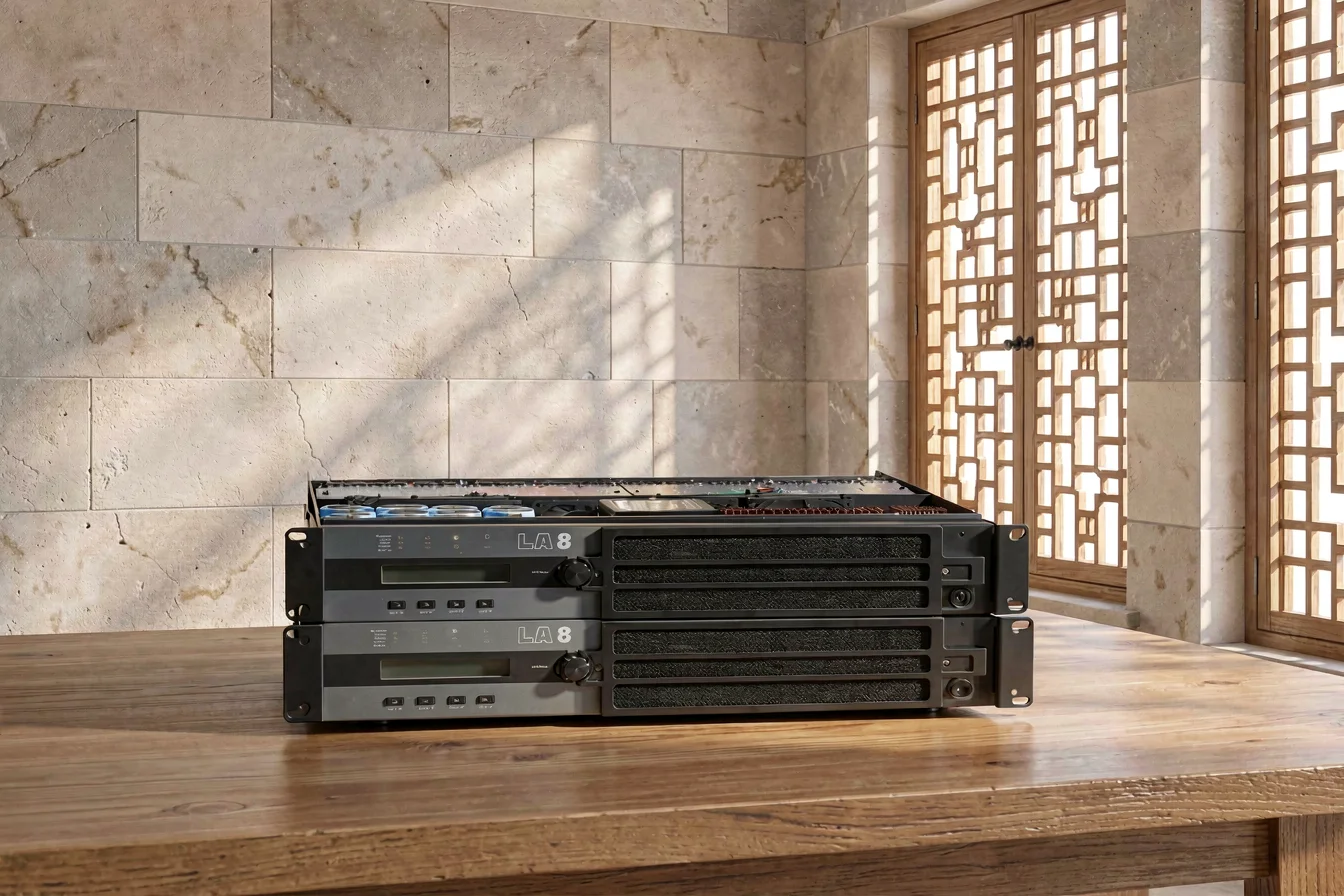
Reliability emerges as the decisive criterion for amplifier for mosque sourcing, with benchmarks aligned to defect rates, maintenance cycles, and service life. Defect data concentrates on control knobs, physical connectors, and power supply modules, with mean time between failures skewing toward five+ years for premium SKUs[3][4]. Maintenance is minimized with DSP-driven, rack-mount units, and expected service life for mosque amplifiers is typically seven to ten years, contingent on operator discipline and environmental factors. Sourcing risks cluster around procurement from unverified vendors, lack of technical after-sales support, and mismatched system power to venue needs. Essential OEM/ODM criteria include factory QC documentation, local compliance certificates (noise, electrical safety), and lockable user interface options. Negotiation levers center on warranty terms, replacement part availability, and rapid after-sales response protocols.
| Benchmark Dimension | MUSYSIC Preamp | Rockville RPM1870 Mixer |
|---|---|---|
| Defect rate (controls/connectors) | Moderate | Low |
| Maintenance cycle | Annual cleaning/spot repairs | Annual with optional upgrades |
| Expected service life | 5–7 years | 7–10 years |
| OEM/ODM support | Limited | Strong |
| Compliance certificates | CE, RoHS | CE, RoHS, regional |
Reliable mosque amplifier procurement pivots on proven durability, clear QC benchmarks, and supplier compliance. Buyers must prioritize rack-mount DSP models, validate warranty/service support, and negotiate for rapid part replacement and local certifications.
Emerging trends for amplifier for mosque point toward expanded DSP functionality, cloud-based remote control integration, and automated feedback suppression as baseline features in the next 12 months. Price trajectories are likely to remain stable for entry rack-mount models, with modest increases for advanced, multi-channel digital units, driven by demand for remote management and noise compliance automation. Buyers can expect continued migration away from legacy analog amps to feature-rich, lockable digital mixers with wireless input, LCD status displays, and user-level restrictions. Strategic procurement should balance early-cycle purchases against seasonal demand peaks, with focus on supplier accreditation and scalable warranty coverage. The future roadmap combines technical innovation and regulatory sensitivity, positioning mosque amplifier buyers to select high-reliability OEM/ODM partners and configure systems for both clarity and compliance, confidently anticipating durability and operational simplicity for years ahead.
Buyers should embrace digital mixer amplifiers with advanced DSP, ensure supplier-proven reliability, and prioritize compliance-ready configurations — securing resilient, futureproof PA performance for mosque venues of any scale.