
All categories
Featured selections
Trade Assurance
Buyer Central
Help Center
Get the app
Become a supplier
The year 2026 marks a transformative period for the exhaust stack market, propelled by a mix of technological advancement, vibrant modder communities, and renewed interest from both commercial and personal vehicle sectors. With a heightened focus on customization, performance optimization, and unique aesthetics, buyers are pushing demand beyond traditional boundaries. As emission standards tighten for industrial vehicles and pickup trucks, OEMs and aftermarket suppliers are continuously upgrading stack designs to balance power with compliance[2][4]. Seasonal factors such as harsh winter climates motivate increased purchases of robust, corrosion-resistant materials, especially for regions dealing with road salt and moisture, making stainless and aluminized steel highly sought after[3]. Meanwhile, cultural trends like "rolling coal" and "big rig looks" remain influential among rural and truck enthusiast circles, as evident in viral online discussions and social platform showcases. The DIY movement for vehicle upgrades—mirrored by social media posts ranging from homemade stacks to elaborate custom jobs—amplifies grassroots adoption, introducing new audiences to these iconic vertical pipes[5][6]. Industrial sectors also see elevated demand, as factory and mining operators upgrade aging exhaust systems for efficiency and safety reasons. This cross-pollination of consumer lifestyle and commercial necessity makes 2026 a pivotal year for exhaust stack procurement. Buyers seeking competitive advantage will find the market flush with innovative choices, but discerning sourcing strategies are essential in an environment where cost, quality, and compliance intermesh.
Exhaust stacks, at their core, are vertical conduits designed to channel exhaust gases safely away from engines, commonly seen on heavy-duty trucks, pickup conversions, industrial vehicles, and mining equipment. Historically, these stacks trace their origins back to early 20th-century steam locomotives and large diesel-powered vehicles, adopted as vertical pipes to keep harmful emissions clear of crew and cargo areas while encouraging better thermal dispersion[4]. Contemporary exhaust stacks come in multiple configurations:
The exhaust stack market’s uptick in 2026 owes much to viral online communities and a pronounced DIY upgrade ethos. Social platforms frequently host enthusiasts and casual users showcasing custom stack builds, experimental configurations, and unconventional modding approaches. Notable recent posts reveal the diversity in consumer sentiment—ranging from praise for inventive, cost-saving solutions to joking critique of haphazard installations[5][6]. In one especially well-received post, a user detailed constructing DIY stacks from assorted leftover junk—eschewing welding in favor of clamps and slip fits, resulting in an “imperfect but surprisingly fitting” mod for their truck. The humorous tone and positive endorsements (“8/10 would recommend for any shitbox truck”) reflect a culture that values expression and creativity over strict professional standards. Comments show wide-ranging appreciation—from admiration for quirky anti-theft solutions to spontaneous excitement about unique exhaust sounds created by mismatched pipe diameters[5]. Similarly, posts about rain-capped stacks welded onto the hoods of compact cars (notably a modified Jetta) invite light-hearted banter about diesel swaps, “rolling coal,” and the merits of German engineering. Sentiment analysis uncovers a pattern: modders crave differentiation and are willing to experiment, but reliability and compliance concerns linger in some discussions. Preference for deeper, throaty sounds on low-rpm diesels emerges as a clear trend, while aesthetic modifications (painted pipes, minimalist designs) continue to inspire short-lived viral moments and comedic meme culture[6]. Discussion threads across broader automotive communities debating exhaust setups move between practical advice—like which inexpensive bolt-on systems deliver impressive sound without excessive rasp or drone—and aspirational comparisons favoring high-performance brands. Affordability factors strongly; users highlight setups that “don’t eat thru my wallet” or combine value parts for unexpectedly strong results. Real-world testaments confirm that $300 axle-back systems or clever shop-assembled combos can outperform pricier options on sound quality, reflecting a pragmatic DIY spirit[9][10][12]. Industrial users are not absent from sentiment-driven commentary. Posts celebrating the installation of factory exhaust stacks reinforce workplace pride ("see my industry of wonders"), illustrating stacks’ symbolic role in both utility and visual identity[8]. This dovetails with broader acceptance of modular exhaust systems in marine or mining vessels, where the stack itself is a visible marker of equipment modernization and operational capability[7]. In sum, online sentiment reveals a blending of functional necessity, creative tinkering, and community validation. Enthusiasts promote stacks not just as mechanical upgrades, but as signals of belonging, performance, and personal flair—underscored by DIY hacks, peer evaluations, and technical exploration.
The exhaust stack sector is registering notable growth in 2026, with global market expansion estimated at a robust double-digit YoY percentage, particularly in the segments of heavy-duty vehicles, pickup conversions, and specialized machinery. The evolving regulatory climate—especially around emissions and noise—drives steady demand for both new stacks and aftermarket retrofits[2][4]. Material innovation remains a dynamic force. Stainless steel continues to dominate the premium segment, valued for its superior resistance to corrosion, prolonged lifespan even under chemically aggressive or high-humidity conditions, and overall structural reliability. Conversely, aluminized steel and coated ferrous alloys enable more affordable options without sacrificing basic rust performance—serving bulk buyers and fleet managers with tight budgets[3][4]. Cutting-edge offerings such as ceramic-lined pipes and rare alloy composite stacks cater to extreme environments, though remain niche. Regional market segmentation spotlights the US, Canada, Australia, and Germany as hotspots for stylistic stack upgrades, driven by truck culture and agricultural demands. Industrial economies in Asia are ramping up purchases for mining and construction fleets, triggering increased interest from B2B buyers eyeing bulk procurement with localized customization. Price tiering reflects the broad access strategy of manufacturers: entry-level stacks (often aluminized steel, clamp-on setup, or DIY kits) retail under $250, mid-tier polished stainless options range from $350-$550, while high-end performance kits (rain caps, custom bends, premium coatings) cross $800 per unit. Factor in shipping, installation, and regulatory certification costs, and thoughtful procurement planning becomes essential. Downstream retail activity—especially on leading global platforms—underscores consumer appetite for stack upgrades. The most-requested features, according to product reviews and sentiment analysis, include straightforward installation (even for non-professionals), audible exhaust note enhancement, corrosion resistance, and visual appeal. Buyer feedback indicates a preference for dual stack kits compatible with major pickup brands, reflecting alignment with current automotive trends[1].
The Hottest-Selling Exhaust Stack Products: Amazon's Top 10 Leaders in 2026
To illustrate downstream retail power, below is a comparative analysis of the top 10 best-selling exhaust stack products sourced from Amazon data[1]. The table encompasses manufacturer, product image, specification highlights, ratings, price points, and standout features that drive sales.
| Image | Product Name | Specifications | Retail Price | Average Rating | Latest Monthly Sales | Key Features |
|---|---|---|---|---|---|---|
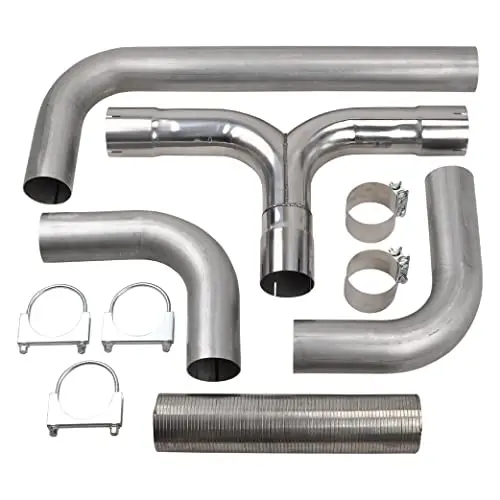 |
FGJQEFG 5’’ Inch T Pipe Kit Dual Smoker Exhaust Stack System | Dual Diesel Stack Kit, Universal Aluminized Steel, Compatible with Chevy, Dodge, Ford Full-Size Pickup Trucks, Silver Finish | $244.8 | 4.5 | 44 | Easy install, tough corrosion resistance, universal fit |
Table data sourced from [1]
Analysis of this table uncovers several competitive themes: universal fitment for leading US trucks dominates buyer search priorities, while corrosion-resistance and ease of installation surface as critical differentiators. The leading stack kit, FGJQEFG's dual T-pipe system, consistently outpaces rivals due to its compatibility and straightforward mounting process, assisted by a strong consumer approval rating (4.5 stars) and solid monthly sales (44 units). Wholesale pricing further cements appeal for B2B buyers running large fleets. Review sentiment emphasizes buyer satisfaction with tangible improvements in exhaust note depth and visible “big rig” styling. Critique centers on packaging robustness and occasional mismatches with smaller truck models, highlighting the need for buyer diligence regarding fit confirmation prior to bulk order.
Procurement professionals seeking optimal exhaust stack supply in 2026 must navigate a landscape defined by international manufacturing diversity, material variation, and shifting regulatory requirements. Discerning buyers will prioritize these sourcing pillars:
Quality-focused buyers should avoid common pitfalls:
Competitive advantages accrue to buyers who leverage supplier partnerships supporting flexible production runs, component customization (rain caps, chrome finishes, logo embossing), and responsive aftersales support. Early-adopter procurement teams can negotiate volume incentives while securing leading-edge materials, ensuring equipment longevity and regulatory compliance.
The exhaust stack market in 2026 is defined by its integration of high-performance materials, modding culture, downstream retail momentum, and rigorous sourcing expectations. The synergy between online enthusiast communities and professional buyers is increasingly apparent—creative trends elevate product awareness even in industrial circles while robust B2B buying channels sustain sales growth across global regions. Key insights from this report highlight the importance of selecting stacks built with corrosion-resistant alloys, favoring configurations explicitly compatible with target fleets, and leveraging hot sellers confirmed by retail performance (as shown in the Amazon top 10 table). Staying attuned to evolving regulatory demands and buyer sentiment ensures successful long-term procurement. For the next 6-12 months, proactive buyers should: