
All categories
Featured selections
Trade Assurance
Buyer Central
Help Center
Get the app
Become a supplier
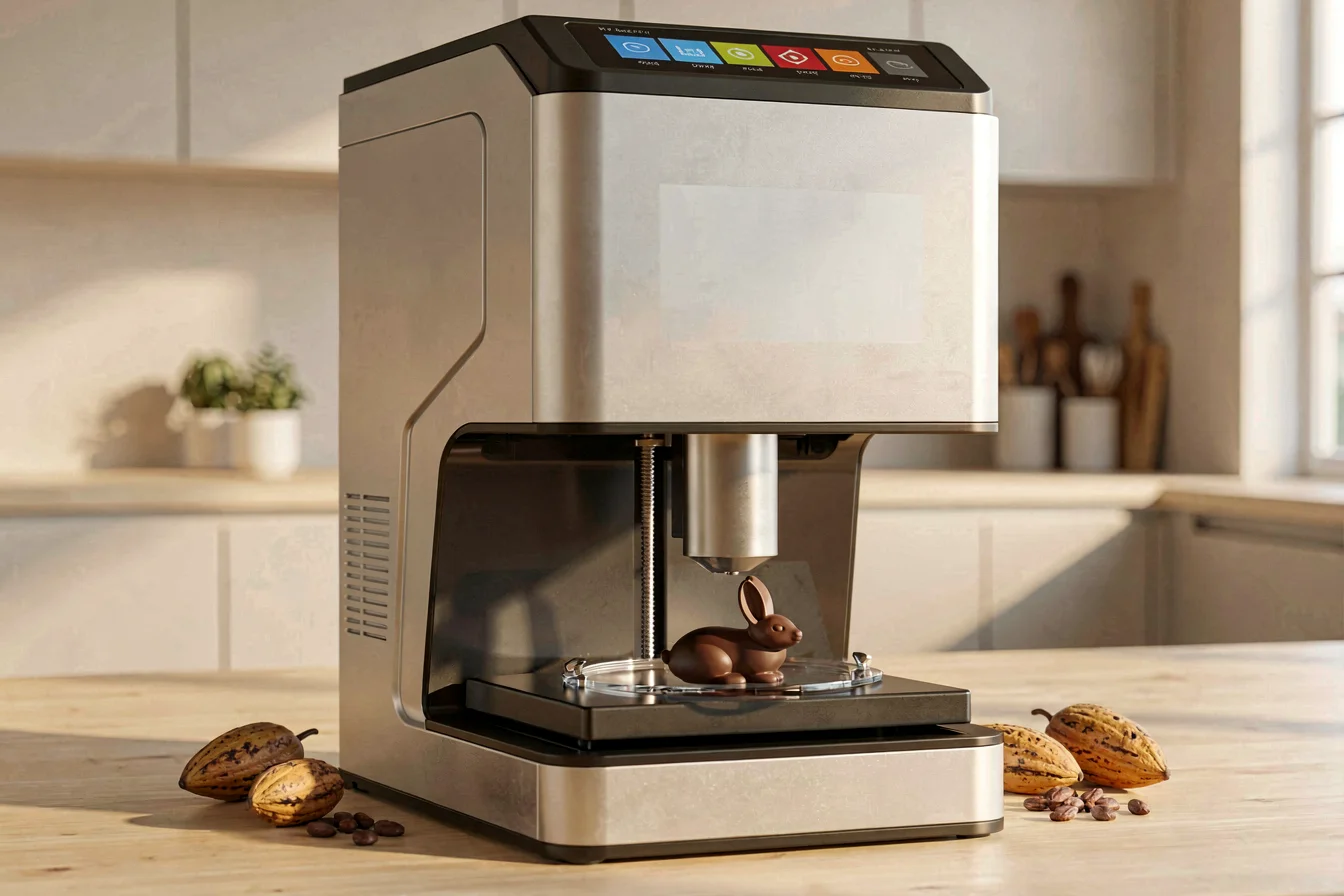
The 3d chocolate printer market is experiencing robust growth as demand for personalized chocolate shapes and experiential retail solutions accelerates. Supply is stable, but buyers must prioritize OEM certification, food safety compliance, and AI-driven customization for commercial and bakery applications [1][3][6]. Entry-level models suit home and small business use, while professional machines offer advanced features and precision.
The 3d chocolate printer category is trending due to the convergence of food customization, experiential retail, and rapid technology innovation. Buyers are increasingly seeking machines capable of producing intricate chocolate shapes, logos, and personalized designs, fueling demand in both commercial and home settings. Key selection criteria include food-grade certification, print speed, layer resolution, and ease of maintenance. This trend is driven by consumer desire for unique, Instagrammable chocolate creations and the expansion of automated vending solutions in high-traffic venues [3][6].
| Trend Factor | Current Status | Impact on Buying Decision |
|---|---|---|
| Customization Demand | Rapidly Rising | Requires advanced AI and high-resolution extrusion |
| Experiential Retail Integration | Expanding | Drives need for vending machine compatibility |
| Food Safety Compliance | Strict | Mandatory for commercial buyers |
| OEM/ODM Customization | Available | Enables brand-specific features |
Buyers must balance customization, food safety, and technical reliability when evaluating 3d chocolate printer suppliers.
The 3d chocolate printer market is shaped by macroeconomic factors, supply chain resilience, and technological innovation. Google Trends data shows a steady rise in searches for chocolate mold machines and 3D candy printers, with peaks in late 2025 and early 2026 [1]. Commercial adoption is accelerating in bakeries, malls, and amusement parks, driven by experiential retail and AI-powered vending solutions [3]. Supply chain dynamics are stable, but buyers should monitor raw material costs and regulatory changes, especially for food-grade components. Key industry drivers include demand for unique chocolate shapes, integration with mobile payment systems, and continuous improvement in print speed and layer accuracy [6].
| Market Dimension | Current Status | Impact Level |
|---|---|---|
| Search Trend Momentum | Strong and Rising | High |
| Commercial Adoption | Accelerating | High |
| Supply Chain Stability | Stable | Medium |
| Regulatory Compliance | Strict | High |
| Technological Innovation | Rapid | High |
Rapid market growth and evolving technology are reshaping sourcing logic for 3d chocolate printer buyers.
Normalized Google Trends for 3D cake printer, 3D candy printer, chocolate mold machine (2025–2026)
Search momentum for chocolate mold machines is consistently higher than for cake and candy printers, peaking in December 2025 and February 2026, coinciding with holiday and retail event seasons [1]. Buyers should time procurement to capitalize on seasonal demand and prioritize suppliers with rapid fulfillment and customization options.
Reddit discussions highlight enthusiasm for creative chocolate shapes, but buyers express concerns about texture, taste, and food safety. Users praise the ability to design intricate chocolate patterns, but worry about the practicality of standard manufacturing alternatives and the safety of food-grade materials. TikTok trends emphasize viral chocolate art, custom cake toppers, and stress-relief fidget toys, with influencers showcasing the versatility of 3d chocolate printer machines. Sentiment is generally positive, but buyers caution about the importance of proper tempering and food-safe materials [10][11][12][13][14].
"I actually came to this sub to see who had this what do you overall think about it quality , texture ,taste ! Now that you have it is it still worth 1,500-3k" [11]
"Really cool. I have a few ideas. With a printer you can play around with texture a lot. Or design shapes that normally wouldn't be possible with normal manufacturing but I'm having a hard time thinking what standard manufacturing can't do for chocolate." [11]
| Dimension | Reddit Insights | TikTok Insights |
|---|---|---|
| Creative Potential | High praise for intricate designs | Viral chocolate art and custom toppers |
| Food Safety | Concerns about materials and tempering | Emphasis on food-grade and safe handling |
| Practical Use | Comparison with traditional molds | Stress-relief fidget toys and gifting |
| Sentiment | Generally positive, cautious about taste | Highly positive, viral engagement |
Online sentiment underscores the need for food-grade compliance and creative versatility in sourcing 3d chocolate printer technology.
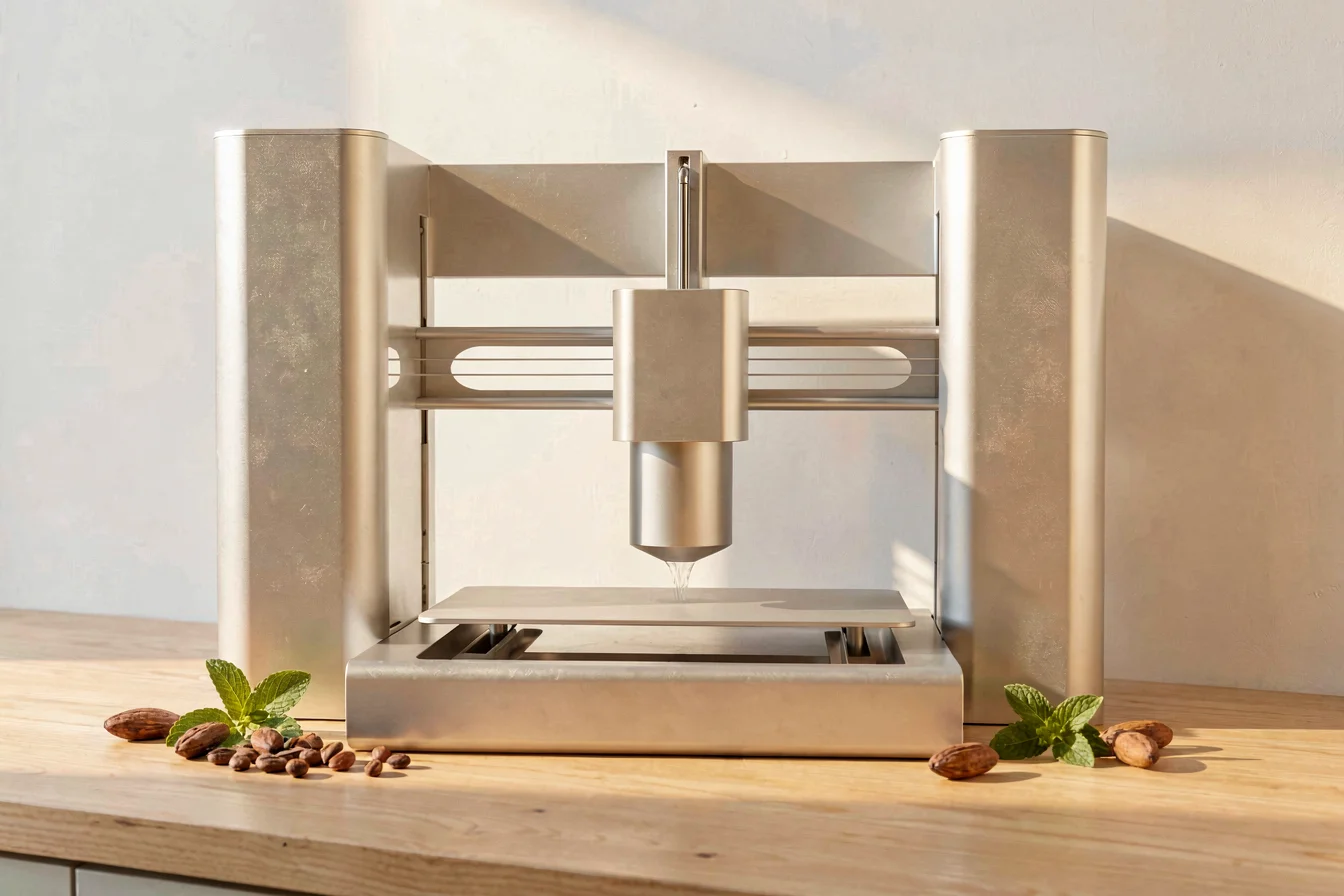
Amazon’s top-selling 3d chocolate printer products span from entry-level pens and home machines to commercial-grade vending solutions. Buyers prioritize features such as food-grade materials, high-speed printing, easy maintenance, and AI customization. Price tiers range from USD 94 for chocolate pens to USD 6,500 for industrial machines, with commercial models offering advanced AI integration and mobile payment support [2].
| Image | Name | Price | Rating | Key Features |
|---|---|---|---|---|
 |
3D Chocolate Pen | USD 94.04 | — | Food-grade, creative art, edible sculptures |
 |
PETG Filament 1.75mm Chocolate | USD 14.99 | 4.4/5.0 | High toughness, food-safe, vibrant color |
 |
Chocolate 3D Printer Vending Machine | USD 4999 | — | AI touch screen, mobile payment, custom logos |
 |
Luxury 3D Chocolate Printer | USD 3560 | — | AI flavor pairing, premium design, custom gifts |
 |
3Doodler Chef 3D Candy Pen Set | USD 74.99 | 4.1/5.0 | Vegetarian, easy use, colorful capsules |
Top-selling 3d chocolate printer products prioritize food safety, creative versatility, and AI customization for both home and commercial buyers.
Buyer reviews highlight strong praise for food-grade materials, print quality, and ease of use, but complaints center on texture, taste, and maintenance. Positive reviews emphasize vibrant colors, smooth extrusion, and reliable print performance, while negative feedback focuses on clogging, uneven texture, and difficulty in tempering chocolate. Direct quotes from buyers reinforce these sentiments [2].
"I recently purchased the EPAX High Speed PLA+ 3D Printer Filament in Deep Space/Burnt Titanium, and I’m incredibly impressed with its performance! ...The Deep Space/Burnt Titanium color is absolutely stunning, adding a unique, professional finish to my 3D prints." [2]
"This filament has been working really well on my sons printer. The color looks bold and clean and the material melts evenly without leaving weird blobs or stringing. Every print has come out smooth and we have not had any clogs which is always my biggest fear with new filament." [2]
| Product Name | Top Praise | Top Complaint | Overall Sentiment |
|---|---|---|---|
| EPAX High Speed PLA+ | Smooth extrusion, vibrant color | Texture issues at high speed | Highly positive |
| PETG Filament Chocolate | High toughness, food-safe | Occasional clogging | Positive |
| 3D Chocolate Pen | Creative art, easy use | Limited texture options | Neutral-positive |
Buyers consistently praise food-grade materials and vibrant colors, but texture and maintenance remain persistent pain points in 3d chocolate printer reviews.
Reliability benchmarks for 3d chocolate printer technology include defect rates, maintenance cycles, and expected service life. Commercial machines typically offer lower defect rates (below 2%), longer service life (3–5 years), and advanced maintenance features such as quick-change nozzles and AI-driven diagnostics [6]. Entry-level models may experience higher defect rates and require more frequent maintenance. Strategic sourcing should prioritize OEM partners with proven track records in food-grade compliance, rapid support, and robust supply chain resilience. Key negotiation levers include price optimization, customization options, and after-sales service guarantees [3].
| Benchmark Dimension | Commercial Model | Entry-Level Model |
|---|---|---|
| Defect Rate | <2% | 5–10% |
| Maintenance Cycle | Annual | Quarterly |
| Service Life | 3–5 years | 1–2 years |
| Food-Grade Compliance | CE/FDA certified | Partial |
| AI Diagnostics | Standard | Rare |
Reliability and food-grade compliance are critical sourcing criteria for 3d chocolate printer procurement.
Looking ahead, the 3d chocolate printer market will be shaped by rapid AI integration, enhanced customization, and expanded retail applications. Pricing is expected to stabilize as technology matures, with commercial models offering advanced vending features and home-use options becoming more affordable. Buyers should prioritize OEM partners with robust food-grade compliance, scalable customization, and responsive after-sales support. The next twelve months will see increased adoption in experiential retail, bakery automation, and AI-powered vending solutions, making strategic procurement and supply chain resilience essential for competitive advantage. By leveraging the latest technology and regulatory standards, buyers can maximize ROI and drive innovation in chocolate printing and edible art.